Guide
Camping for beginners: how to plan and enjoy your first night at a campground
From booking a site to packing out the trash: a calm, step-by-step plan for your first camping trip by the car.
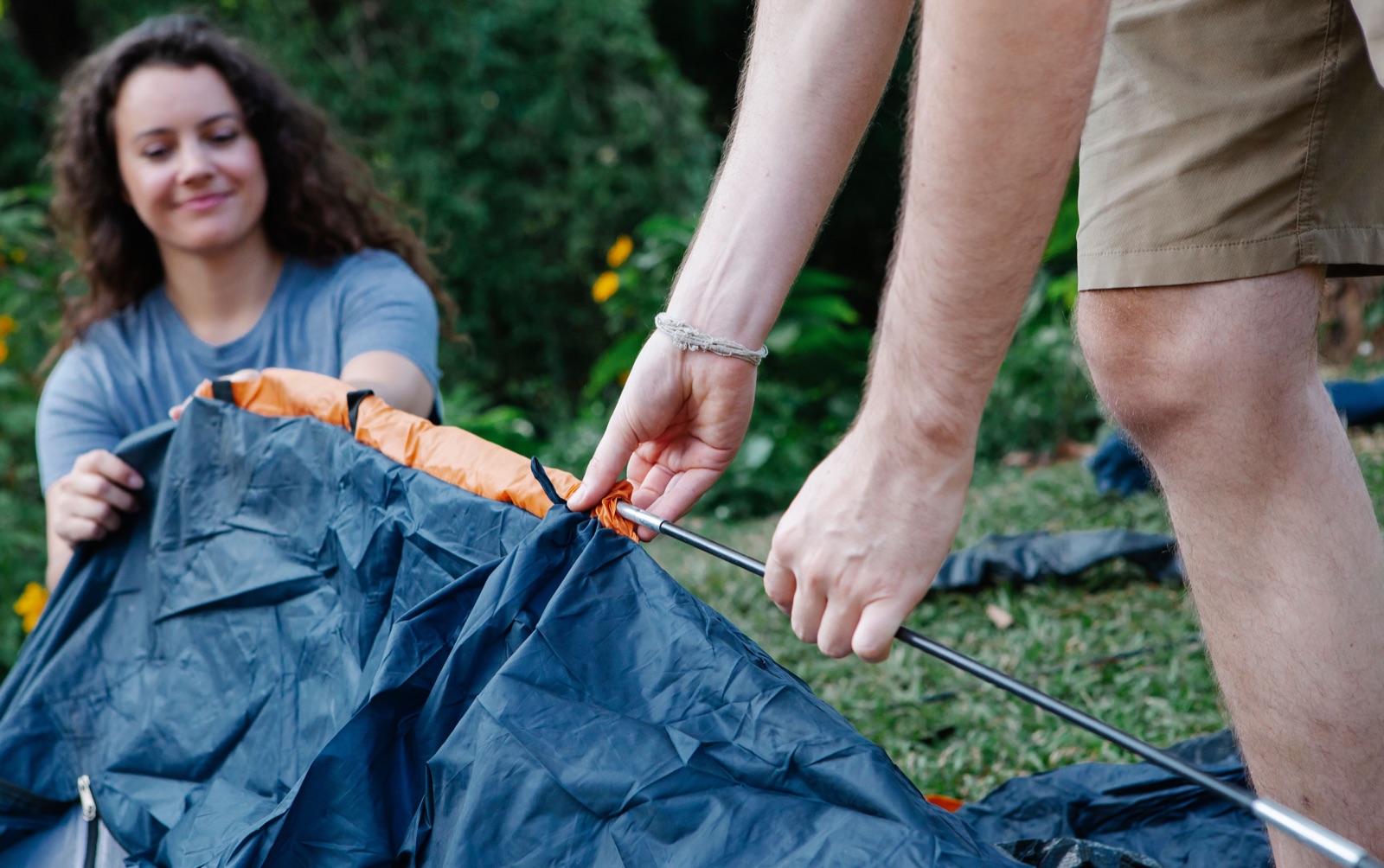
Camping for beginners is easiest at a campground you can drive to: the car carries the gear, there is usually water and a toilet nearby, and if the weather turns you can head home. This guide walks you through a first trip in the order you will do it, from choosing a site to packing up, with the gear you need first and the mistakes that catch most people. By the end you will have a plan for one or two comfortable nights out. As the National Park Service puts it, camping gets easier every time.
What you'll need
Essentials
-
Tent with stakes and a footprint
: your shelter. Practice pitching it at home before the trip. -
Sleeping bag and sleeping pad
: the bag rated for the coldest night, the pad to keep the ground from drawing heat away. -
Stove, fuel and a lighter
: simple hot meals and coffee. Try the stove at home first. -
Cooler, food and water
: plan every meal; bring water if the campground has none. -
Headlamp for each person
: hands-free light after dark, with spare batteries. -
Rain jacket and a warm layer
: evenings cool down quickly, and showers happen. -
First-aid kit
: carry one and know how to use it. -
Trash bags
: everything you bring in goes back out with you.
Optional
-
Camp chairs and a lantern
: comfort around the table once the sun goes down. -
Tarp and cord
: a dry place to sit and cook if it rains.
Choose where and when to go
Pick a developed campground
For a first trip, look for a campground with drinking water, toilets and a picnic table and fire ring at each site. The NPS suggests checking a campground's facilities and rules before you go: potable water, where campfires are allowed, the maximum group size, showers and toilets, and food storage requirements. Check whether you need a reservation. Some sites are booked by phone or through online systems such as Recreation.gov, others are first-come, first-served. Most national parks also require an entrance pass.
Keep the first trip short and easy
- One or two nights, within a couple of hours of home
- A weekend with a mild forecast
- A site near the restrooms if you would rather not walk far in the dark
- A site farther away if you want quiet and a darker sky
Gather the gear without buying everything
A beginner camping gear list is shorter than it looks. The kit above covers the essentials. Borrowing or renting the big items, tent, sleeping bags and stove, lets you learn what you like before you spend money.
Shelter and sleep
Choose a tent with room for everyone plus some gear. Sleep warmth depends on the bag and the pad together: a warm bag on bare ground or a thin air mattress can still sleep cold. See the tents and sleep systems sections.
Kitchen
A two-burner propane stove is the simplest car camping kitchen. The NPS advises practicing with a new stove before the trip, in case it is hard to light or has broken parts. Keep meals simple: one-pot dinners, sandwiches, foods you already cook at home. See the camp kitchen section.
Light
Give each person a headlamp, the hands-free light the NPS recommends among its Ten Essentials, and bring a camping lantern for the table.
For the complete packing list, use the camping checklist.
Practice at home
Pitch the tent in your yard or a park before the trip, following the maker's instructions, as the NPS recommends. You will find out whether all the poles and stakes are there, and you won't be learning the tent in the dark. Light the stove once and inflate the sleeping pads. Pack everything the night before, using a written list.
Arrive and set up camp
Plan to arrive with several hours of daylight left. The NPS advises setting up camp before dark.
Choose the tent spot
On a campground site, the tent pad or cleared area is usually the best place. The NPS gives these camping basics for a good spot:
- Large, level and not in a low area, which turns soggy when it rains
- No dead trees or dead branches overhead
- Cleared of sticks, rocks and pinecones that could puncture the floor
- Oriented so your head will be on the uphill side
- A safe distance from the fire ring, since sparks can burn holes in the tent
Pitch the tent
- Lay the footprint or groundcloth down. If you use a tarp, fold any excess underneath so it can't collect water.
- Spread the tent on top, door facing where you want it.
- Assemble the poles and attach the tent body.
- Stake the corners, pulling the floor square.
- Add the rainfly and stake it out taut, even if the sky is clear.
- Tie out the guylines if wind or rain is possible.

Lay out the camp
Set up the kitchen on the picnic table, away from the tent. In bear country, the NPS advises keeping cooking and sleeping areas well apart, storing food in the campground's bear box or as the park requires, and not sleeping in clothes you wore while cooking.
Inside the tent
Sleeping pads first, then bags, with a headlamp in a pocket where you can find it in the dark. Keep food and anything scented out of the tent.
Cook, eat and clean up
- Cook outside the tent, always. Stoves, heaters and fuel lanterns make carbon monoxide; the US Consumer Product Safety Commission warns against using them inside tents, campers and vehicles.
- Keep food in airtight bags and containers in the cooler or the car, never left out on the table. The NPS says this cuts down on smells that attract wildlife, and never feed wildlife.
- Eat the meat and cheese first so the ice lasts.
- Wash up with three bins, wash, rinse and a sanitizing rinse, as the NPS describes, and let dishes air-dry.
- Clean up right after each meal and check the table and ground for scraps.
Campfires, only where allowed
A campfire is part of the fun at many campgrounds, but rules change with the season and fire danger. Check fire restrictions before you go and use the site's fire ring. Smokey Bear's guidance is to keep fires at least 15 feet from tents, plants and low branches, keep them small, have water and a shovel ready, never leave a fire unattended, and put it out by drowning it, stirring, drowning again and feeling for heat with the back of your hand. Buy firewood at or near the campground if that is what the rules ask. If fires are banned, a lantern makes a good centerpiece instead.
Camping tips for rain
- Pitch on level, slightly higher ground, never in a dip.
- Keep the footprint inside the tent's outline so it can't channel rain under the floor.
- Stake the rainfly taut so it does not touch the inner tent.
- Hang a tarp over the picnic table for a dry kitchen and a place to sit.
- Pack clothes and sleeping bags in waterproof bags.
- Keep wet gear outside the inner tent, in the vestibule or the car.
- Never bring the stove inside the tent to cook out of the rain.
The NPS lists flash flooding, lightning, wind and dead branches as hazards to check for when you pick a site, and advises staying out of open fields in a lightning storm and away from ravines that might flood. If storms are forecast, changing your dates is a perfectly good choice.

Be a good neighbor
- Keep voices and music down, especially during quiet hours.
- Walk on paths, not through other people's sites.
- Keep pets under control.
- Leave natural objects where you found them.
Most of these follow Leave No Trace's principles for respecting wildlife and other visitors.
Pack up and leave no trace
- Make sure the fire is out and cold to the touch.
- Pack out all trash and leftover food.
- Count stakes and poles as you take the tent down.
- Check the table, fire ring and ground for anything left behind.
- Dry the tent fully at home before storing it.
Common beginner mistakes
- Arriving after dark and pitching the tent by headlamp
- A warm bag on a thin, uninsulated pad
- Forgetting the lighter, the can opener or the tent stakes
- Cotton clothing only, with no warm or waterproof layer
- Food left out overnight
- Too many plans for one weekend: leave time to sit around camp
Once a car camping trip feels easy, a short backpacking trip is the natural next step.
Questions
What is the best way to start camping as a beginner?
Book one or two nights at a developed campground with water and toilets, close to home, in mild weather. Car camping lets you bring comfortable gear and leave early if something goes wrong.
What do I need for my first camping trip?
A tent, a sleeping bag and pad, a way to cook, food and water, a headlamp, layers and rain gear, a first-aid kit and trash bags. Many beginners borrow or rent the big items before buying.
How do I stay dry when camping in the rain?
Pitch on high, level ground away from low spots, use the rainfly and stake it taut, keep a footprint or groundcloth tucked under the tent so it does not catch water, and hang a tarp over the table for a dry place to cook and sit.
Is it safe to cook in the tent if it rains?
No. Stoves, heaters and fuel lanterns make carbon monoxide, and the US Consumer Product Safety Commission warns against using them inside tents. Cook under a tarp in the open instead.
Sources (7)
- National Park Service — How to camp
- National Park Service — Finding and setting up a campsite
- National Park Service — Cooking in camp
- National Park Service — The Ten Essentials
- National Park Service — Leave No Trace seven principles
- Smokey Bear — Campfire safety
- U.S. Consumer Product Safety Commission — Portable heaters and camping equipment
Read next
Sleeping bag temperature ratings: what comfort and limit mean
Comfort, limit and extreme explained, and how to turn the number on the bag into a warm night at the campsite you are going to.
Camping checklist: everything to pack for a weekend at a campground
The full packing list for camping by the car, grouped the way you will pack it, plus the things most often left at home.
Camping lanterns: LED, rechargeable, solar and gas lanterns compared
A lantern lights the whole campsite, not just where you look. Here is how the types compare and what to check before you buy one.