Buying guide
Headlamps: how to choose one by lumens, beam, run time and batteries
Lumens, beam distance, run time and power source: how to read a headlamp spec sheet and pick the right light for camp and trail.
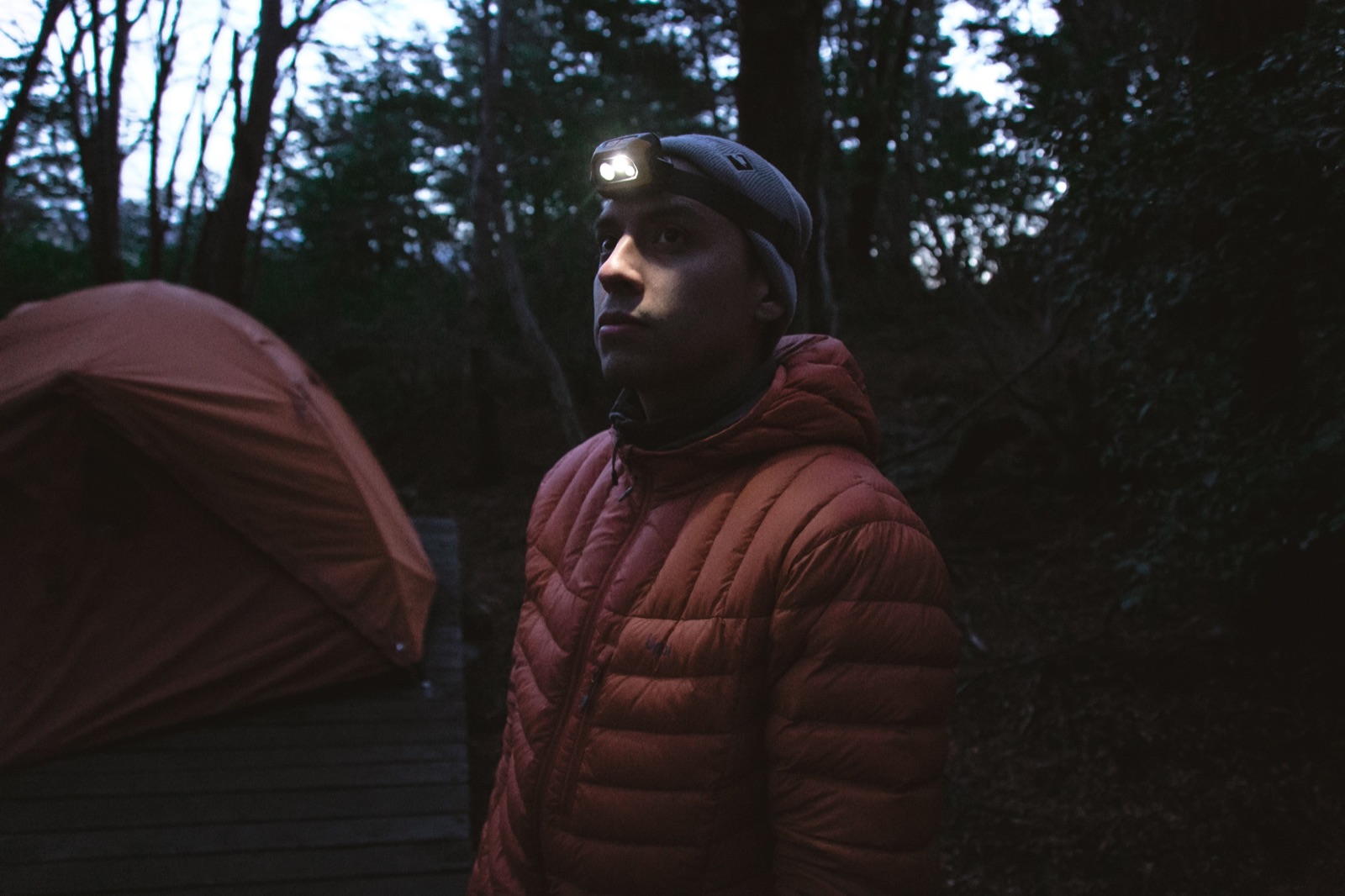
A headlamp is the light you will use most at camp: it keeps both hands free for cooking, pitching a tent or finding the trail back from the restroom. The National Park Service lists illumination among its Ten Essentials and recommends a headlamp over a flashlight for exactly that reason, with spare batteries. This guide explains the numbers on a headlamp box, the main types, and which kind suits which trips, so you can compare lamps without guessing.
What a headlamp does at camp and on the trail
Most of the time a headlamp runs on a low or medium setting: lighting a pot, a page or the inside of a tent a few feet away. A brighter, longer beam matters less often, when you walk a trail after dark, look for a campsite, or search for a trail junction. A good lamp handles both: a dim, even flood for close work and a stronger beam for distance, with a battery that lasts the trip.
The NPS advises setting up camp before dark, and if you have to move around after dark, sticking to routes you have seen in daylight and using a headlamp. Treat the lamp as a tool you will rely on, not an accessory.
How to read a headlamp spec sheet
Many makers rate their lamps with the ANSI/PLATO FL1 protocol, a shared test method for portable lights. When a box says "FL1", the figures were measured the same way, which makes two lamps easier to compare.
Lumens: total light output
Lumens measure how much light the lamp puts out. Under FL1 the reading is taken shortly after the lamp is switched on with fresh batteries; Petzl gives the window as 30 to 120 seconds. More lumens means a brighter maximum, but very few camp tasks need the top setting, and it is the mode that empties the battery fastest.
Beam distance
Beam distance is the farthest point at which the light still gives 0.25 lux, which Pelican describes as roughly the light of a full moon. It tells you how far you can see on the trail. A lamp with a focused beam can show a longer distance than a brighter lamp with a wide beam.
Run time (burn time)
Under FL1, run time starts from the output measured 30 seconds after switch-on and ends when the light falls to 10 percent of that level. A lamp that starts at 300 lumens has reached the end of its rated run time at 30 lumens, so it keeps glowing dimly after the number on the box. Many lamps also dim gradually during the run, so the full brightness does not last the whole rated time.
Some makers add a "reserve" figure. Petzl lists reserve lighting as extra time at a low level after the FL1 run time ends: enough light to walk by, and outside the scope of the standard.
An example from one maker's spec sheet
Petzl's TIKKINA, a simple headlamp that ships with three AAA batteries, shows how much the modes differ. According to Petzl, it weighs 92 g (3.2 oz), has a wide beam and is rated IPX4. These are its figures with AAA batteries:
| Mode | Brightness | Distance | Burn time |
|---|---|---|---|
| Max burn time | 7 lm | 10 m (33 ft) | 100 h |
| Standard | 100 lm | 40 m (131 ft) | 10 h, plus 20 h reserve |
| Max power | 300 lm | 65 m (213 ft) | 2.5 h |
The lowest setting lasts 40 times longer than the brightest. That is typical, and it is why the lumen number on the front of the box says little about how long a lamp will last at camp.

Types of headlamps
Headlamps differ mainly in how they are powered and how much light they are built to make.
| Type | Power | Strengths | Trade-offs | Suits |
|---|---|---|---|---|
| Basic AAA headlamp | Disposable or rechargeable AAA cells | Simple, light, batteries sold everywhere | Lower maximum output, ongoing battery cost | Car camping, kids, a spare lamp |
| Rechargeable headlamp | Built-in or removable lithium-ion battery, USB charging | No disposable batteries, often brighter | Needs a charger, power bank or outlet | Weekend trips, regular use |
| Hybrid headlamp | Own rechargeable pack or AAA cells | Recharge at home, swap in AAAs anywhere | Slightly more to manage | Longer trips, travel |
| High-output headlamp | Larger rechargeable battery, sometimes at the back of the head | Long beam distance | Heavier, costs more | Night hiking, running, route finding |
Rechargeable headlamps and battery choice
A rechargeable headlamp is cheaper to run if you use it often. The catch is that you need power on the trip: a power bank, a car charger or an outlet. A hybrid design removes that risk. Petzl's ACTIK CORE, for example, runs on its CORE rechargeable pack (1250 mAh, charged in about 3.5 hours) or on three AAA batteries.
The power source can change the output. Petzl's own tables for the ACTIK CORE list 625 lumens at maximum with the CORE battery but 450 lumens with AAA batteries, and different burn times for the standard mode. When you compare lamps, check which battery the figures were measured with.
LED headlamps and beam patterns
Nearly every current headlamp is an LED headlamp. What differs is the beam pattern: a wide flood for close tasks, a focused spot for distance, or a mixed beam that does both. A flood is easier on the eyes at camp; a spot helps on the trail. Many lamps let you switch between the two.
Headlamp or flashlight
For camping, the headlamp usually wins over a flashlight: it leaves both hands free and points where you look, which is why the NPS recommends it. A handheld flashlight still makes sense as a backup in a car camping kit, or for shining a light far ahead.
What to look at before you buy
- Weight and comfort. The two Petzl lamps above weigh 88 to 92 g (about 3 oz) each. Brighter lamps with bigger batteries usually weigh more, and some move the battery to the back of the head to balance the load. Try the strap on before a long trip.
- Modes you will actually use. A dim mode for the tent, a standard mode for camp and a bright mode for the trail cover nearly everything.
- Red headlamp mode. Red light is dim and does not ruin your night vision the way white light does. It is the polite choice in a shared tent or a busy campground. Petzl lists a 2-lumen red mode with 60 hours of burn time on the ACTIK CORE.
- Lock function. A lock stops the lamp switching on inside a pack and draining the battery.
- Water resistance. IPX ratings describe protection from water. IPX4 means rain and splashes are fine, which covers most camping; higher ratings such as IPX7 and IPX8 are meant for submersion.
- Battery indicator. Rechargeable lamps with a charge indicator help you avoid starting a trip on half a battery.
Which headlamp suits whom
- First camping trip or car camping: a basic AAA or hybrid lamp with a red mode and a lock. Bring spare batteries, as the NPS recommends. Pair it with a camping lantern for the picnic table.
- Backpacking: a light rechargeable or hybrid lamp. Check the burn time at the mode you will actually use, not only at maximum, and carry a way to recharge or a set of AAAs. The backpacking checklist lists it with the rest of the kit.
- Night hiking: a high-output lamp with a mixed or focused beam and a long beam distance.
- Kids: a simple, light lamp with few modes so it is easy to use in the dark.
How to use and care for a headlamp
- Test it at home before the trip, and charge it or fit fresh batteries.
- Use the lowest mode that does the job. It stretches the battery and keeps your eyes adjusted to the dark.
- Switch on the lock or remove the battery for storage in a pack.
- Remove disposable batteries between trips, since leaking batteries can damage the contacts.
- Wash the strap if it is removable and washable; Petzl, for example, describes the TIKKINA strap as removable and washable.
- Keep the lens clean and dry the lamp after a wet night before you store it.
For the rest of the night kit, see the lights and power section and the camping checklist.
Questions
How many lumens does a headlamp need for camping?
For camp chores, reading and walking to the restroom, a low or standard mode of around 100 lumens is usually plenty. A maximum of a few hundred lumens helps when you hike a trail after dark or look for a turn, but high modes drain the battery quickly.
What does ANSI/PLATO FL1 mean on a headlamp box?
It is a common test protocol for portable lights. Brightness is measured shortly after switch-on with fresh batteries, beam distance is the point where the light falls to 0.25 lux, and run time lasts until output drops to 10 percent of that initial level.
Is a rechargeable headlamp better than one that takes AAA batteries?
A rechargeable headlamp saves money and waste if you can charge it between trips. A hybrid model that runs on its own battery or on AAA cells is the safer choice for long trips, because you can swap in fresh batteries anywhere.
What is the red light on a headlamp for?
Red light is dim and does not ruin your eyes' adaptation to the dark the way bright white light does. It is useful around camp at night and inside a shared tent, where a white beam would wake or blind other people.
Does a headlamp need to be waterproof?
For camping and hiking, a lamp rated IPX4 (splash and rain resistant) is usually enough. Higher ratings such as IPX7 and IPX8 are built to survive submersion, which matters for paddling or very wet trips.
Sources (6)
Read next
Camping for beginners: how to plan and enjoy your first night at a campground
From booking a site to packing out the trash: a calm, step-by-step plan for your first camping trip by the car.
Camping lanterns: LED, rechargeable, solar and gas lanterns compared
A lantern lights the whole campsite, not just where you look. Here is how the types compare and what to check before you buy one.
Camping checklist: everything to pack for a weekend at a campground
The full packing list for camping by the car, grouped the way you will pack it, plus the things most often left at home.