Buying guide
Camping lanterns: LED, rechargeable, solar and gas lanterns compared
A lantern lights the whole campsite, not just where you look. Here is how the types compare and what to check before you buy one.
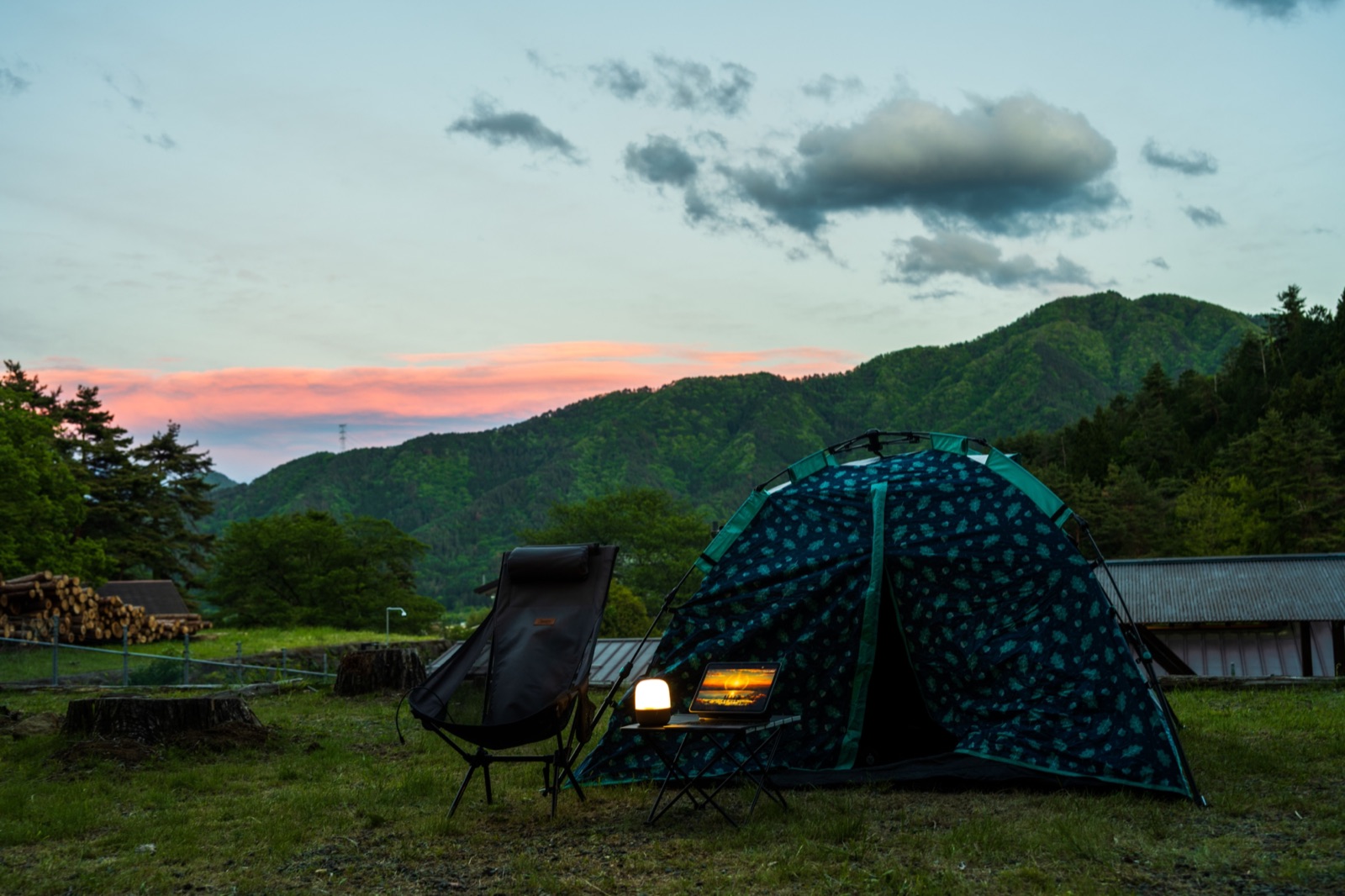
A camping lantern spreads light around the whole site: over the picnic table, through the tent, across the cooking area. A headlamp points where you look; a lantern lights the space everyone shares. This guide covers the main lantern types, how to compare brightness and run time, which type suits which trip, and the one safety rule that matters most: fuel-burning lanterns stay outside the tent.
What a camping lantern is for
At a campground a lantern usually does three jobs. It lights the table for cooking and cards, it marks the campsite so you can find it in the dark, and a dim setting turns the tent into a place where you can read or sort gear. Backpackers often skip a lantern and use a headlamp, while car campers usually bring one or two.
Types of camping lanterns
| Type | Power | Strengths | Trade-offs | Inside a tent? |
|---|---|---|---|---|
| LED lantern on batteries | AA, AAA or D cells | Simple, cheap to buy, batteries sold everywhere | Ongoing battery cost, output can fade as cells run down | Yes |
| Rechargeable LED lantern | Built-in lithium-ion battery, USB charging | No disposable batteries, many double as a power bank | Needs charging between trips | Yes |
| Solar LED lantern | Small built-in panel plus battery, often USB as well | Recharges in the sun | Slow to charge in shade or cloud | Yes |
| Propane lantern | Small propane cylinder, glowing mantle | Very bright, warm light | Hot, fragile mantles, carbon monoxide, fuel to carry | Never |
| Liquid-fuel lantern | White gas or similar, mantle | Bright, refillable | Same hazards as propane, plus pumping and filling | Never |
| Candle lantern | Candle in an enclosed holder | Light, soft light | Little light, open flame | Never |
LED lanterns
An LED lantern is the default choice for most camping. It makes no heat to speak of, no flame and no exhaust, and many have several brightness levels plus a red mode. Battery LED lanterns are the simplest: put in fresh cells and go. Carry spares, because the light can fade as the batteries run down.
Rechargeable lanterns
A rechargeable lantern with a built-in battery saves money over time and often works as a power bank for a phone. As one maker's example, Fenix lists its CL26R PRO with a removable 5000 mAh battery, a 500-lumen high mode that lights 360 degrees, a red light, a hook for hanging it in a tent, a USB-C charging port and a USB port for charging other devices. The same page notes that the high mode is not available while the lantern is charging another device or being charged itself. Check details like that before relying on a lantern as both light and charger.
Solar lanterns
A portable solar lantern charges from a small panel in daylight. It is handy as a second light on sunny trips and for camps without power. In forest shade or several cloudy days in a row it may not refill, so pair it with a battery or rechargeable light you can charge before you leave.
Propane and liquid-fuel lanterns
Gas lanterns burn fuel to heat a mantle, a small fabric sock that glows when it burns. They give a bright, warm light and run as long as you have fuel. They also get very hot. Coleman's manual for one propane lantern, the 5155B, says to always light and use the lantern outdoors, never run it without its heat shield, and keep flammable things at least 12 inches from its sides and 48 inches above it. Once burned in, a mantle is fragile, and that manual says to replace any mantle with a hole, since a hole can make the lantern overheat.
Fuel lanterns never go inside a tent
Any lantern that burns fuel (propane, white gas, butane or a candle) makes carbon monoxide and heat. The US Consumer Product Safety Commission warns not to use portable heaters or lanterns while sleeping in enclosed areas such as tents, campers and vehicles, and notes that carbon monoxide poisoning is more likely at high altitude and can be mistaken for a cold or flu. Use fuel lanterns only in the open, on a stable surface, away from tents, tarps and trees, and follow the warnings in your lantern's manual. Inside the tent, use LED light only.

What to look at before you buy
Brightness in lumens
Lumens measure total light output. Many makers test with the ANSI/PLATO FL1 protocol, which, as Petzl explains, measures output shortly after the light is switched on with fresh batteries and counts run time until output falls to 10 percent of that initial level. A lantern's maximum lumens matter less than having a low setting for the tent and a medium setting for the table.
Run time
Run time depends heavily on the mode. A lantern's longest run time is almost always quoted at its lowest setting. Fenix, for example, lists a maximum run time of 408 hours for the CL26R PRO, and its mode chart shows the 500-lumen high mode running for a small fraction of that. Look for a run time table that lists every mode, and compare lanterns at the setting you will actually use.
Light quality and direction
- 360-degree light spreads evenly around a table.
- Down-facing light works best hung from a tent ceiling or a branch over the table.
- Warm or adjustable color is easier on the eyes than cold white light in the evening.
- Red mode keeps your night vision and doesn't light up the neighbors.
Power and charging
For a camping lantern with a rechargeable battery, check the capacity in mAh, the charging port and whether it can charge a phone. For battery lanterns, check the cell size: AA and AAA are easier to replace than D cells on a long trip.
Size, weight and hanging
A portable lantern for a tent should be small, with a hook or loop. A larger table lantern can be heavier. Collapsible lanterns pack flat in a bin.
Water resistance
Look for a stated IPX rating if the lantern will sit out in the rain. Without one, check the maker's wording; Fenix, for instance, says its CL26R PRO is waterproof only with the battery port cover closed.

Which lantern suits whom
- First camping trip: one LED lantern for the table and a headlamp for each person. It is the simplest, safest setup. See camping for beginners.
- Family car camping: a rechargeable LED lantern for the table and a small one for the tent. A model that charges phones earns its space in the bin.
- Long trips without power: a lantern that takes standard batteries, or a solar lantern backed up by a power bank.
- Backpacking: most people skip the lantern and use a headlamp in a stuff sack or a tiny collapsible LED lantern.
- Bright light for big groups outdoors: a propane lantern can light a large area, used outdoors only and kept well clear of tents, tarps and branches.
How to use and care for a camping lantern
- Charge rechargeable lanterns before the trip, and put fresh batteries in battery models.
- Use the lowest setting that does the job to stretch the run time.
- Hang LED lanterns from the tent's ceiling loop rather than leaving them on a sleeping bag.
- Take disposable batteries out before storing the lantern, so they can't leak inside it.
- For gas lanterns, follow the manual for fitting mantles and cylinders, let the lantern cool before you pack it, and store fuel outside living spaces.
- Dry a wet lantern before storing it.
Leave No Trace's campfire principle suggests a lantern for evening light instead of building a fire. For the rest of the kit, see the camping checklist and the lights and power section.
Questions
What is the best type of camping lantern for a tent?
An LED lantern on batteries or a rechargeable battery. It gives no flame and no exhaust, so it is the only kind of lantern that belongs inside a tent. Hang it from the tent's ceiling loop or set it on the floor on a low setting.
Can I use a propane lantern inside a tent?
No. The US Consumer Product Safety Commission warns against using fuel-burning lanterns and heaters while sleeping in tents, campers and vehicles because of carbon monoxide, and lantern makers tell you to light and use them outdoors only.
How many lumens does a camping lantern need?
A low setting of a few dozen lumens is usually enough inside a tent, and a few hundred lumens lights a picnic table or a small campsite. A lantern with several brightness levels lets you match the light to the job and save battery.
Are solar lanterns any good for camping?
They work well as an extra light on sunny trips, since they recharge during the day. Output and run time depend on how much sun the panel gets, so they are a poor choice as your only light in cloudy or wooded camps.
Sources (5)
- U.S. Consumer Product Safety Commission — Portable heaters and camping equipment
- Coleman — 5155B propane lantern instructions (ManualsOnline copy of the manual)
- Fenix — CL26R PRO rechargeable lantern
- Petzl — How is lighting performance measured with the ANSI/PLATO FL1 protocol?
- National Park Service — Leave No Trace seven principles
Read next
Family tents: how to choose a big tent for camping with kids
Person ratings, floor size, headroom and shape: what to compare before you buy a large tent for the whole family.
Headlamps: how to choose one by lumens, beam, run time and batteries
Lumens, beam distance, run time and power source: how to read a headlamp spec sheet and pick the right light for camp and trail.
Camping checklist: everything to pack for a weekend at a campground
The full packing list for camping by the car, grouped the way you will pack it, plus the things most often left at home.