Buying guide
Family tents: how to choose a big tent for camping with kids
Person ratings, floor size, headroom and shape: what to compare before you buy a large tent for the whole family.
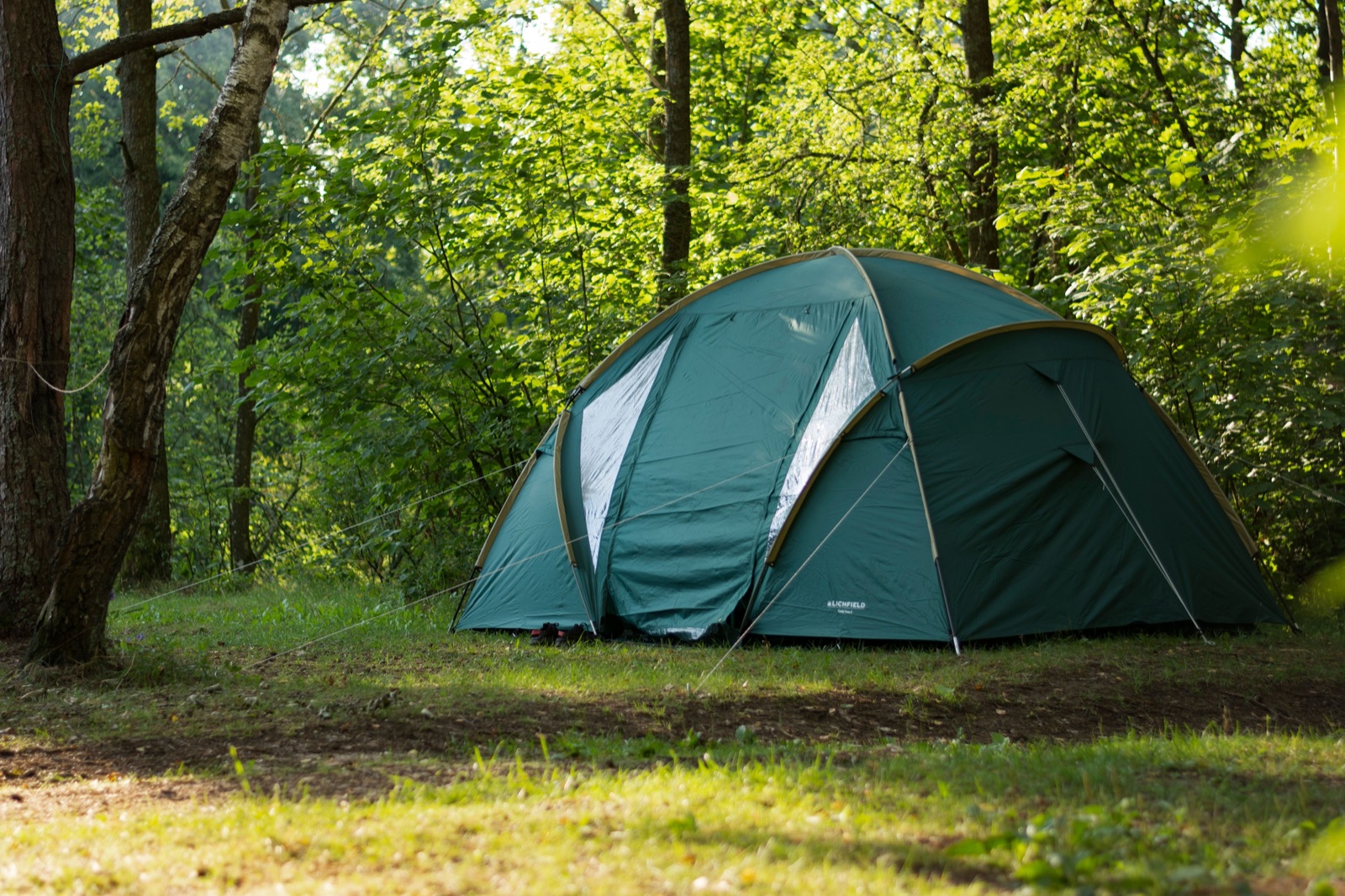
A family tent is a large tent built for car camping: room for parents, kids, sleeping bags and often an air mattress, with enough headroom to stand up and change. Because it only travels from the car to the site, weight matters far less than space, setup and how well it sheds rain. This guide explains what the size ratings mean, the main shapes, and what to check before you buy.
What the person rating really means
The number on the box is the most misleading spec on a family tent. It counts how many people fit lying side by side on standard pads, with little or no room for gear. Coleman's own tent buying guide says a four-person tent typically fits four sleeping-bag-sized pads placed close together, with limited extra room, and suggests comparing floor dimensions and center height rather than relying on the rating alone.
Makers' own advice is to size up. Coleman's guide notes that many campers choose a bigger tent for extra space, especially with children, pets or air beds. CORE rates its 6-person instant cabin tent to sleep six, but recommends three people plus gear for comfort.
A rough sizing rule
| Family | Rating to look at | Why |
|---|---|---|
| 2 adults, 1 small child | 4 person tent | One queen air bed plus a kid's pad |
| 2 adults, 2 kids | 6 person tent | Two queen air beds or four pads plus bags |
| 2 adults, 3–4 kids | 8 person tent | Room for gear and a dog |
| Two families or a group | 10 to 12 person tent | Often split into two or more rooms |
Treat the table as a starting point. Measure your air mattress and compare it with the floor dimensions on the product page before you trust any rating.
Types of family tent
Dome tents
A dome tent uses two or more flexible poles crossing over the top. The walls slope in, so you get full height only near the center. Domes are usually the lightest and most compact family tents and cope well with wind. Coleman's Sundome 6-Person, for example, lists a 10 by 10 ft floor and a 6 ft center height and says it fits two queen-size air beds.
Cabin tents
A cabin tent has near-vertical walls and a high roof, so most of the floor has standing room. They feel more like a small room, often have large windows and room dividers, and are the usual choice for big tents for camping with kids. The trade-off is more wind resistance and bulk. CORE's 6 Person Instant Cabin Tent lists an 11 by 9 ft floor, a 72 in center height and a weight of 23 lb.
Tunnel and multi-room tents
Tunnel tents use parallel hoops and must be staked out to stand. They make good use of floor space in long, multi-room layouts, so some large tents use them, or mix tunnel, dome and cabin sections. Expect a fussier pitch on hard ground.
Instant and hub tents
These have poles pre-attached to the fabric, so you unfold the tent and extend or click the frame into place. They suit families who want camp set up before the kids get restless. They are covered in detail in the instant and pop up tent guide.

Family tent types compared
| Type | Headroom | Setup | Weather | Best for |
|---|---|---|---|---|
| Dome | Full height in the center only | Moderate | Good in wind | Most families, first tent |
| Cabin | Standing room across most of the floor | Moderate to slow | Catches more wind | Long stays, young kids |
| Tunnel / multi-room | Good along the length | Needs stakes, takes practice | Good when pitched into the wind | Large families, groups |
| Instant / hub | Often cabin-like | Fastest | Depends on the model | Short weekends, quick setup |
What to look at before you buy
Floor area and floor shape
Floor area in square feet is the best way to compare tents of different ratings. Kelty, for example, lists 86.5 sq ft for its Wireless 6P tent. A rectangular floor fits air mattresses and cots better than a hexagonal one with angled corners.
Center height
Center height decides whether adults can stand. Look for 6 ft or more if you want to stand up to change; the tents mentioned here list 6 ft (Coleman Sundome 6), 72 in (CORE 6 Person Instant Cabin) and 74 in (Kelty Wireless 6P). In a dome, that height drops off quickly toward the walls; in a cabin, it doesn't.
Weather protection
Rainfly and waterproof rating
A rainfly is the waterproof outer layer. A full-coverage fly that reaches close to the ground keeps out wind-driven rain better than a small "roof cap" fly. Waterproofing is given as hydrostatic head in millimeters: the height of a water column the fabric resists before leaking. CORE lists 1200 mm water-resistant fabric for its 6-person instant cabin. Higher numbers usually mean more margin in heavy rain, but seams, zippers and how well you pitch the tent matter just as much.
Wind
Tall, flat-walled tents catch more wind. Use every guyline and stake. CORE, for example, says its instant cabin is designed to withstand winds up to 35 mph only when properly staked and anchored.
Doors, windows and storage
Two doors keep kids from climbing over sleeping parents. Large mesh windows help ventilation and cut condensation. Wall pockets, a gear loft and a lantern hook keep small things off the floor.
Weight and packed size
You won't carry a family tent far, but you do need to fit it in the car with everything else. Kelty lists a 19 lb packed weight for the Wireless 6P, and CORE 23 lb for its 6-person instant cabin. Check the packed dimensions against your trunk.
Which family tent suits whom
- Families new to camping: a 6 person dome tent. It usually costs less than a cabin, pitches the same way every time and is easy to dry.
- Families with toddlers or long stays: a cabin tent with a room divider and full standing height.
- Weekend campers who arrive late: an instant cabin tent with pre-attached poles.
- Big groups: a 10 or 12 person multi-room tent, or two medium tents, which are easier to pitch and to find space for at a campsite.
- Couples with one child who also backpack: a roomy 3 or 4 person tent may do both jobs; see the 2 person tent guide for how capacity scales.
Setting up and caring for a family tent
- Do a practice pitch in the yard or a park before the trip, with everyone helping.
- At camp, clear the ground of sticks and stones and use a footprint or ground cloth slightly smaller than the floor so rain doesn't collect between the layers.
- Stake the corners first, then raise the frame, then fit the rainfly and tension it evenly.
- Stake out every guyline before night falls.
Safety and care
Never use a stove, grill, fuel-burning lantern or heater inside the tent. MSR's stove instructions, for example, warn that the stove "can produce carbon monoxide, which has no odor," and say never to use it in an enclosed space such as a tent or vestibule. Cook outside, away from the fabric.
Before storing the tent, set it up at home to dry completely, brush out dirt and pack it loosely. Mildew starts quickly on a tent folded away damp. For cleaning and seam care, follow the instructions that came with your product.
The short version
Pick a family tent by floor area and center height, not the number on the box, and size up by two people if you want room for air mattresses and gear. Choose a dome for simplicity, a cabin for standing room and an instant tent for fast setup. For other shelter options, browse the tents section.
Questions
What size family tent do I need?
Size up from the number of people sleeping in it. Tent ratings assume sleeping pads packed side by side, so a family of four usually needs a 6-person tent to have room for bags, an air mattress and space to change.
How many people really fit in a 6 person tent?
Six only if everyone lies shoulder to shoulder on narrow pads. CORE, for example, rates its 6-person instant cabin to sleep six but recommends three people plus gear for comfort.
Is a cabin tent or a dome tent better for a family?
A cabin tent has near-vertical walls, so more of the floor has full standing height. A dome tent is usually lighter, packs smaller and handles wind better. Families who spend time inside on rainy days often prefer a cabin.
How much does a big family tent weigh?
Usually far more than a backpacking tent. Kelty lists 18 lb 2 oz minimum for its Wireless 6P and CORE lists 23 lb for its 6-person instant cabin, so these tents are meant to be carried from the car, not on your back.
Read next
Air mattresses for camping: how to choose one that sleeps warm
An air bed feels like home until the cold air inside it chills you. Here is how to pick a camping mattress that is comfortable and warm.
Pop up tents: how to choose an instant tent that sets up in minutes
Spring-open pop-ups, instant cabins and hub tents: how fast-pitch tents work, what you give up for speed and who each one suits.
2 person tents: how to choose one for two people and their gear
Floor width, doors, weight and weatherproofing: what decides whether a two-person tent really fits two people.