Buying guide
Pop up tents: how to choose an instant tent that sets up in minutes
Spring-open pop-ups, instant cabins and hub tents: how fast-pitch tents work, what you give up for speed and who each one suits.
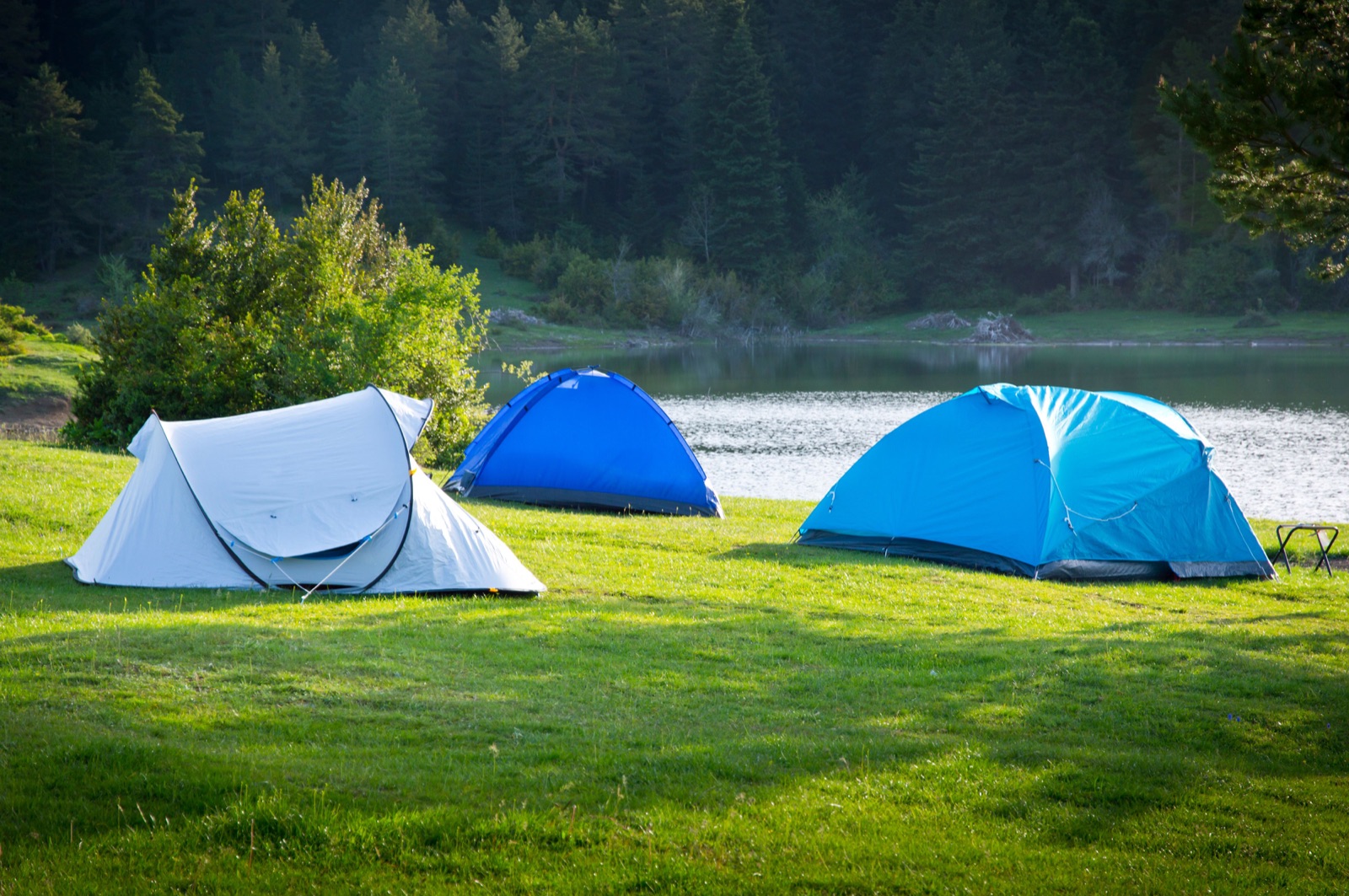
A pop up tent is a tent whose frame is already built in: you unfold or release it, and it stands up in a minute or two instead of the ten minutes or more it can take to assemble poles and clip them to a standard tent. That speed is the whole point, and it comes with trade-offs in weight, packed size and wind strength. This guide explains the three main designs, what the specs mean and who each one suits.
How fast-pitch tents work
Every tent needs a frame. A standard dome makes you assemble the poles and clip or sleeve them to the fabric at camp. A fast-pitch tent does that work at the factory, so the frame stays attached to the tent when you pack it. Three designs do this in different ways.
Spring pop up tents
A true pop up camping tent has flexible, sprung rods sewn into the fabric. Packed, it is coiled into a flat, round disc; let it go and it springs open into shape. Stake it down and you are done. These are the quickest of all to pitch, and usually small: one to three people. The trade-offs are a large, awkward packed disc that doesn't fit in a backpack, folding that takes practice, and a frame that is usually less stable in strong wind than poles you can tension.
Instant tents with pre-attached poles
An instant tent has telescoping or hinged poles permanently attached to the tent. You unfold it, extend the legs until they click, and the roof rises with them. This design scales up to large family sizes. Coleman says its 6-Person Instant Cabin, with pre-attached poles, sets up in as fast as one minute and has a 10 by 9 ft floor and a 6 ft center height. CORE quotes as little as 60 seconds with two people for its 6 Person Instant Cabin Tent, which lists an 11 by 9 ft floor and a 72 in center height.
Hub tents
A hub tent uses folding pole sections joined at central hubs on each wall. You pull on each hub and it snaps outward, locking the wall taut. Gazelle, for example, quotes 90 seconds or less for its T4 Hub Tent and lists a 94 by 94 in interior floor, a 78 in center height and a 30 lb weight. Hub tents are usually heavy and long when packed, but roomy for their footprint.

Pop up tent types compared
| Type | Setup | Usual size | Packed shape | Wind | Best for |
|---|---|---|---|---|---|
| Spring pop up | Seconds to open, practice to fold | 1–3 people | Large flat disc | Weaker | Festivals, short campground stays |
| Instant (pre-attached poles) | About 1–2 minutes plus staking | 4–10 people | Long, heavy bag | Fair when fully guyed | Family car camping |
| Hub tent | About 1–2 minutes plus staking | 4–8 people | Long, heavy bag | Fair to good when staked | Base camps, overlanding |
| Standard dome (for reference) | 10+ minutes | Any | Compact | Good | Backpacking, all-round use |
What to check before you buy
Setup time vs real setup time
Advertised times cover raising the frame only. You still need to stake the corners, attach guylines and fit a rainfly if there is one. Plan on a few extra minutes, and do a practice pitch at home so the first time isn't in the dark.
Rainfly and waterproofing
Read what's in the box
Many instant tents have a fly that covers only the roof, so rain can still reach the windows and door. Coleman's 6-Person Instant Cabin, for example, has an integrated vented rainfly sewn into the roof rather than a separate full fly. CORE sells its 6-person instant cabin both with and without a full rainfly; the full-rainfly version adds a 17 sq ft vestibule and weighs 27 lb instead of 23 lb. Check the product page for what is included and whether a full fly is sold as an add-on.
Hydrostatic head
Water resistance is given as hydrostatic head in millimeters: the height of water the fabric holds back before leaking. CORE lists 1200 mm for its instant cabin fabric. Gazelle lists 2000 mm for the T4's 210-denier polyester shell and 5000 mm for its 300-denier Oxford floor, which shows why you should compare like with like (wall with wall, floor with floor). Seams and zippers usually leak before good fabric does.
Wind
Tall, straight-walled instant tents act like sails. CORE says its instant cabin is designed for winds up to 35 mph only when properly staked and anchored. Use every stake and guyline, and turn the narrow end into the wind.
Weight and packed length
A pre-attached frame doesn't fold small. Gazelle lists a 66.5 in pack length for the T4, and the CORE instant cabin weighs 23 lb. Measure your trunk, and think about who will lift it out of the car.
Doors, windows and floor
Look for a door wide enough to carry in an air mattress, mesh windows on several sides for airflow, and a bathtub-style floor whose edges turn up a few inches to keep ground water out. Some hub tents, like the Gazelle T4, have a removable floor that is easier to clean.
Pop up screen tents and changing tents
Two related shelters use the same fast-pitch frames but are not for sleeping. A pop up screen tent is a bug-proof room for eating or sitting at camp, usually without a sealed floor. A pop up changing tent is a tall, narrow privacy shelter for changing clothes or a camp shower. Both are handy additions to a family site, not replacements for a sleeping tent.
Which pop up tent suits whom
- Festival-goers and quick overnights at a campground: a small spring pop up tent.
- Families who arrive late or camp with young kids: an instant cabin tent; see the family tent guide for sizing.
- Base camps of several nights, or windier sites: a hub tent, if you can handle the weight.
- Anyone who will carry the tent more than a short walk: skip pop-ups and look at a 2 person tent or a backpacking tent instead.
Pitching a pop up tent well
Speed is the reason to buy one, but a few habits make a fast-pitch tent sleep as well as a standard one:
- Choose the spot first. Clear sticks and stones before you release the frame, because a sprung pop-up opens wherever it lands.
- Stake the windward side first, then the rest. A light pop-up can roll away in a gust before it is pegged down.
- Tension the fly evenly. Wrinkles collect rain and let it sag onto the inner tent.
- Practice the fold at home. Spring pop-ups fold back into their disc in a set sequence; watch the maker's video and try it a few times on a dry lawn, not at the end of a wet weekend.
Care and safety
Fold a pre-attached frame only the way the instructions show; forcing a hinge or telescoping leg in the wrong direction is the usual way these tents break. Dry the tent fully before storing it, since a heavy instant tent folded wet will mildew quickly. Never run a stove, grill or heater inside: MSR's stove instructions, for example, warn that the stove "can produce carbon monoxide, which has no odor," and say never to use it in a tent or vestibule. For other shelters, browse the tents section.
Questions
What is the difference between a pop up tent and an instant tent?
A pop up tent has a sprung frame sewn into the fabric that opens by itself when released. An instant tent has poles pre-attached to the tent that you extend and lock into place; it takes a minute or two longer but is usually larger and sturdier.
How fast does an instant tent really set up?
Makers quote best-case times: Coleman says its 6-Person Instant Cabin sets up in as fast as one minute, and CORE quotes as little as 60 seconds with two people. Staking, guylines and a rainfly add more time.
Are pop up camping tents waterproof?
Many are water resistant rather than storm-proof, so check the hydrostatic head rating, the rainfly and the seams. Some instant tents have only a roof fly rather than a full one: Coleman's 6-Person Instant Cabin uses an integrated vented rainfly built into the roof.
What is an automatic tent?
Another name for a pop up or instant tent: one whose frame is built in, so it opens without threading poles through sleeves or clips.
Can I sleep in a pop up screen tent or changing tent?
They are not made for sleeping. A screen tent is a bug-proof shelter for eating and sitting, and a changing tent is a tall privacy shelter; both usually lack a sealed floor and a rainfly.
Read next
Camping for beginners: how to plan and enjoy your first night at a campground
From booking a site to packing out the trash: a calm, step-by-step plan for your first camping trip by the car.
Family tents: how to choose a big tent for camping with kids
Person ratings, floor size, headroom and shape: what to compare before you buy a large tent for the whole family.
2 person tents: how to choose one for two people and their gear
Floor width, doors, weight and weatherproofing: what decides whether a two-person tent really fits two people.