Buying guide
Backpacking tents: how to choose a light shelter you will carry
Weight, floor space, pole design and fabric: what to compare before you buy a tent that rides on your back for miles.
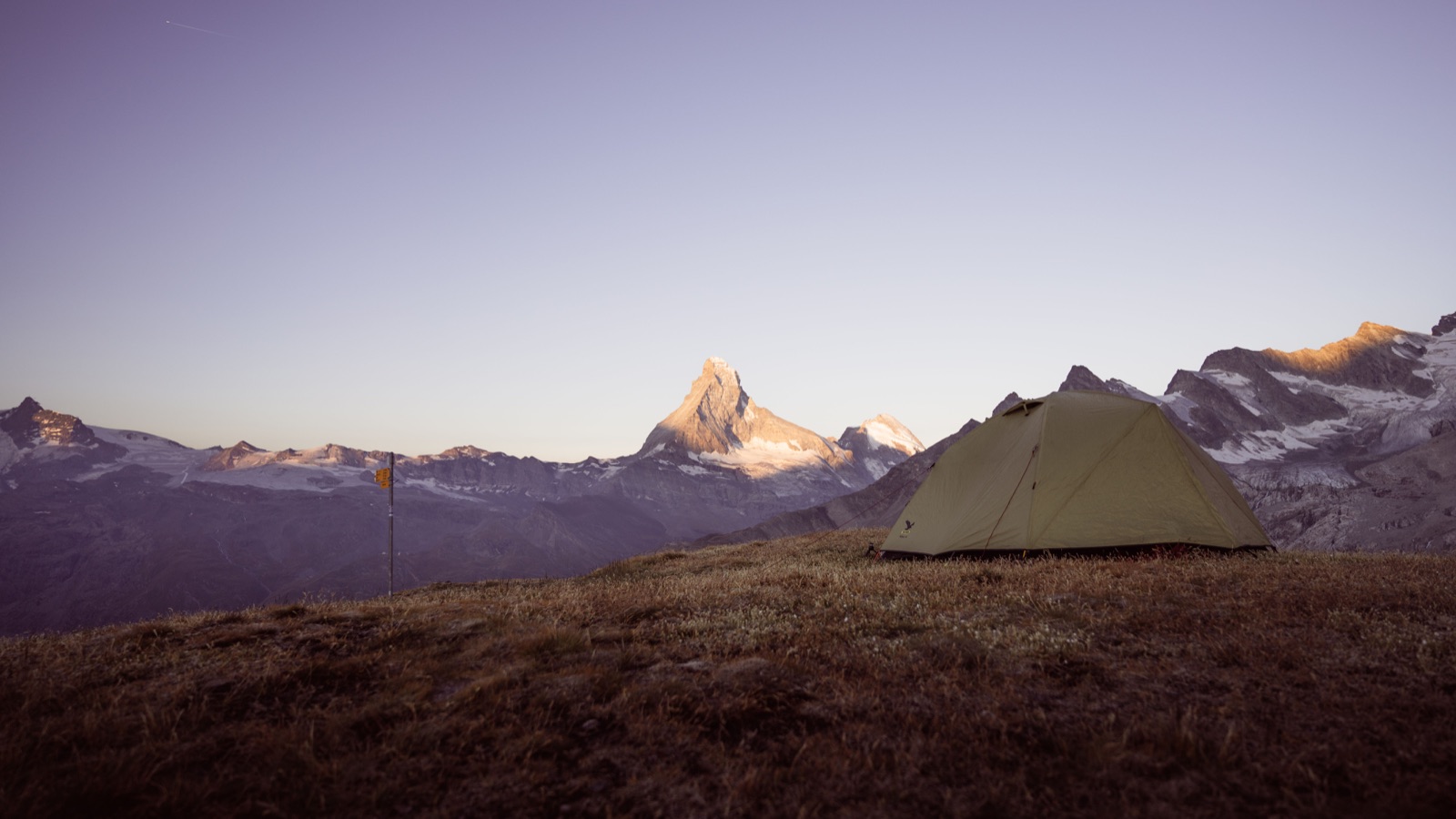
A backpacking tent is a shelter built to be carried: light enough to live in your pack for a whole trip, small enough to pitch on a cramped site, and strong enough for wind and rain. Choosing one is mostly a trade between weight, room and how easy the tent is to set up. This guide walks through the types, the numbers on the spec sheet and which design suits which hiker.
What a backpacking tent has to do
A car-camping tent only travels from the trunk to the site. A backpacking tent rides on your back for every mile, so a pound saved here is felt all day. At the same time it still has to keep you dry, keep bugs out and give you enough floor to sleep without touching wet walls.
Most backpacking tents are 3-season tents: built for spring, summer and fall, with plenty of mesh in the inner tent for airflow and a separate waterproof rainfly over the top. They are not designed to carry a snow load. If you plan trips in deep winter or above treeline in storms, look at 4-season tents instead.
Types of backpacking tent
Freestanding dome tents
A freestanding tent stands up on its own poles before you stake it. You can pitch it on rock or a wooden platform, pick it up to shake out dirt and move it if the spot is lumpy. Most use a hubbed aluminum pole set and a double-wall design: a mesh inner tent plus a rainfly. They are the easiest place for a beginner to start, but the poles add weight.
Semi-freestanding tents
These use fewer or shorter poles and need a stake or two at one end to hold their full shape. They shave a few ounces from a full dome and still pitch quickly, but they are less happy on hard ground where stakes won't go in.
Trekking-pole tents
A trekking-pole tent uses your hiking poles as its main supports. With no tent poles to carry, these are often the lightest double-wall shelters you can buy. Durston Gear's X-Mid 2, for example, has a 92 by 52 inch floor, and Durston's pages list about 31 to 35 oz (roughly 890 to 1,005 g) for the complete tent, depending on the version. The catch: a trekking-pole tent must be staked out to stand at all, and pitching it tightly takes some practice.
Single-wall shelters
A single-wall tent combines the fly and the tent body into one waterproof layer. That saves weight and packing space and is common among ultralight hikers. The trade-off is condensation: the moisture you breathe out collects on the inside of the only wall, so good venting matters more.

Backpacking tent types compared
| Type | Typical weight | Pitch | Best for | Main trade-off |
|---|---|---|---|---|
| Freestanding dome | Heaviest of the four | Easy, stands on its poles | Beginners, rocky or platform sites | Pole weight |
| Semi-freestanding | A little lighter | Easy, needs a few stakes | Most 3-season trips | Weaker on hard ground |
| Trekking-pole tent | Often the lightest double-wall | Takes practice, needs stakes | Hikers who already use poles | Fussier pitch |
| Single-wall shelter | Very light | Varies | Ultralight hikers | Condensation |
What to look at on the spec sheet
Weight: minimum vs packaged
Tent makers list two weights, and the gap between them can be several ounces. MSR, following the ASTM F1934 standard, defines minimum weight as the tent body, rainfly and poles only, and packaged weight as everything in the box as sold, including stakes, guylines and stuff sacks. What you carry usually lands between the two, because most hikers bring stakes and guylines but leave some extras at home.
To put numbers on it, MSR lists the Hubba Hubba LT 2 at a minimum weight of 3 lb (1.36 kg) and a packaged weight of 3 lb 6 oz (1.54 kg). Compare the same kind of weight across tents, never a minimum weight against a packaged one.
Capacity and floor area
The person rating assumes people lying shoulder to shoulder with little room for gear. Floor area in square feet tells you more. As an example of how capacity scales, MSR's Hubba Hubba LT 1 lists 20 sq ft of floor with a 39 in peak height, while the LT 2 lists 32 sq ft and a 40 in peak.
1 person tent or 2 person tent?
A one person tent is the lightest choice for solo hikers and fits small, uneven sites. Using MSR's numbers again, the LT 1 has a minimum weight of 2 lb 6 oz (1.07 kg), about 10 oz less than the LT 2. Many solo hikers decide the extra floor of a 2-person tent is worth that weight, especially in wet weather when you want your pack and boots inside. For two hikers sharing, see the 2 person tent guide.
Peak height, doors and vestibules
Peak height is the tallest point inside. Many 2-person backpacking tents have a peak around 40 inches, but walls often taper fast toward the ends, so the usable headroom is smaller than the peak. Two doors mean two people can get in and out without climbing over each other. A vestibule is the covered space between the inner tent and the rainfly, outside the floor, where you keep boots and a pack dry. MSR lists 8 sq ft of vestibule for the LT 1 and 16 sq ft across the two vestibules of the LT 2.
Fabrics and waterproofing
Fabric thickness is given in denier (D), a measure of yarn weight: lower numbers are lighter and less abrasion resistant. Backpacking tents usually use thin ripstop nylon or polyester for the fly. Waterproof coatings are rated by hydrostatic head in millimeters, the height of a column of water the fabric holds back before it leaks. MSR, for instance, lists 20D ripstop nylon for the LT 2, with a 1200 mm coating on the rainfly and 1800 mm on the floor. Floors usually carry the higher rating because you kneel and lie on them. Light floors wear faster on rough ground, which is why many hikers add a footprint or a thin groundsheet.
Which backpacking tent suits whom
- First backpacking trips: a freestanding or semi-freestanding double-wall tent. It pitches the same way every time and forgives mistakes.
- Solo hikers counting ounces: a 1-person semi-freestanding tent or a trekking-pole shelter, if you already hike with poles.
- Couples or hikers with a dog: a 2-person tent with two doors and two vestibules, or a 3-person tent if you want space to sort gear inside.
- Long-distance hikers: the lightest backpacking tent designs, trekking-pole or single-wall, once you are comfortable pitching them in bad weather.
- Hikers in forests with good trees: a hammock can replace the tent altogether; see camping hammocks.
Pitching and caring for a backpacking tent
Practice pitching at home before your first trip, especially a trekking-pole tent. On the trail, Leave No Trace recommends camping on durable surfaces such as established sites, rock, gravel or dry grass, and keeping camp about 200 feet from lakes and streams. Check the rules of the land agency in charge, which can be stricter.
Keeping it working for years
- Dry it before storage. Pack it wet if you must, but set it up or hang it to dry within a day or two at home so the coatings don't mildew.
- Store it loose. Keep it in a breathable bag rather than compressed in its stuff sack.
- Clean gently. Sponge off dirt with water; follow the care instructions on your product rather than using a washing machine.
- Mind the zippers and poles. Close zippers before you tension the tent, and fold shock-corded poles from the middle so the cord isn't stretched.
Never cook inside
Don't run a stove, heater or fuel-burning lantern inside your tent or its vestibule. MSR's stove instructions warn that the stove "can produce carbon monoxide, which has no odor," and say never to use it in an enclosed space such as a tent or vestibule. Cook outside and well away from the fabric.

The short version
Decide first how many people will sleep in the tent and how you like to pitch it. Then compare floor area, peak height and the same kind of weight across a few tents, and choose the lightest one that gives you room to sit up and keep your gear dry. For more shelter options, browse the tents section.
Questions
How much should a backpacking tent weigh?
There is no single right number, but light 2-person tents often list 2 to 3 pounds: MSR gives a 3 lb minimum weight for the Hubba Hubba LT 2, and Durston lists about 31 to 35 oz for the X-Mid 2, depending on the version. Trekking-pole shelters are usually the lightest, because your hiking poles replace the tent poles.
What is the lightest kind of backpacking tent?
Single-wall and trekking-pole shelters are usually the lightest designs, since they drop a separate inner tent or the pole set. They save weight at the cost of more condensation or a fussier pitch.
Is a 1 person tent or a 2 person tent better for solo backpacking?
A 1-person tent is lighter and fits smaller sites. Many solo hikers choose a light 2-person tent instead for room to keep a pack and wet gear inside; in MSR's Hubba Hubba LT line the difference is about 10 ounces.
What is a trekking pole tent?
A tent that uses one or two trekking poles as its main supports instead of dedicated tent poles. It must be staked out to stand, and it suits hikers who already walk with poles.
What is the difference between minimum weight and packaged weight?
Minimum weight is usually the tent body, rainfly and poles only. Packaged weight is everything in the box, including stakes, guylines and stuff sacks, and is closer to what you will actually carry.
Sources (7)
- MSR — Hubba Hubba LT 1 tent specifications
- MSR — Hubba Hubba LT 2 tent specifications
- MSR — FAQ: minimum weight and packaged weight
- Durston Gear — X-Mid 2 tent specifications
- Durston Gear — Second-generation X-Mid 2 changes
- Leave No Trace — Principle 2: Travel and camp on durable surfaces
- MSR — XGK-EX stove instructions (carbon monoxide warning)
Read next
Sleeping pads: how to choose a camping mat for warmth and comfort
Air, self-inflating or foam: how to pick a sleeping mat with the right R-value, size and weight for the way you camp.
2 person tents: how to choose one for two people and their gear
Floor width, doors, weight and weatherproofing: what decides whether a two-person tent really fits two people.
Camping hammocks: how to choose a hammock to sleep in outdoors
Gathered-end, all-in-one hammock tents and lay-flat designs: what to compare, how to hang one and what you need to stay dry and warm.