Checklist
Backpacking checklist: what to pack for a night or a weekend on the trail
Everything you carry on your back for an overnight or weekend trip, grouped by system, with the Ten Essentials built in.
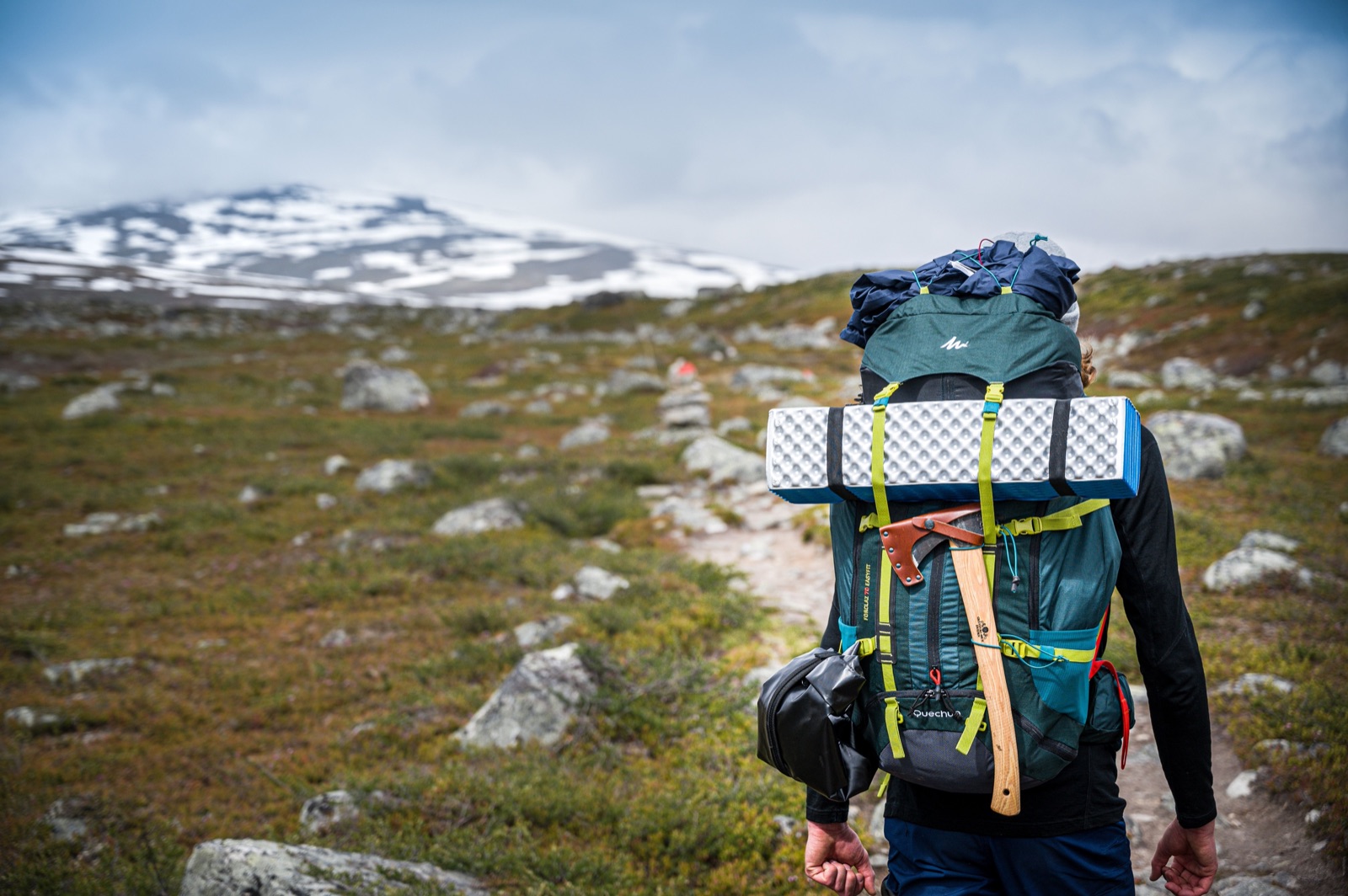
This backpacking checklist covers one to three nights on the trail in spring, summer or fall, with everything carried on your back. Each item has to earn its weight, so the list is shorter than a camping checklist for a campground, but nothing on it is optional decoration. The National Park Service's Ten Essentials are built into the groups below.
Before you go, check the rules for the area: permits, where you may camp, fire rules and food storage requirements. Leave No Trace's first principle is to plan ahead and prepare, including for weather and emergencies.
Pack
- Backpack, usually 30 to 50 liters for an overnight with compact gear, fitted to your torso length; see the backpacks section
- Pack liner or a large trash bag to keep gear dry
- Pack rain cover (optional if you use a liner)
- Stuff sacks to keep small items together
Shelter
- Tent or shelter, with poles, stakes and guylines
- Footprint if your tent floor is thin (optional)
- Trekking poles if your shelter pitches with them, or for support on rough ground
The NPS counts emergency shelter among the Ten Essentials: on a day hike that might be a space blanket or bivy; on a backpacking trip your tent covers it.
Sleep
- Sleeping bag or quilt with a comfort rating at or below the expected low
- Sleeping pad with an R-value of 2 or more for 3-season ground; the pad matters as much as the bag on cold ground
- Inflatable pillow or a stuff sack filled with clothes
See the sleep systems section for temperature ratings and R-value.
Kitchen and food
- Stove and fuel; cook outside the tent, never inside, as the CPSC warns about carbon monoxide from camping stoves in tents
- Lighter, plus waterproof matches or a second lighter as a backup
- One pot, enough for boil-only meals
- Spoon (long-handled for eating from bags) and a mug
- Food for every meal, plus snacks
- An extra day's food: the NPS suggests no-cook, salty, easy-to-digest food such as nuts and bars
- Bear canister, food bag and cord, or whatever the area requires
- Small trash bag to pack out wrappers and scraps
Food storage at night
In bear country, keep your cooking area and your food well away from where you sleep. NPS pages give different distances (200 feet on one, 100 yards on another), so follow the rules for the area you are in: many parks require a bear canister, a bear box or a specific way to hang food. Where you hang food, the NPS describes a sack hung by a rope above the ground and away from the tree trunk. Don't sleep in the clothes you cooked in.
See the camp kitchen section for stoves, fuel and backpacking food.
Water
- Water bottles or a reservoir
- Water filter, purifier or treatment tablets, with a backup method
- Map notes on where the water sources are; the NPS suggests identifying water sources at your destination before you go
Washing and toilet
- Small amount of biodegradable soap; Leave No Trace says to wash at least 200 feet from lakes and streams and to scatter strained dishwater
- Trowel for cat holes, dug 6 to 8 inches deep and at least 200 feet from water, camp and trails
- Toilet paper and a bag to pack it out
- Hand sanitizer
Clothing
Layers to wear and carry
- Moisture-wicking shirt and hiking pants or shorts
- Warm insulating layer: fleece or a light insulated jacket
- Rain jacket, which doubles as a wind layer
- Rain pants for wet forecasts
- Warm hat and light gloves; nights cool fast, even in summer
- Sun hat
Feet and sleep
- Broken-in hiking boots or trail shoes
- Hiking socks plus one dry pair for camp and sleeping
- Camp shoes (optional, light sandals)
- Dry base layer kept only for sleeping
The NPS suggests packing one more layer than you expect to need, for the worst conditions you might meet.

Navigation and safety
- Map of the area and a compass; learn to use them before you go
- Phone or GPS with offline maps, plus a power bank; the NPS says to bring a physical map as a backup
- Headlamp with spare or charged batteries
- First-aid kit and any medications you take; carry it and know how to use it
- Repair kit: knife or multi-tool, duct tape, a few safety pins, a pad patch kit
- Fire starter, where fires are allowed
- Sunscreen, sunglasses and lip balm
- Insect repellent
- Whistle
- Trip plan left with someone at home
Personal items
- Toothbrush and small toothpaste
- ID, permit and a little cash
- Car key in a zipped pocket
What people forget
- The lighter, or a backup for it
- The headlamp's charge, or spare batteries
- Tent stakes after drying the tent at home
- Water treatment
- The permit
- A dry layer kept only for sleeping
- A bag for packing out trash
What to leave at home
- Camp chairs, coolers, lanterns and large cookware: they belong to car camping
- Glass jars and cans
- Duplicate items: one pot, one knife, one light per person
- Cotton clothing for cold or wet trips, since it usually dries slowly
- Anything you cannot pack back out
Before you hit the trail
- Lay everything out on the floor and check it against this list.
- Pack heavy items close to your back and between your shoulder blades, with the things you need during the day on top or in pockets.
- Weigh the pack and try it on, walking for a few minutes with the hip belt tight.
- Check the forecast and the area's current alerts the day before you leave.
For your first night out, a short trail and a known campsite make the list easy to test. You can find more on camping for beginners.
Questions
What are the backpacking essentials?
A pack, a shelter, a sleeping bag and pad, a stove with fuel, water and a way to treat it, food, clothing layers and rain gear, and the Ten Essentials: navigation, sun protection, extra clothing, illumination, first aid, fire, repair kit and tools, extra food, extra water and emergency shelter.
What size backpack do I need for an overnight trip?
Usually 30 to 50 liters for one or two nights with compact gear, and more if your sleeping bag and tent are bulky or the trip runs longer. The pack should fit your torso length.
How is a backpacking checklist different from a camping checklist?
It has fewer and lighter items, because you carry everything. Chairs, coolers, lanterns and spare cookware stay home, and a water filter, a smaller first-aid kit and a way to store food away from wildlife come along.
How should I store food overnight in the backcountry?
Follow the rules for the area you are in, which may require a bear canister or a food locker. Where there is no rule, the National Park Service advises hanging food in a sack well away from your tent and from tree trunks.
Read next
How to pack a backpack for hiking and backpacking
Heavy gear close to your back, light gear at the bottom, what you need often on top. A step-by-step method for a pack that carries comfortably.
Camping checklist: everything to pack for a weekend at a campground
The full packing list for camping by the car, grouped the way you will pack it, plus the things most often left at home.
Headlamps: how to choose one by lumens, beam, run time and batteries
Lumens, beam distance, run time and power source: how to read a headlamp spec sheet and pick the right light for camp and trail.