Buying guide
Trekking poles: how to choose adjustable, folding or fixed hiking poles
Pole type, shaft material, locks, grips and length: what to compare before you buy trekking poles, and how to keep them working.
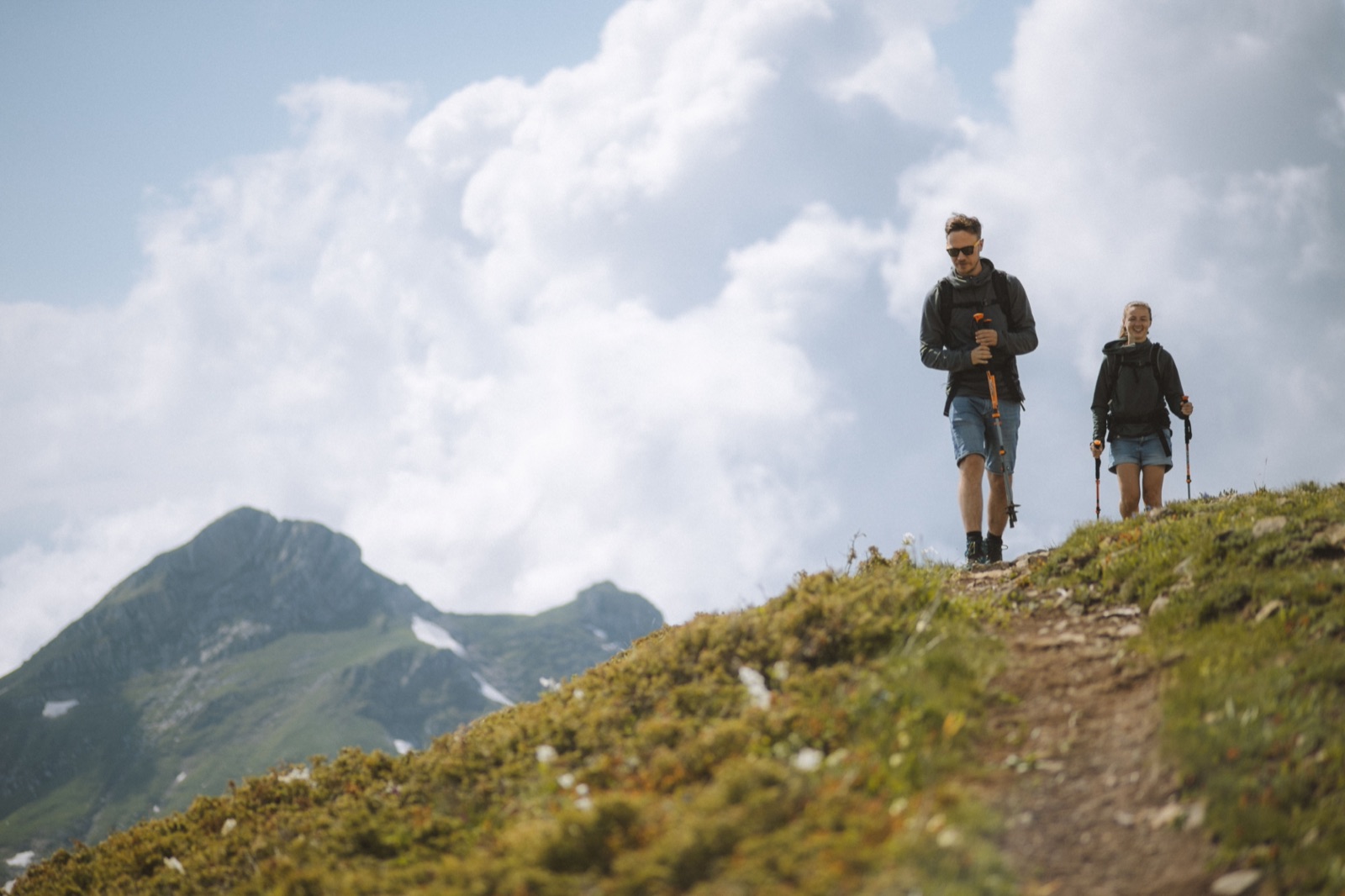
Trekking poles are a pair of light, adjustable walking poles with grips, wrist straps and hard tips. They give you two extra points of contact on loose ground, let your arms share the work on long descents, and help you keep a steady rhythm on climbs. Many backpackers also use them to pitch trekking-pole tents. This guide explains the types of trekking poles, what to compare, how to size them and how to look after them.
What trekking poles do
Poles help most where the ground is uneven or steep: stream crossings, rocky descents, mud and snow. In a 1999 lab study of eight men walking down a 25-degree ramp, measured knee joint forces were 12 to 25 percent lower with hiking poles than without.
On flat, smooth trails poles matter less, and some hikers prefer to walk without them.
Types of trekking poles
| Type | How it works | Strengths | Trade-offs | Suits |
|---|---|---|---|---|
| Telescoping (adjustable) | Two or three sections slide inside each other and lock | Length adjusts for climbs, descents and tent pitching | Longer when packed than folding poles | Most hikers and backpackers |
| Folding (collapsible) | Sections connected by an inner cord snap together like tent poles | Packs very short, quick to deploy | Often fixed length or only a short adjustment range | Fast hikers, trail runners, travel |
| Fixed length | One-piece or set length | Simple, light, stiff | Must be bought in the right size, awkward to pack | Ultralight hikers who know their length |
| Hiking staff | A single pole, often with a camera mount | One hand free, light | Less balance than two poles | Easy trails, day hikes |
Adjustable hiking poles and lock types
Adjustable hiking poles use one of two lock styles:
- Lever locks (also called clamp or flick locks) close with a clip on the outside of the shaft. They are easy to check at a glance and to adjust with gloves on.
- Twist locks tighten an expander inside the shaft when you twist the sections. They are slim and light but can slip if not tightened fully, and they are harder to work with cold or wet hands.
Some poles combine the two: a lever lock on the top section for quick adjustment and a folding lower half for a short packed length.
Collapsible hiking poles
Folding poles pack small enough to fit inside a pack or a suitcase. Check the packed length and whether there is a short adjustment range at the top; without it you need to buy the right length.
What to look at before you buy
Shaft material: aluminum or carbon
- Aluminum trekking pole: a little heavier, usually cheaper, and tends to bend rather than snap under a sideways load, so it can often be straightened enough to finish a trip.
- Carbon fiber: lighter and damps vibration well, but costs more and can crack or splinter if it is levered between rocks.
Weight matters most for long trips, where you swing each pole forward with every step all day. For occasional hikes, durability and price may count for more.
Grips
Grip material changes how the pole feels on a hot day or a long descent. LEKI's grip guide lists cork grips on several of its trekking poles, including the Makalu and Cressida Cork Lite models, foam grips with an extension below the main grip for steep ground, and rubberized grips that stay tacky when wet. In general, and depending on the model:
- Cork usually wicks moisture from sweaty hands and molds to your grip over time.
- Foam is light, soft and absorbs moisture.
- Rubber insulates in cold weather but can rub in heat.
An extended grip below the main handle lets you choke down on the pole for short climbs or traverses without changing its length.
Straps
A well-adjusted strap lets you push down through the strap rather than squeezing the grip, which is less tiring. Look for straps that adjust easily and don't chafe; LEKI, for example, offers adjustable loop straps on many models and strapless clip-in systems on others.
Tips and baskets
Most poles come with carbide tips that bite into rock and ice, small trekking baskets that stop the pole sinking into mud, and sometimes rubber tip covers for pavement and rock. Bigger snow baskets are sold for winter use. A 2001 article by USGS researchers reviewed the environmental and social impacts of trekking poles and ways to change how poles are designed or used to reduce them. On hard, busy trails, rubber tip covers and keeping the tips on the trail tread are simple ways to leave fewer marks.
Length range and packed length
Check that the pole's adjustment range covers your flat-ground length with a few inches to spare, since LEKI suggests lengthening poles by about 2 to 4 inches for descents. Tall hikers in particular should check the maximum length before buying. Packed length matters if you carry the poles on the pack or fly with them.

How to size and use trekking poles
- On flat ground, wearing your hiking shoes, grip the pole with the tip on the ground and set the length so your forearm is level and your elbow bends at about 90 degrees. LEKI gives this as the starting point.
- Shorten the poles by about 2 to 4 inches for long climbs and lengthen them by about as much for long descents.
- Put your hand up through the strap from below, then grip the pole and strap together so the strap carries some of your weight.
- On flat ground, plant each pole as the opposite foot steps forward; on descents, plant them ahead of you.
LEKI's online pole length advisor suggests a starting length from your height (30 to 90 inches) and activity, and says the result is a general recommendation: body proportions, terrain, footwear and preference all change what feels right.
Which poles suit whom
- Day hikes and walking poles for easy trails: an inexpensive aluminum telescoping pair, or a single staff.
- Backpacking: an adjustable pair with lever locks, light enough to carry all day. If you use a trekking-pole tent, check the length range covers the tent's pitching height. See the backpacking checklist.
- Fast hiking and travel: folding poles with a short packed length.
- Snow or rough ground: sturdy aluminum poles with snow baskets.
How to care for trekking poles
- After a trip, LEKI says to pull telescoping poles apart and let the sections air-dry separately to prevent oxidation inside the shafts, then reassemble them.
- Wipe the poles with a dry cloth. LEKI says not to use lubricants, oils or grease on its poles.
- Store them dry and in a cool place.
- Check tips, baskets, straps and locks before each trip and replace worn parts; most makers sell tips, baskets and lower sections as spare parts.
- Tighten or adjust lever locks according to the maker's instructions if they start to slip.
For the rest of the gear, see the camp tools section and the camping checklist.
Questions
How do I know what length trekking poles I need?
Stand on flat ground with the pole tip by your foot and hold the grip: your elbow should bend at about 90 degrees. Most adjustable poles let you fine-tune from there, shorter for climbs and longer for descents.
Are carbon trekking poles better than aluminum?
Carbon poles are lighter and feel less buzzy on rock, but they cost more and can crack or splinter under a sharp sideways load. Aluminum poles are a little heavier and tend to bend rather than break, which many hikers prefer for rough terrain.
How should I set trekking poles for a descent?
Lengthen both poles a few inches from your flat-ground setting so you can plant them ahead of you without leaning forward. LEKI suggests about 2 to 4 inches for descents, and shortening them by the same amount for climbs.
Should I use one trekking pole or two?
Two poles give balanced support and are what most hikers use for backpacking. A single pole or hiking staff is lighter and leaves a hand free, which suits easy trails and day hikes.
Sources (6)
- LEKI USA — How to use trekking poles correctly
- LEKI USA — Pole length advisor
- LEKI USA — Grip guide
- LEKI USA — Product care: poles
- Schwameder et al., Knee joint forces during downhill walking with hiking poles, Journal of Sports Sciences (1999)
- USGS — Marion et al., Trekking poles: can you save your knees and the environment? (2001)
Read next
Hiking backpacks: how to choose a pack for day hikes and overnights
One pack for short hikes, long day hikes and the occasional night out: what size to pick, how it should fit and which features earn their weight.
Backpacking checklist: what to pack for a night or a weekend on the trail
Everything you carry on your back for an overnight or weekend trip, grouped by system, with the Ten Essentials built in.
Camping checklist: everything to pack for a weekend at a campground
The full packing list for camping by the car, grouped the way you will pack it, plus the things most often left at home.