Buying guide
Hiking backpacks: how to choose a pack for day hikes and overnights
One pack for short hikes, long day hikes and the occasional night out: what size to pick, how it should fit and which features earn their weight.
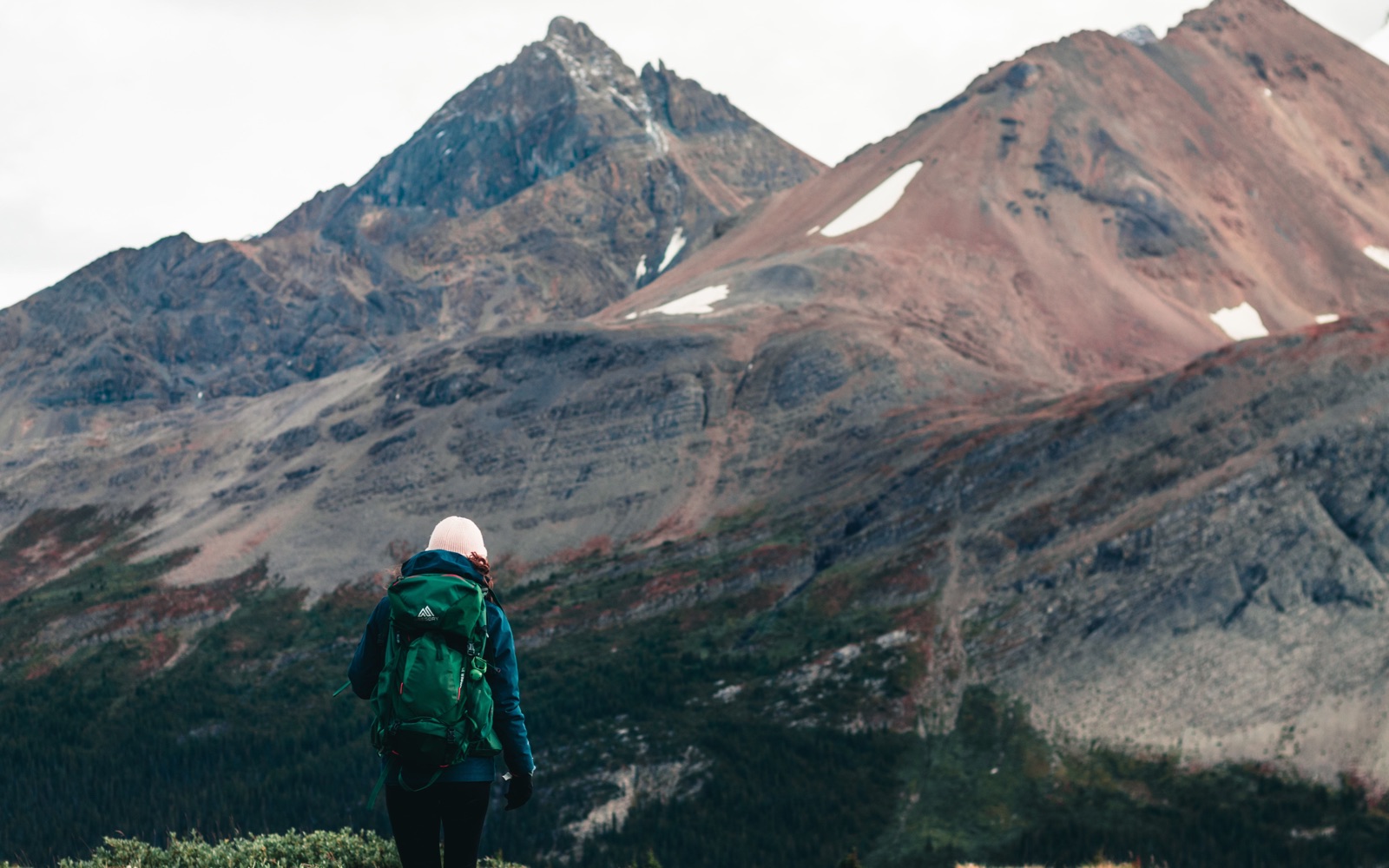
A hiking backpack is the pack you grab for most trail days: big enough for water, food, a rain jacket and the rest of the essentials, and for many people also the pack for an easy night out. This guide covers the whole range from small day packs to roughly 50 liters, how a hiking backpack should fit, and which features matter. If you are planning trips of several nights with a tent and stove, read the guide to backpacking backpacks, which deals with heavier loads and frames.
What a hiking backpack has to do
On a day hike the pack carries what the National Park Service calls the ten essentials: navigation, sun protection, extra clothing, a headlamp, first-aid supplies, fire starters, a repair kit, extra food, water and emergency shelter. None of that is heavy on its own, but together with two or three liters of water it adds up. The pack's job is to hold all of it close to your back, keep the weight from swinging, and let your back breathe on a warm climb.
Three things decide whether a pack does that job well: the capacity in liters, how the pack fits your torso, and how the frame and hip belt handle the weight you actually carry.
Types of hiking backpacks
Hiking packs fall into three broad groups by size. The limits blur between brands, but the uses stay the same.
Small hiking packs (15 to 25 liters)
A small hiking rucksack carries the essentials, water and lunch for a few hours on the trail. Most have a light back panel, a simple webbing waist strap or a removable belt, and side pockets for bottles. Deuter's Speed Lite 21, for example, holds 21 liters, weighs 470 g (about 1 lb) and has a recommended load of 2 to 5 kg (roughly 4 to 11 lb).
Mid-size hiking packs (25 to 35 liters)
This is the most versatile size for long day hikes, cool-weather hikes with extra layers, or hiking with kids when one adult carries the shared gear. Packs here usually add a framesheet or wire frame and a padded hip belt. Deuter's Futura 27 holds 27 liters, weighs 1,250 g (about 2 lb 12 oz), uses a spring-steel frame with a mesh back that leaves a gap for air, takes a hydration reservoir up to 3 liters, includes a rain cover and is rated for 4 to 8 kg (about 9 to 18 lb).
Large hiking packs (35 to 50 liters)
A pack around 40 liters can carry a full day of gear in cold weather or a light overnight kit: sleeping bag, pad, small shelter and a simple stove. The Gregory Zulu 40 is a typical example: 40 liters, 1.57 kg (about 3 lb 7 oz) in size M/L, a tensioned-mesh back panel, a U-shaped zip that opens the main compartment, a rain cover and a recommended maximum carry of 18 kg (about 40 lb).
Comparison table
| Type | Typical capacity | Frame and belt | Usual load | Best for |
|---|---|---|---|---|
| Small hiking pack | 15–25 L | Light back panel, webbing or removable belt | Light: water, snacks, a layer | Short and half-day hikes |
| Mid-size hiking pack | 25–35 L | Framesheet or wire frame, padded belt | Moderate | Full-day hikes, extra layers, family gear |
| Large hiking pack | 35–50 L | Frame, padded belt, load lifters | Heavier, up to a light overnight kit | Long days, cold weather, one-night trips |
| Backpacking pack | 50 L and up | Full frame, heavy-duty belt | Multi-day loads | Several nights out (see the backpacking guide) |

How a hiking backpack should fit
Measuring your torso length
Pack sizes follow your torso length, not your height. Gregory measures it from the C7 vertebra, the bony bump at the base of your neck when you tilt your head forward, down to the top of your hip bones (the iliac crest). Ask someone to hold a soft tape on C7, find the top of your hip bones with your thumbs pointing back, and read the tape at that level. Then compare the number with the maker's size chart: the Zulu 40, for instance, is sold in S/M for 38 to 48 cm (about 15 to 19 inches) and M/L for 46 to 56 cm (about 18 to 22 inches).
Trying a pack on
When you try a pack on, Gregory suggests loading it with at least 10 to 20 lb (4.5 to 9 kg) first, so the straps settle the way they will on the trail.
What to check
- Hip belt: the padded part sits over your hip bones, with its top edge about an inch above the iliac crest.
- Shoulder straps: they wrap smoothly over your shoulders and start curving onto your back about 3 inches (8 cm) below the top of the shoulder, with no gap.
- Sternum strap: clipped across your chest at about heart height, snug but not pulling the straps inward or restricting your breathing.
On packs of about 35 liters and up you will also find load lifters; the backpacking backpacks guide covers them and the full harness adjustment.
Women's and men's hiking backpacks
Many hiking backpacks come in women's and men's versions. Women's versions usually have shorter torso ranges, narrower and differently curved shoulder straps, and a hip belt angled for wider hips. Go by your measurements and the fit on your body rather than the label; if the other version fits you better, use it.
What to look at when choosing
Capacity
Pick the smallest pack that fits your bulkiest kit, which is usually your cold-weather kit. A pack that is too big tempts you to fill it, and a half-empty large pack sags. If you need one pack for both long day hikes and an occasional night out, 35 to 45 liters covers both, provided your overnight gear is compact.
Weight and recommended load
Makers list two numbers worth comparing: the pack's own weight and its recommended or maximum load. A light pack with a thin belt is designed for light loads; push it past its rating and the weight moves onto your shoulders. A heavier pack with a frame and padded belt pays back its extra weight when you carry more.
Back panel and ventilation
Packs either sit flat against your back with foam pads and air channels, or use a tensioned mesh panel that holds the pack a little away from you. Mesh panels breathe better on hot climbs; flat foam panels keep the load closer and tend to feel more stable on rough ground.
Access and pockets
Top-loading packs are simplest. A U-shaped or front zip lets you reach gear at the bottom without unpacking. Hip-belt pockets hold a phone and snacks, stretch side pockets take bottles you can reach while walking, and a front stretch pocket holds a wet rain jacket away from dry gear.
Water
Most hiking backpacks have a sleeve and port for a hydration reservoir, as both the Futura 27 and Zulu 40 do, plus side pockets for bottles. A reservoir lets you sip without stopping; bottles are easier to refill and to check how much you have left. If you prefer drinking on the move, also look at our guide to hydration packs.
Weather protection
Pack fabrics are usually water-resistant, not waterproof: seams and zips let water in during steady rain. A rain cover, included with some packs, keeps the outside dry; a liner bag inside keeps your spare layers dry even when the cover slips.
Which hiking backpack suits whom
- Short hikes, warm weather: a small pack around 15 to 25 liters, light and simple. See daypacks for more on this size.
- Long day hikes and changeable weather: 25 to 35 liters with a padded hip belt and a ventilated back.
- Families: the adult carrying shared water, food and layers usually needs 30 liters or more.
- Day hikes plus the odd overnight: 35 to 50 liters with a frame and load lifters, paired with compact sleeping gear.
- Several nights out with a tent and stove: move up to a backpacking backpack built for the heavier load.
Care and storage
Empty the pack after every hike, shake out crumbs and grit, and leave it open to dry before storing it, especially the hydration sleeve and back panel. Wipe off dirt with a damp cloth and mild soap rather than putting the pack in a washing machine, unless the maker's care instructions allow it. Store it loose in a dry place out of direct sun, with buckles undone and straps loose. Before a season starts, check buckles, zips and the stitching where the shoulder straps meet the pack.
For loading the pack so it rides well, see how to pack a backpack. More guides are in the backpacks section.
Questions
What size hiking backpack do I need?
For half-day and full-day hikes, 15 to 30 liters is usually enough. If you want one pack that also covers the occasional overnight with light gear, look at 35 to 50 liters; for longer trips, a dedicated backpacking pack carries the load better.
Is a hiking backpack for women different?
Many makers sell women's versions with shorter torso ranges, differently shaped shoulder straps and a hip belt cut for a different hip profile. Fit matters more than the label, so try both versions in the size that matches your torso length.
Do I need a hip belt on a hiking backpack?
On a small pack with a light load, a thin webbing belt or none at all is fine. Once you carry more than a few pounds for a long day, a padded hip belt moves the weight onto your hips and makes a clear difference to your shoulders.
What is a good light backpack for hiking?
Look at the maker's stated weight and recommended load together. A light daypack can weigh around a pound, but it is designed for light loads; a heavier pack with a frame sheet and padded belt carries more weight comfortably.
Read next
Trekking poles: how to choose adjustable, folding or fixed hiking poles
Pole type, shaft material, locks, grips and length: what to compare before you buy trekking poles, and how to keep them working.
Backpacking backpacks: how to choose a pack for multi-day trips
A multi-day pack has to carry a tent, a sleeping bag, food and water on your hips for hours at a time. Here is what to compare before you buy one.
Day hiking backpacks: how to choose a daypack for the trail
A daypack only has to carry a few hours' worth of gear, but it carries it every time you go out. What size to get and which details make the difference.