Buying guide
Backpacking backpacks: how to choose a pack for multi-day trips
A multi-day pack has to carry a tent, a sleeping bag, food and water on your hips for hours at a time. Here is what to compare before you buy one.
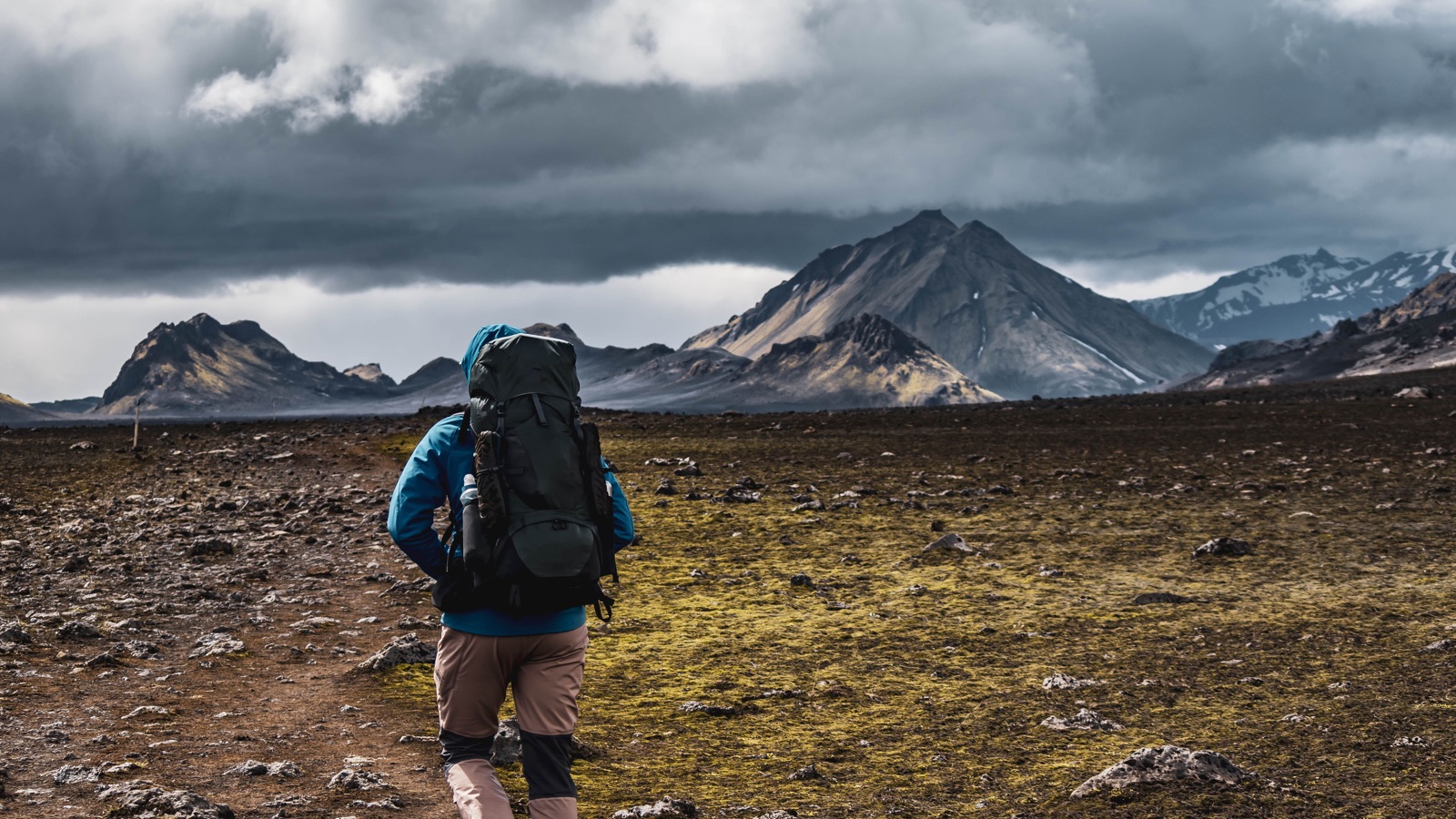
A backpacking backpack is built for one job: carrying everything you need for several days and nights on the trail, including shelter, sleeping bag, kitchen, food and water, and moving most of that weight onto your hips. That makes it a different tool from a hiking backpack for day trips. This guide covers capacity for multi-day trips, the frame types, how to fit the pack to your torso, and how to read the load ratings makers publish.
Why a backpacking pack is different
A day pack rarely carries more than water, food and a few layers. A multi-day load is much heavier. Cascade Designs plans food at about 2 to 2.5 lb per person per day and notes that a liter of water weighs 2.2 lb. Three days of food and a few liters of water already weigh more than most full day packs, before you add a tent, a sleeping bag and pad and a stove.
Shoulders tire quickly under that kind of weight; hips do not. A backpacking pack uses a stiff frame to transfer the load from the shoulder straps down to a padded hip belt, so your legs carry it. That frame, the hip belt and the fit to your torso matter more than any pocket or feature.
Capacity: how many liters for how many nights
Cascade Designs gives 45 to 65 liters as the size of an average backpacking pack. Where you land in that range depends less on trip length than on how compact your gear is:
- 40 to 50 liters: one to three nights with a compact down sleeping bag, a small shelter and a simple kitchen. A 40 liter backpack also works for longer trips if your kit is light.
- 50 to 65 liters: three to five nights, cooler seasons with more layers, a bear canister, or a bulkier synthetic bag.
- 65 liters and up: long stretches between resupply, winter gear, or a parent carrying gear for children.
A 65 liter backpack is a forgiving size for a first multi-day pack because it fits bulky beginner gear. If you plan to replace that gear with lighter, smaller items later, a pack in the 50s may serve you longer.
Types of backpacking backpacks
Internal frame packs
Most backpacking packs have an internal frame: aluminum stays, a steel or alloy perimeter wire, or a plastic framesheet hidden inside the back panel. The pack sits close to your back, which keeps the load stable on rough or steep ground. The Gregory Baltoro 65 is a heavy-duty example: 65 liters, 2.23 kg (about 4 lb 15 oz) in size M, an alloy steel frame, a front U-zip into the main compartment, a separate zippered sleeping bag compartment at the bottom, and a recommended maximum carry of 27.2 kg (about 60 lb).
Lightweight framed packs
A newer group of packs keeps a minimal frame, often a single stay or a hoop, and drops extra fabric and features. The ULA Circuit, for example, is listed at 68 liters of total volume including its pockets and extension collar, weighs 38.5 oz (1,092 g), uses a carbon fiber and Delrin hoop with a single aluminum stay, and is rated for loads up to 35 lb. Packs like this suit hikers whose gear is already light. Our guide to ultralight backpacks covers this end of the range.
External frame packs
An external frame backpack hangs the pack bag on a visible frame, traditionally aluminum tubing. The frame holds the load away from your back, which leaves an air gap, and offers lash points for bulky items. External frame packs tend to sway more on uneven trails and are less common today, but they still suit heavy, awkward loads on well-graded paths.
Comparison table
| Type | Typical capacity | Pack weight | Load it suits | Strengths | Trade-offs |
|---|---|---|---|---|---|
| Internal frame, full-featured | 50–75 L | Usually 4–5 lb or more | Heavy multi-day loads | Stable, well padded, many pockets and access points | Heaviest of the three |
| Lightweight framed | 40–70 L | Usually 2–3 lb | Moderate loads from light gear | Saves pounds, simple | Lower load limits, fewer features |
| External frame | Varies, usually large | Varies | Heavy, bulky loads on easy trails | Air gap at the back, many lash points | Less stable on rough ground, bulky |

Fit: torso length, hip belt and harness
Torso length and sizes
The right size depends on your torso length, measured from the C7 vertebra at the base of your neck to the top of your hip bones; the hiking backpacks guide explains how to measure it. Makers publish size ranges in inches or centimeters: the Baltoro 65 in size M fits torsos of 43 to 51 cm (about 17 to 20 inches); the ULA Circuit comes in torso sizes from 15–18 inches (S) to 24 inches and up (XL), with separate hip belt sizes from 26 inches upward.
Adjusting the harness
Gregory recommends putting 10 to 20 lb (4.5 to 9 kg) in the pack before fitting it, then checking these points in order:
- Hip belt first. Center the padded belt on your hip bones so its top edge sits about 1 inch (2.5 cm) above the iliac crest, and tighten it firmly.
- Shoulder straps. Pull them snug. They should wrap over the shoulder and meet your back about 3 inches (8 cm) below the top of the shoulder; if they start lower, Gregory suggests trying a larger size.
- Load lifters. These short straps run from the top of the shoulder straps to the pack. Tighten them to draw the top of the load toward you.
- Sternum strap. Clip it at about chest height, snug enough to steady the straps without pinching your breathing.
Shifting the load on the trail
You can also shift the weight as you walk: on long, flat stretches, Gregory suggests loosening the shoulder straps a little and tightening the load lifters to put more weight on the hips; on steep or technical ground, do the opposite.
Women's backpacking packs
Many backpacking packs also come in women's versions with shorter torso ranges, differently shaped shoulder straps and hip belts. Choose by torso length and hip size first, then try both versions loaded if you can.
What else to look at
Load rating
The recommended maximum load is the single most useful spec for a backpacking pack. Pick a pack rated comfortably above the heaviest load you expect, such as your first day out with full food and water. Makers also give rules of thumb for the total load relative to your body weight: Deuter's packing guide names 20 to 25 percent as a maximum, and VAUDE's suggests no more than 25 to 30 percent on longer trips. Treat them as makers' guidance, not personal advice.
Access
Top-loading packs with a drawcord are lightest. A U-zip or J-zip on the front panel lets you reach gear in the middle without emptying the top, and a sleeping bag compartment gives a separate door at the bottom.
Adjustable or fixed torso
Adjustable harnesses let you move the shoulder straps up or down to match your torso within a range. Fixed sizes save weight but leave no room for error, so measure carefully.
Hip belt and pockets
A wide, padded, firm hip belt is what carries the weight. Belt pockets for snacks and a phone save you from taking the pack off. Packs sold with hip belts sized separately from the torso, as the Circuit is, help people whose hip size and torso length don't match the usual pairing.
Fabric
Heavier nylon resists rocks and brush better, lighter fabric saves weight. Very few packs are fully waterproof at the seams and zips, so plan on a liner or rain cover either way.
Which backpacking backpack suits whom
- First multi-day trips with existing gear: a full-featured internal frame pack of 55 to 70 liters with an adjustable torso and a high load rating.
- Weekend backpackers with compact gear: 40 to 55 liters, internal frame or lightweight framed.
- Hikers cutting weight: a lightweight framed pack, once the rest of the kit is light enough to stay under its load limit.
- Heavy loads on easy trails: an external frame pack is still an option.

Care and storage
After each trip, empty every pocket and dry the pack fully before storing it loose in a dry, shaded place; clean it by hand following the maker's care instructions. Before each season, check buckles, hip belt padding and the seams where straps join the pack, and use the maker's repair or warranty service for damage to load-bearing parts instead of improvising.
Once your pack fits, loading it well makes the next difference: see how to pack a backpack. More guides are in the backpacks section.
Questions
What size backpacking backpack do I need?
Roughly 40 to 50 liters suits one to three nights with compact gear, 50 to 70 liters suits longer trips or bulkier sleeping bags and food for several days, and more than that is for winter kits or carrying gear for others.
Is a 40 liter backpack big enough for backpacking?
It can be for a night or two, or for longer if your sleeping bag, shelter and pad pack small. With a bulky synthetic bag, a large tent or a bear canister, most people need 50 liters or more.
Are external frame backpacks still worth it?
They still suit heavy, bulky loads on maintained trails and keep your back cooler because the pack sits away from you. Internal frame packs hug the body and are more stable on uneven ground, which is why most backpacking packs today use them.
How much weight can a backpacking backpack carry?
Check the maker's recommended maximum load. Among the framed packs in this guide it ranges from 35 lb for a lightweight design to about 60 lb for a heavy-duty one; carrying more than the rating puts the extra weight on your shoulders.
Read next
Backpacking checklist: what to pack for a night or a weekend on the trail
Everything you carry on your back for an overnight or weekend trip, grouped by system, with the Ten Essentials built in.
Hiking backpacks: how to choose a pack for day hikes and overnights
One pack for short hikes, long day hikes and the occasional night out: what size to pick, how it should fit and which features earn their weight.
Ultralight backpacks: frameless and minimal-frame packs explained
An ultralight pack saves pounds only if the rest of your gear is light enough for it. Here is how to tell whether you are ready for one and what to compare.