Buying guide
Ultralight backpacks: frameless and minimal-frame packs explained
An ultralight pack saves pounds only if the rest of your gear is light enough for it. Here is how to tell whether you are ready for one and what to compare.
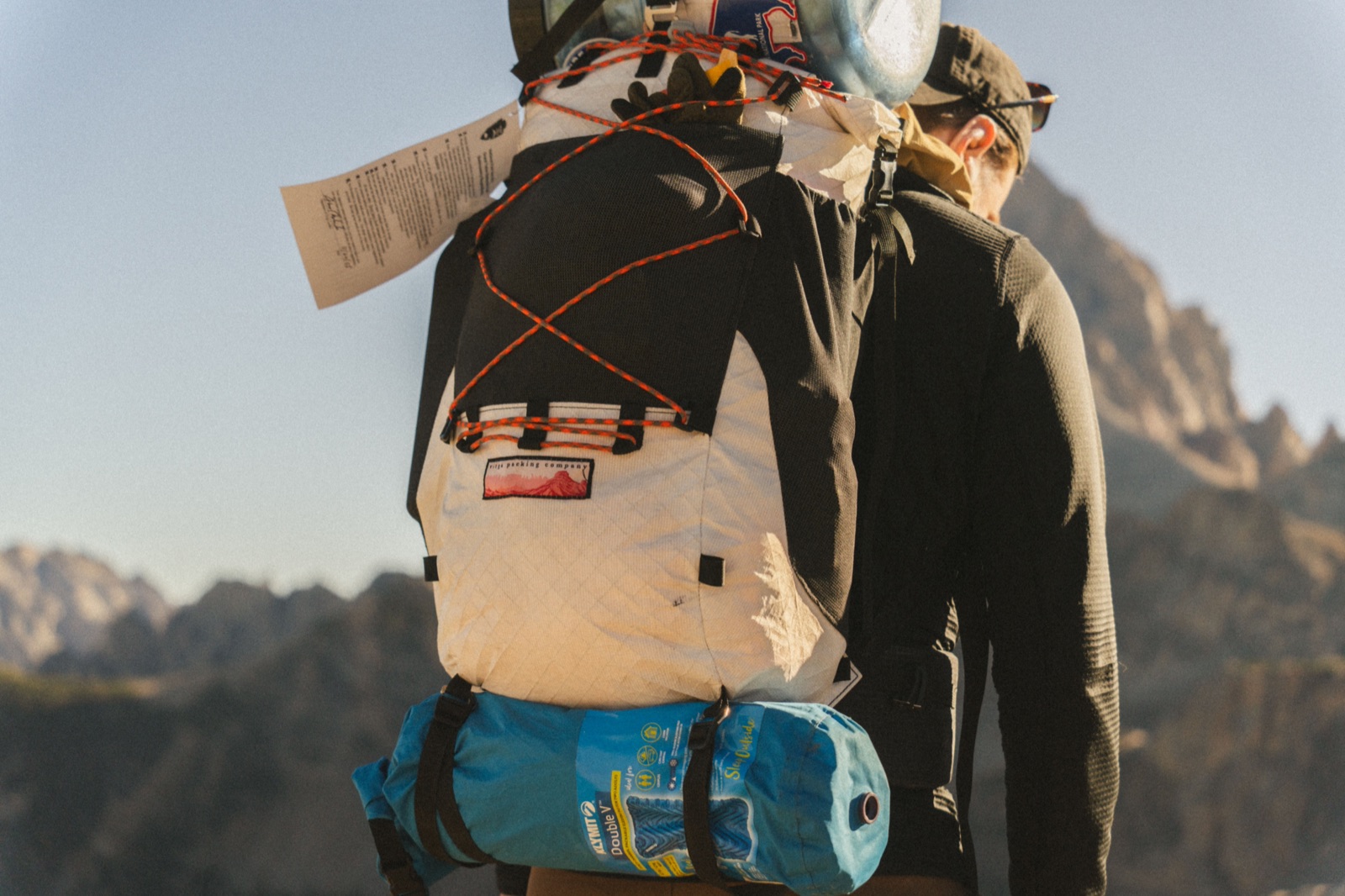
An ultralight backpack is a multi-day pack stripped to what carries the load: a light body, a minimal frame or none, and a few well-placed pockets. The examples below weigh between a quarter and a half as much as a conventional backpacking backpack, but they are also built for a lighter total load. This guide explains frameless and minimal-frame designs, how load limits and base weight fit together, and what to check before you switch.
How an ultralight pack saves weight
The difference shows up clearly in makers' specs. Gregory's Baltoro 65, a full-featured internal frame pack, weighs 2.23 kg (about 4 lb 15 oz) in size M and is rated for 27.2 kg (about 60 lb). ULA's Circuit, a lightweight framed pack listed at 68 liters of total volume, weighs 38.5 oz (1,092 g) and is rated for up to 35 lb. Gossamer Gear's frameless Kumo 36 weighs 18.9 oz (536 g) in size Small, and its maker rates it at 20 lb for comfort and 25 lb at most.
So the lighter the pack, the lower its load limit. An ultralight pack pays off only when your whole kit is light enough to stay under that limit with food and water on board.
Base weight: the number that decides
Base weight is everything you carry except consumables: food, water and fuel. Ultralight hikers track it because it stays the same each day while consumables shrink. There is no official threshold for "ultralight"; what matters is whether your base weight plus your heaviest day of food and water fits the pack's rating.
Cascade Designs plans food at about 2 to 2.5 lb per person per day and notes that a liter of water weighs 2.2 lb. With four days of food and two liters of water, consumables alone come to roughly 12 to 14 lb. Add that to your base weight and compare the total with the load ratings above: it shows quickly whether a frameless pack is realistic for your trips or whether a minimal-frame pack is the better fit.
Types of ultralight backpacks
Frameless packs
No stays, hoop or framesheet. The pack gets its structure from what you put in it, typically a folded foam sleeping pad against the back panel, and the hip belt, if any, is light. Frameless packs are the lightest option and pack down small, but they need a low total load and careful packing. The Kumo 36 is an example: 36 liters (28 L in the main body plus 8 L in the mesh and side pockets), with torso sizes of 17 to 19 inches and 19.5 to 21.5 inches.
Minimal-frame packs
A single aluminum stay, a carbon hoop, a perimeter rod or a removable framesheet gives the pack enough stiffness to transfer weight to a padded hip belt. The ULA Circuit uses a carbon fiber and Delrin hoop with a single aluminum stay and foam, and its hip belt comes in six sizes, chosen separately from the torso size. These packs handle long food and water carries more comfortably than frameless designs, for a small weight penalty.
Lightweight conventional packs
Many mainstream makers sell lighter versions of their framed backpacking packs: fewer zips, thinner fabric, simpler belts. They are a gentle step for hikers who want to cut weight without changing how they pack.
Comparison table
| Type | Example from makers' specs | Pack weight | Maker's load rating | Best for |
|---|---|---|---|---|
| Frameless | Gossamer Gear Kumo 36 (36 L) | 18.9 oz (536 g), size S | 20 lb comfort, 25 lb max | Very light kits, short resupply stretches |
| Minimal frame | ULA Circuit (68 L) | 38.5 oz (1,092 g) | Up to 35 lb | Light kits with longer food and water carries |
| Full-featured framed | Gregory Baltoro 65 (65 L) | 2.23 kg (about 4 lb 15 oz), size M | 27.2 kg (about 60 lb) | Heavier, bulkier kits |

What to look at
Load rating first
Read the maker's comfortable and maximum load, not only the pack's weight. Plan around your heaviest day, usually the first day after a resupply or the start of a long dry stretch.
Volume
Light gear is often compact, so many ultralight packs sit between about 35 and 60 liters. Check what the listed volume includes: on the Kumo 36, 8 of the 36 liters are mesh and side pockets, and the Circuit's 68 liters include its outside pockets and an extension collar of about 8 liters, with about 39 liters in the main body. A large stretch front pocket is useful for a wet tent or rain jacket, but gear there sits away from your back.
Fit
Ultralight packs often come in fixed torso sizes with no adjustment, so measure your torso from C7 to the top of your hip bones and stay within the maker's range. Gossamer Gear gives the Kumo 36 two sizes; ULA offers the Circuit in four torso sizes and six hip belt sizes.
Hip belt and shoulder straps
On a frameless pack the hip belt mainly stabilizes the load. On a minimal-frame pack it carries most of the weight, so look for real padding and a size that matches your hips. Shoulder straps shaped like a running vest, with bottle or phone pockets, are common on ultralight designs.
Fabrics
Ultralight packs use high-strength nylons such as Robic (the Kumo is made of it, and the Circuit uses it for the bottom and side pockets) or laminated and woven Dyneema fabrics. Lighter fabrics are usually less abrasion-resistant, so think about where you hike: off-trail brush and granite wear packs faster than maintained trails. Few packs are waterproof at the seams; use a liner.
Features you give up
Expect fewer zips, no sleeping bag compartment, a simple rolltop or drawcord closure, and often no lid. Most hikers who go light do not miss them, but if you rely on organization, look at a minimal-frame pack with a few more pockets.
Who should, and should not, go ultralight
- Good fit: hikers whose sleeping bag, shelter and pad are already light and compact, trips with frequent water and resupply, and people who are comfortable packing carefully.
- Start with a minimal frame: if you carry a bear canister, long water carries, or a camera kit.
- Not yet: if your current kit is heavy or bulky. Lighten the big items first (shelter, sleep system, pack last), then choose an ultralight backpack that matches the new total.
Common mistakes when going ultralight
- Buying the pack first. The pack is the last piece to downsize. Choose it once you know the weight and bulk of your shelter, sleep system and kitchen.
- Planning around an average day. Check the load on your heaviest day, with the most food and water you will carry, against the maker's rating.
- Overstuffing a frameless pack. Past its rating, the pack sags, the hip belt stops helping and the weight moves onto your shoulders.
- Forgetting the back panel. Without a frame, a lumpy stove or pot against your back is felt every step. Put the foam pad or soft gear there.
- Too much in the outside pockets. Heavy items in a front mesh pocket sit far from your back and pull the pack away from you.
- Choosing the lightest fabric for rough trails. If you hike off-trail or through brush, a slightly heavier, tougher fabric lasts longer.
Packing and care
On a frameless pack, fold a foam pad into a tube or panel against the back first, then pack soft items around it so the pack keeps its shape; how to pack a backpack covers the general zones. Keep heavy food and water close to your back and centered.
Light fabrics need gentle care: rinse off grit, wipe with mild soap and water, dry fully in the shade, and store the pack loose. Check stress points such as strap attachments and the hip belt joint before long trips, and patch small holes early following the maker's advice. More guides are in the backpacks section.
Questions
What is an ultralight backpack?
A backpacking pack that cuts weight by using a minimal frame or none, light fabrics and few features, often weighing around a pound or two. It is designed for lighter total loads than a conventional backpacking pack.
How much weight can an ultralight backpack carry?
Check the maker's rating. Gossamer Gear rates its frameless Kumo 36 for 20 lb in comfort and 25 lb at most, while ULA rates its framed Circuit for loads up to 35 lb.
What is base weight?
Base weight is the weight of everything in your pack except consumables: food, water and fuel. It is the number ultralight hikers use to compare kits, because consumables change from day to day.
Is a frameless backpack comfortable?
It can be, if the total load stays within its rating and you pack it so a folded foam pad or soft gear gives the back its shape. Overloaded, a frameless pack sags and the weight ends up on your shoulders.
Read next
Backpacking stoves: canister, integrated, liquid fuel and alcohol compared
A light stove that boils water fast is enough for most trips. Here is how the four types compare, and which one suits the way you hike.
Backpacking backpacks: how to choose a pack for multi-day trips
A multi-day pack has to carry a tent, a sleeping bag, food and water on your hips for hours at a time. Here is what to compare before you buy one.
Hiking backpacks: how to choose a pack for day hikes and overnights
One pack for short hikes, long day hikes and the occasional night out: what size to pick, how it should fit and which features earn their weight.