Buying guide
Day hiking backpacks: how to choose a daypack for the trail
A daypack only has to carry a few hours' worth of gear, but it carries it every time you go out. What size to get and which details make the difference.
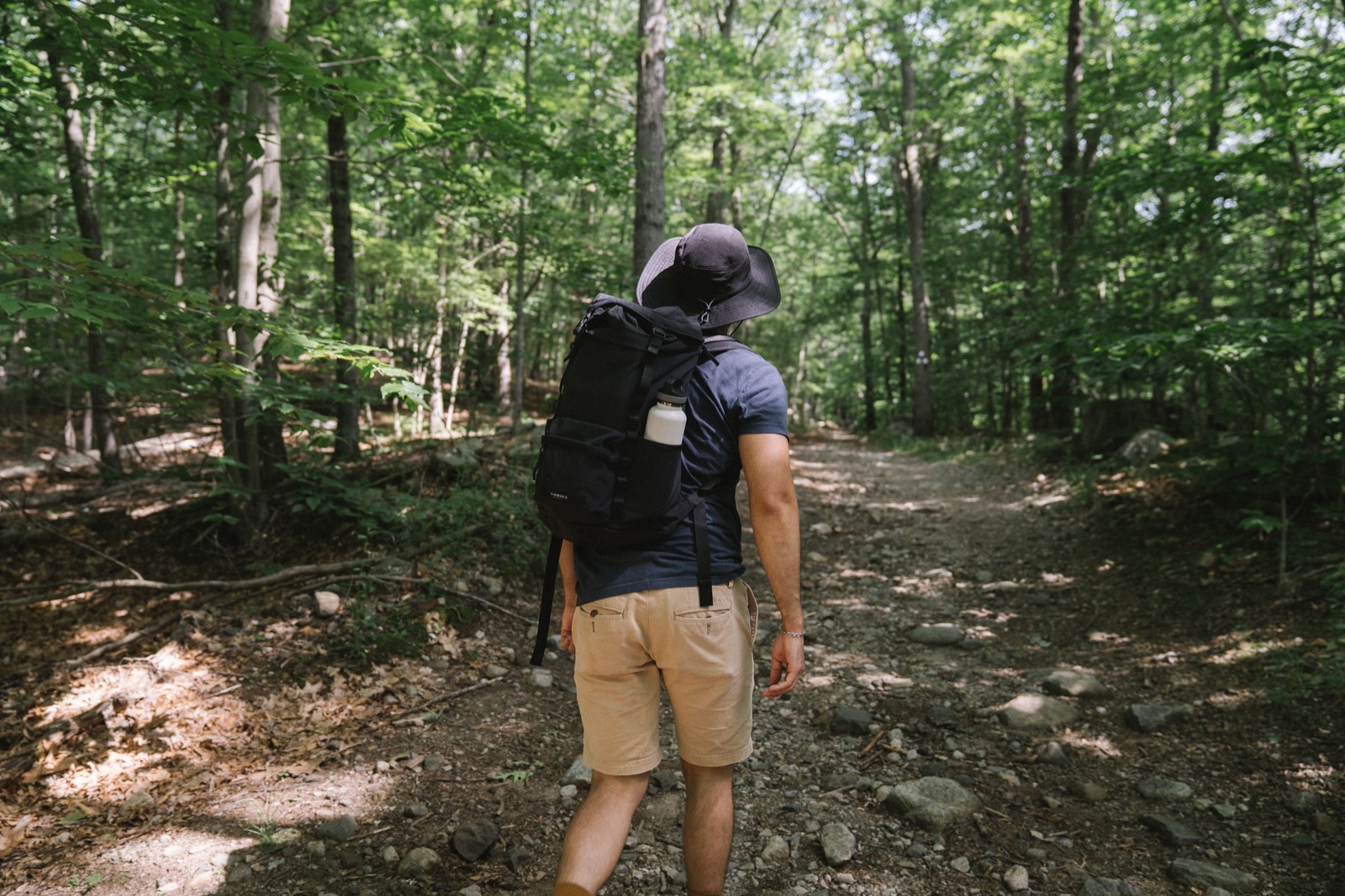
A day hiking backpack, or daypack, is the small pack that carries water, food, a warm layer and the safety basics for a hike you finish the same day. Because the load is light, the choice comes down to the right size, a fit that stops the pack from bouncing, and a few details: where the water goes, how the back breathes and how the pack handles rain. This guide covers the 10 to 30 liter range. For bigger packs that also carry overnight gear, see hiking backpacks.
What a daypack needs to carry
The National Park Service lists ten essentials for any hike: navigation (a map, plus compass or GPS), sun protection, an extra layer for the worst weather you might meet, a headlamp, first-aid supplies, fire starters, a repair kit and knife, extra food, water with a way to treat more, and emergency shelter such as a space blanket. Packed small, these items usually fill only part of a small pack. Water, lunch, a rain jacket and a fleece take up the rest, which is why most day hiking backpacks fall between 15 and 30 liters.
Types of daypacks
Minimal daypacks (10 to 18 liters)
Light, simple packs with thin shoulder straps, often no frame and at most a webbing waist strap. They suit short hikes, travel and summit pushes from a base camp. Some fold into their own pocket.
Standard day hiking backpacks (18 to 30 liters)
The most common daypack: a light framesheet or foam back panel, padded shoulder straps, a sternum strap, side bottle pockets and a hip belt. Deuter's Speed Lite 21 holds 21 liters, weighs 470 g (about 1 lb), has a detachable waist belt and a recommended load of 2 to 5 kg (roughly 4 to 11 lb). Larger models add a frame and a ventilated back: Deuter's Futura 27 holds 27 liters, weighs 1,250 g (about 2 lb 12 oz), takes a reservoir up to 3 liters, includes a rain cover and is rated for 4 to 8 kg (about 9 to 18 lb).
Hydration daypacks
Daypacks built around a water reservoir, with a sleeve, a hose port and often a clip to hold the drink tube on the shoulder strap. CamelBak's Rim Runner X22, for example, comes with a 1.5 liter reservoir, weighs 690 g (about 1 lb 8 oz) and has a removable stability belt. Our guide to hydration packs covers these in detail.
Rolltop and waterproof daypacks
A rolltop daypack closes by rolling the top over several times and buckling it, like a dry bag. Made from coated fabric with welded or taped seams, it keeps gear dry in steady rain and spray; check the maker's rating before trusting one to stay dry under water. The trade-off: fewer pockets, a stiffer back and less ventilation.
Comparison table
| Type | Typical capacity | Usual weight | Hip belt | Best for |
|---|---|---|---|---|
| Minimal daypack | 10–18 L | Usually under 1 lb | None or webbing | Short hikes, travel, summit days |
| Standard daypack | 18–30 L | Usually 1–3 lb | Webbing or padded | Most day hikes |
| Hydration daypack | 10–30 L | Usually 1–2 lb | Webbing or padded | Hot weather, drinking on the move |
| Rolltop / waterproof | 15–30 L | Varies | Usually webbing | Wet climates, paddling, canyon hikes |

What to look at
Capacity
Pack your full kit for the coldest hike you plan and see what it fills. If you hike alone in summer, 15 to 20 liters is plenty. If you hike with children, carry the group's water and snacks, or hike in shoulder seasons with a puffy jacket, 25 to 30 liters avoids strapping layers to the outside.
Fit and torso length
Even small packs come in sizes, and a pack that is too long sits on your backside instead of your back. Measure your torso from the bony bump at the base of your neck (C7) to the top of your hip bones and compare it with the size chart. Deuter, for example, lists a back length of 44 to 54 cm (about 17 to 21 inches) for both the Speed Lite 21 and the Futura 27.
Hip belt and sternum strap
A webbing hip belt stops a daypack from swinging when you scramble or walk downhill. A padded belt starts to matter once the load passes a few pounds, especially with two or three liters of water on board. A sternum strap keeps the shoulder straps from sliding outward.
Back panel and ventilation
A suspended mesh back, like the Futura's, leaves a gap between the pack and your back so sweat can evaporate. Foam panels with air channels sit closer and feel more stable. In hot, humid places, ventilation tends to matter more than a few ounces.
Pockets and access
Useful pockets on a day hiking backpack: two stretch side pockets you can reach while walking, a stretch front pocket for a wet jacket, a small zip pocket for keys and a phone, and hip belt pockets for snacks. A wide zip opening is easier to live with than a narrow top hole.
Weather protection
Most daypacks are water-resistant, not waterproof. A built-in rain cover or a light pack liner keeps spare layers and electronics dry. Choose a rolltop only if you regularly hike in steady rain or near water.
Weight
A lightweight daypack saves very little compared with what you put in it, so do not give up a hip belt or a comfortable back just to save a few ounces. The maker's recommended load tells you how much weight the pack was designed for.
Which daypack suits whom
- Short hikes and walks: a minimal daypack of 10 to 18 liters.
- Most day hikes: a standard day hiking backpack of 18 to 25 liters with a hip belt and side pockets.
- Long, hot days: a ventilated back, a reservoir sleeve and room for three liters of water.
- Parents and group leaders: 25 to 30 liters with a padded belt.
- Wet climates or paddling: a rolltop or waterproof daypack.
Common daypack mistakes
- Buying too small. A pack that only fits your summer kit leaves the fleece and rain jacket strapped to the outside when the weather turns. Size for your bulkiest day.
- Buying too big. An oversized daypack invites extra weight, and a half-empty pack sags and shifts.
- Ignoring torso length. A pack that is too long sits low on your backside instead of your back; a pack that is too short pulls on your shoulders.
- Leaving the straps loose. Tighten the hip belt, then the shoulder straps, then the sternum strap, so the pack moves with you instead of swinging.
- Skipping rain protection. Carry a rain cover or a liner bag even on a forecast of sunshine; a wet warm layer is no longer a warm layer.
- Packing the essentials last. The first-aid kit, headlamp and rain jacket should be easy to reach, not buried under lunch.
How to pack and care for a daypack
Put the heaviest items, usually water and food, close to your back in the middle of the pack, with the rain jacket and first-aid kit near the top where you can reach them. How to pack a backpack explains the zones in detail.
After a hike, empty the pack, remove the reservoir and leave everything open to dry. Brush or wipe off dirt with a damp cloth and mild soap; follow the maker's care label before machine washing. Store the daypack loose and dry, out of direct sun. More guides are in the backpacks section.
Questions
What size daypack do I need for hiking?
Most day hikers do well with 15 to 25 liters. Go smaller for short, warm-weather walks and up to about 30 liters if you carry extra layers, gear for children or a large water supply.
Is a waterproof daypack worth it?
A rolltop daypack with welded seams keeps gear dry in steady rain and on boats, but it is usually less comfortable and harder to organize. For most hikes, a regular daypack with a rain cover or a liner bag inside is enough.
Do daypacks need a hip belt?
For a light load on a short walk, no. For longer hikes with several liters of water, a padded or at least a webbing hip belt keeps the pack from bouncing and takes weight off your shoulders.
What is the difference between a daypack and a hiking backpack?
A daypack is the small end of hiking packs, usually 10 to 30 liters, built light for loads of a few pounds. Larger hiking backpacks add frames and padded belts for heavier loads and overnight gear.
Read next
Headlamps: how to choose one by lumens, beam, run time and batteries
Lumens, beam distance, run time and power source: how to read a headlamp spec sheet and pick the right light for camp and trail.
Hiking backpacks: how to choose a pack for day hikes and overnights
One pack for short hikes, long day hikes and the occasional night out: what size to pick, how it should fit and which features earn their weight.
Hydration packs: how to choose a pack with a water reservoir
A hydration pack lets you drink without stopping. The choice comes down to how much water you carry, how much else you carry, and how you move.