Guide
Sleeping bag temperature ratings: what comfort and limit mean
Comfort, limit and extreme explained, and how to turn the number on the bag into a warm night at the campsite you are going to.
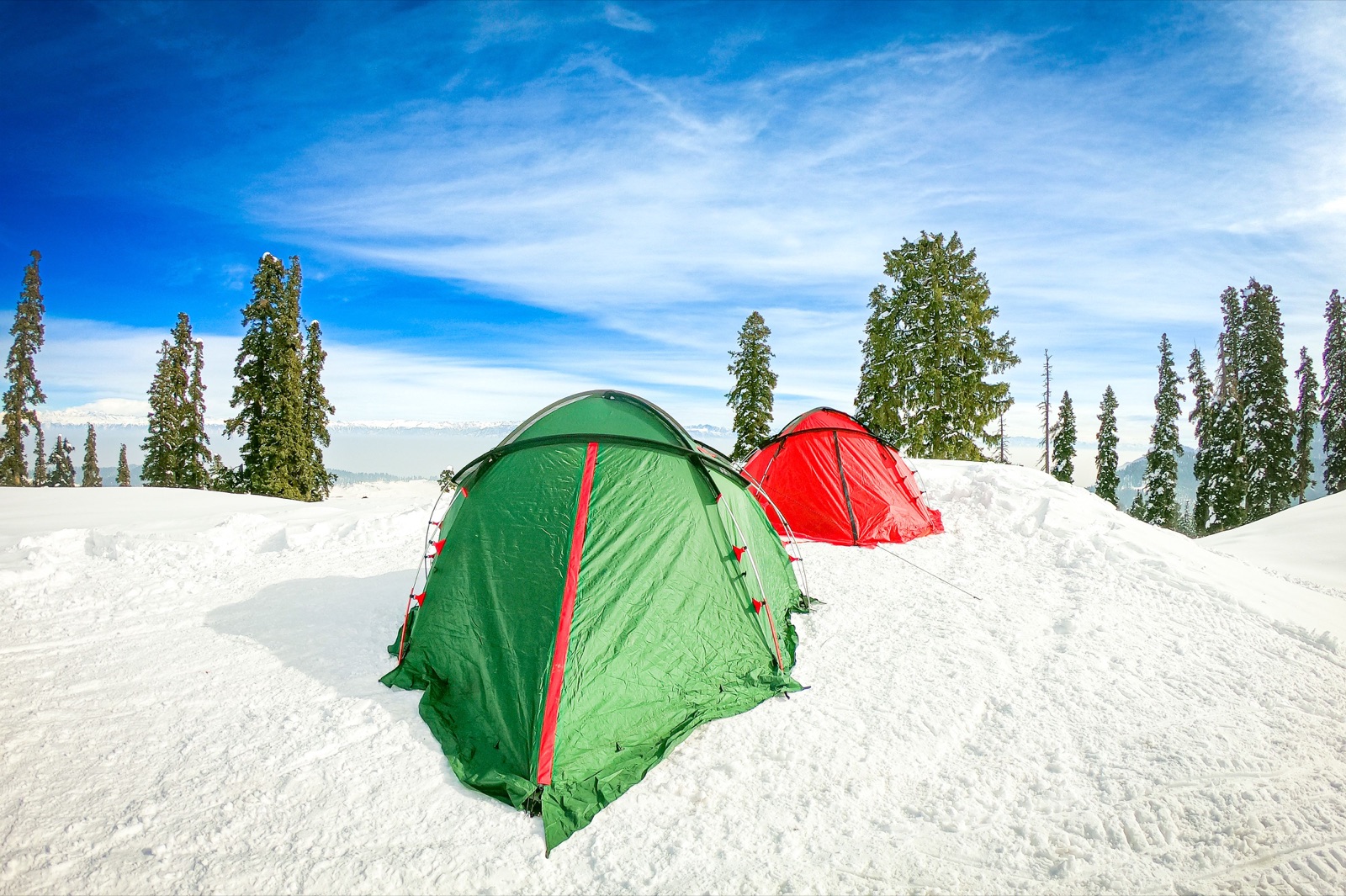
A sleeping bag temperature rating tells you roughly how cold a night the bag can handle, but only if you know which of its numbers you are reading. By the end of this guide you will know what the comfort, limit and extreme ratings mean, how they are measured, and how to pick the right rating for the nights you plan to camp, from a summer 40°F bag to a 0 degree winter bag.
What you'll need
Essentials
-
Sleeping bag with an ISO 23537 rating
: lets you compare bags from different brands on the same test. -
Sleeping pad with an ASTM F3340 R-value
: insulates you from the ground; the bag rating assumes one is under you. -
Night-time forecast for your campsite
: the low at the campsite, not in the nearest town, is the number to plan around.
Optional
-
Sleeping bag liner
: adds a little warmth and keeps the bag clean. -
Warm hat and dry base layers
: clean, dry clothes to sleep in help a bag reach its rating.
Step 1: learn the three numbers on the label
Many outdoor sleeping bags are tested to ISO 23537. The European standard EN 13537 came first; ISO 23537 replaced it in 2016, and the current edition is ISO 23537-1:2022. The test produces several temperatures, and these three are the ones you will see on spec sheets:
| Rating | Who it describes | What it means for you |
|---|---|---|
| Comfort | A "standard woman" sleeping relaxed | The temperature at which a cold sleeper can sleep comfortably through the night |
| Limit (lower limit) | A "standard man" curled up | The lowest temperature for a full night's sleep, curled up against the cold |
| Extreme | A survival figure | An emergency figure only: frostbite is possible |
Sea to Summit and Rab both define comfort and limit this way: the comfort rating is for a standard woman sleeping eight hours in a relaxed position, the limit for a standard man sleeping through the night curled up.
Who the "standard" sleepers are
The test is built around two reference adults, a standard woman and a standard man. Sea to Summit labels its unisex bags with the limit and its women's bags with the comfort rating, and notes that women tend to sleep a few degrees colder than men. Your own body may run warmer or colder than either reference sleeper.
The extreme rating is not a target
Rab describes the extreme rating as the lowest temperature at which a person can stay in the bag for up to six hours, curled up and fighting the cold, and warns that frostbite is very possible there. Sea to Summit calls it a survival rating and no longer quotes it. Treat it as a margin you never plan to use. Cold-weather safety, including recognizing hypothermia, is a matter for proper first-aid training, not a gear label.
Step 2: understand how the test is run
In the lab, a heated manikin dressed in standard base layers lies inside the bag on an insulated pad in a cold chamber. Sensors measure how much heat it loses at points across its surface, and the ratings are calculated from that. Sea to Summit notes that the pad under the manikin has an R-value of at least 4.
Two things follow from this:
- The rating assumes a pad. A bag tested on an R-4 pad will sleep colder on bare ground, a thin foam mat or an uninsulated air bed.
- The rating assumes a thin layer of clothing. Sleeping in dry base layers and a hat matches the test. Wet or sweaty clothes make you colder.
Bags without an ISO rating
Not every bag is tested. ISO 23537-1 covers adult-sized bags with a limit of -20°C (-4°F) or warmer, and Rab notes that quilts and expedition bags fall outside it, so those carry the maker's own estimates. Children's bags are not covered either. Some budget bags print a single number with no standard named. When a bag lists only one temperature, it is safer to treat it as a limit than as a comfort rating.
Step 3: read the number in the bag's name
A bag called "20" or "0" is named after one of its ratings, but brands do not agree on which. Rab uses the comfort rating in its names; Sea to Summit labels its unisex bags with the limit. The gap between the two numbers is usually several degrees, so a "20 degree sleeping bag" from one brand can be noticeably warmer than one from another.
Look up the spec sheet and find both the comfort and the limit numbers before you compare.
Step 4: match the rating to your trip
Find the forecast low for the campsite itself. Valleys, lakeshores and high camps are often colder than the nearest town. Then pick a bag whose comfort rating is at or below that low if you sleep cold, or whose limit is at or below it if you know you sleep warm.
These rough bands are how bags are usually grouped:
| Bag type | Typical rating | Usually for |
|---|---|---|
| Summer bag | 40°F and up | Warm campground nights, low elevations |
| 3-season bag | about 20°F to 35°F | Spring to fall, most US backpacking |
| Cold-weather bag | about 0°F to 20°F | Shoulder seasons in the mountains, late fall |
| Winter or 0 degree sleeping bag | 0°F and below | Snow camping and sub-zero nights |
20 degree sleeping bags
A 20 degree bag is the common choice for 3-season backpacking because it covers frosty spring and fall nights and can be unzipped on warmer ones. Check whether that 20°F is the comfort or the limit before you count on it near freezing.
0 degree and sub-zero sleeping bags
A 0 degree or sub-zero bag is a winter tool. It is heavier, bulkier and too warm for most summer trips. A 0 degree down sleeping bag saves a lot of weight and space against a synthetic one at the same rating; the down vs. synthetic comparison covers the trade-offs. Winter camping also brings risks a sleeping bag cannot solve, so learn them from an experienced group or course first.

Step 5: match the pad to the bag
The ground pulls heat out of you faster than air does, and the fill under your back is crushed flat. Your pad does that half of the job. Pad warmth is measured as R-value, tested to ASTM F3340; higher means more insulation. Therm-a-Rest points out that degree ratings on pads have no common test standard, so compare R-values instead.
Big Agnes groups its pads as R-2 or lower for summer, about R-4 to R-4.8 for spring through fall, and R-5 or more for winter, snow or frozen ground. The Appalachian Mountain Club notes that R-values are additive: stacking a foam pad under an inflatable gives roughly the sum of the two. See the sleeping pads guide for types and sizes.
Step 6: adjust for you and your campsite
A rating is a lab number for a reference sleeper in still air, and Sea to Summit calls it a guideline, not a guarantee. Real nights add variables. Move a few degrees toward a warmer bag if any of these apply to you:
- You sleep cold. If you are often the one reaching for a blanket at home, plan by the comfort rating and add a margin.
- The air is damp. Humid nights by lakes and the coast feel colder, and moisture slowly works into the fill over several nights.
- The site is exposed. Wind through a mesh tent or under a tarp strips away warm air. A sheltered spot among trees is usually warmer than an open ridge or a valley floor where cold air pools.
- You are tired or hungry. Your body makes less heat after a hard day without a proper meal.
If you sleep warm, camp in a solid-walled tent and eat well, the limit rating can be a fair guide. When in doubt, a warmer bag can always be unzipped; a cold one cannot be made warmer except with layers.
Common mistakes
- Buying by the name, not the spec sheet. The number in the name may be the limit.
- Planning around the limit as a cold sleeper. Use the comfort rating if you tend to feel the cold.
- Pairing a winter bag with a summer pad. A cold pad wastes a warm bag.
- Going to bed cold or damp. Change into dry clothes, eat something, and get into the bag warm.
- Overbuying. A 0°F bag on a 50°F night is hot and sweaty, and sweat makes you colder later.
Next steps
Once you know the rating you need, the sleeping bags buying guide covers shapes, fit and fill, and the sleep systems section puts the bag, pad and pillow together.
Questions
What is the difference between comfort and limit ratings?
Under ISO 23537 the comfort rating is the temperature at which a 'standard woman' can sleep for eight hours in a relaxed position. The limit, or lower limit, is the temperature at which a 'standard man' can sleep for eight hours curled up against the cold.
Is a 20 degree sleeping bag warm enough?
It depends on which number the 20 refers to. If 20°F is the comfort rating, the bag suits nights down to about 20°F for most people; if it is the limit, a cold sleeper will usually be comfortable only several degrees warmer than that.
Do I need a 0 degree sleeping bag?
Only for nights that actually get near 0°F, such as winter camping or high mountains in the shoulder seasons. For typical spring-to-fall trips a 0°F bag is heavy, bulky and too warm.
Should I trust the extreme rating?
No. The extreme rating is a survival figure, not a sleeping temperature. Between the limit and the extreme you should expect to be very cold, so never plan a trip around it.
Does my sleeping pad affect the bag's rating?
Yes. Sea to Summit says the bag is tested on a pad with an R-value of at least 4, so a thinner or uninsulated pad makes any bag sleep colder than its label. On frozen ground, Big Agnes and the Appalachian Mountain Club call for a pad with an R-value of 5 or more.
Sources (7)
- ISO — ISO 23537-1:2022 Requirements for sleeping bags, Part 1
- Sea to Summit — Are sleeping bags actually temperature tested?
- Sea to Summit — What do the sleeping bag ratings mean for male and female sleepers?
- Rab — Sleeping bag temperature ratings explained
- Big Agnes — Finding the right sleeping pad
- Appalachian Mountain Club — Winter sleeping pad systems
- Cascade Designs (Therm-a-Rest) — How warm is a sleeping pad? R-value vs. degree ratings
Read next
Camping for beginners: how to plan and enjoy your first night at a campground
From booking a site to packing out the trash: a calm, step-by-step plan for your first camping trip by the car.
Sleeping bags: how to choose one for camping and backpacking
Rating, fill, shape and fit: what to compare so the bag you buy keeps you warm on the nights you actually camp.
Down vs. synthetic sleeping bags: which fill suits your trips
Down is lighter and packs smaller; synthetic copes better with damp and costs less. Here is how to decide which matters more for you.