Buying guide
Sleeping bags: how to choose one for camping and backpacking
Rating, fill, shape and fit: what to compare so the bag you buy keeps you warm on the nights you actually camp.
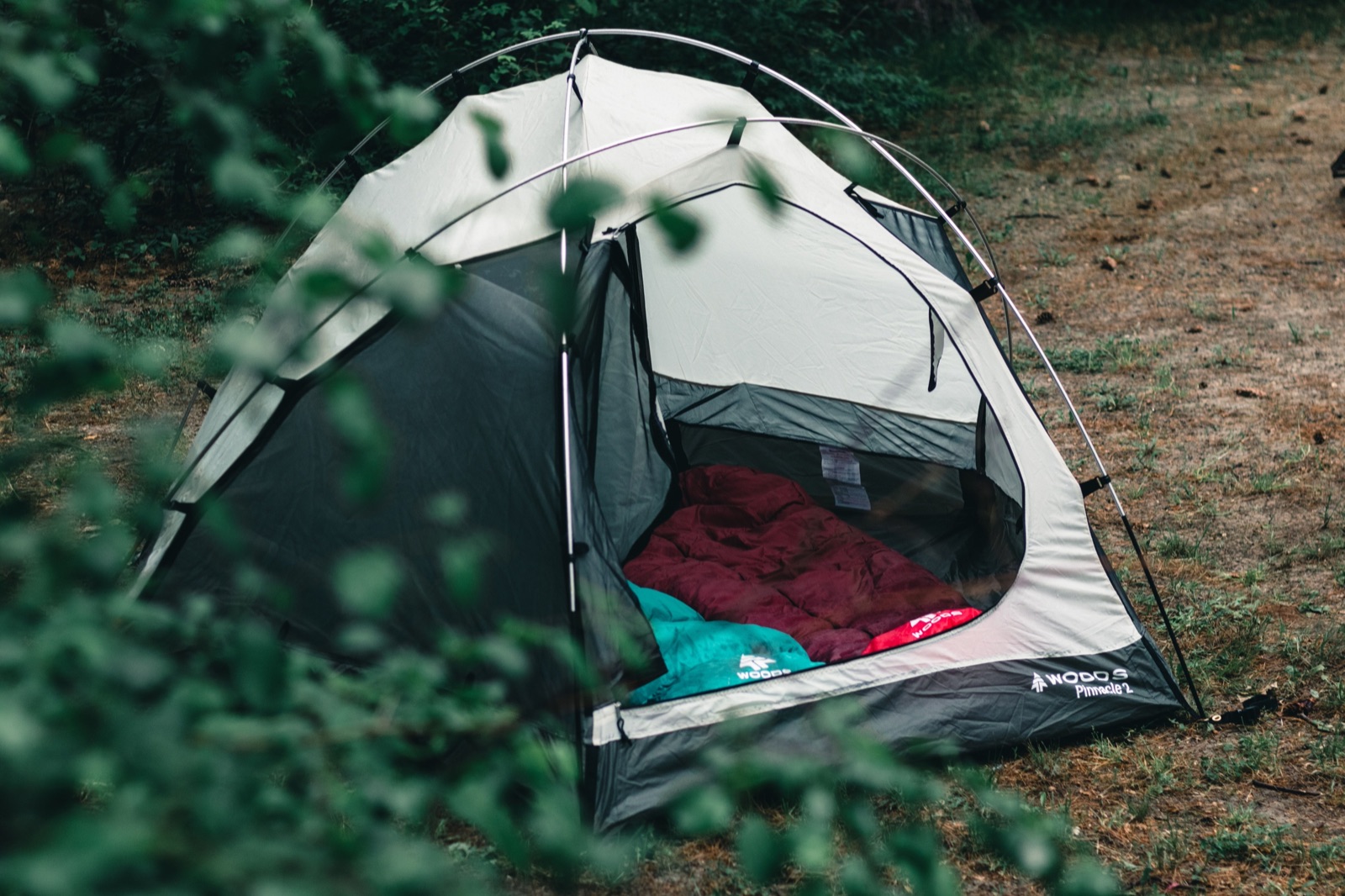
A sleeping bag is the part of your kit that decides whether you sleep or lie awake shivering. Choosing one comes down to four things: how cold the nights will get, what the bag is filled with, its shape, and whether it fits you. This guide walks through each, with a comparison table of the main types and notes on caring for a bag so it stays warm for years.
One thing to settle first: a bag only insulates what is above and around you. The ground below draws heat through the compressed fill under your back, so a bag always works together with a sleeping pad. A warm bag on a thin pad still sleeps cold.
What a sleeping bag does
A sleeping bag traps a layer of still air around your body. The fill, either down or synthetic fibers, creates loft: thickness full of tiny air pockets that slow heat escaping from your skin. More loft usually means more warmth. The shell fabric keeps wind and light moisture out, and the shape decides how much empty space your body has to heat.
That is why two bags with the same weight of fill can feel very different. A bag that is too roomy leaves cold air pockets to warm up; a bag that is too tight squashes the fill and loses loft.
Types of sleeping bags compared
| Type | Shape | Warmth for its weight | Packed size | Best for |
|---|---|---|---|---|
| Mummy | Tapered to the feet, with a hood | Highest | Smallest | Backpacking, cold nights |
| Semi-rectangular | Roomier at the shoulders and hips, tapered feet | Medium | Medium | Mixed car camping and short backpacking trips |
| Rectangular | Straight sides, usually no hood | Lowest | Largest | Warm-weather car camping |
| Double | Wide rectangle for two | Low per person | Very large | Couples car camping |
| Quilt | Open back, no hood | High | Small | Experienced backpackers on a pad |
Mummy bags
A mummy bag tapers from the shoulders to a narrow foot box and has a hood that cinches around your face. Therm-a-Rest describes mummy bags as the warmest, lightest and most packable shape, at the cost of less room inside. They are the usual choice for backpacking and for any night near freezing.
Semi-rectangular bags
A semi-rectangular (or "barrel") bag is the middle ground: more room for knees and elbows than a mummy, with a tapered foot to save some heat. It suits side sleepers and people who find a mummy confining, as long as the nights are not too cold.
Rectangular and double bags
Rectangular bags are the classic camping bags: easy to get in and out of, often unzipping flat into a blanket. They lose the most heat, so they belong on warm nights and at campsites next to the car. Double sleeping bags, sometimes sold as 2-person bags, are wide rectangles that let two people share; they are bulky, but weight rarely matters at a campground.
Quilts
A backpacking quilt drops the hood and the insulation under your back, since the fill there is crushed flat anyway. It relies on a pad to insulate below you and on straps to hold it to the pad. Quilts save weight, but they suit people who already know how they sleep outdoors. The down vs. synthetic comparison covers quilts in more detail.
What to look at before you buy
Temperature rating
Many outdoor bags list temperatures tested to the ISO 23537 standard (formerly EN 13537): a comfort rating for sleeping relaxed, a lower limit for sleeping curled up against the cold, and sometimes an extreme rating that is for emergencies only.
Choose by the comfort rating if you sleep cold, and pick one at or below the coldest night you expect. Brands differ in which number they put in a product's name: Rab uses the comfort rating, while Sea to Summit labels its unisex bags with the limit. Read the spec sheet, not just the name. The temperature ratings guide explains what each number means, how the test works and how to match a rating to your trip.
Down or synthetic fill
Down gives the most warmth for its weight and packs smallest, but it loses loft when wet. Synthetic fill, made of polyester fibers, is heavier and bulkier for the same rating, keeps more of its warmth when damp and usually costs less. The down vs. synthetic comparison covers fill power, treated down and which fill suits which trip.
Length and fit
Pick the length closest to your height. Therm-a-Rest sizes its bags as small (5 ft 6 in), regular (6 ft) and long (6 ft 6 in), and notes that its 6-foot bag actually measures about 6 ft 8 in, because your body stretches out when you lie flat. If you are between sizes or like to keep water bottles and clothes in the foot of the bag, size up. Shoulder and hip room matter as much as length: try a bag on if you can, since every brand cuts differently.
Weight and packed size
For backpacking, every ounce of the bag is carried on your back, so a mummy bag with down fill is the usual pick. For car camping, a heavier synthetic or rectangular bag costs nothing in effort and often costs less money. Check the packed size too: a synthetic bag can take up a large share of a backpacking pack.
Hood, draft collar and zipper
On cold nights a good hood and a draft collar, a padded tube around the neck, keep warm air from puffing out every time you move. A zipper draft tube, the insulated flap behind the zipper, stops cold spots along the side. Left and right zippers matter if you want to join two bags.

Which sleeping bag suits whom
By the way you camp
Car campers and families
A rectangular or semi-rectangular synthetic bag rated around 30°F to 40°F covers most summer campground nights. Families with children should look at bags sized for kids; see the kids' sleeping bags guide.
Backpackers
A mummy bag, usually down, with a comfort rating near the lowest night-time temperature of your season. Down saves weight and space; synthetic is the safer pick for very wet climates.
Cold sleepers
Choose by comfort rating rather than limit, and add a liner or warm base layers on top of that. Make sure your pad is warm enough for the ground temperature too.
Couples
A double bag for car camping, or two bags with matching left and right zippers that join together.
Sleeping bag liners and sleep sacks
A liner is a thin sack of silk, cotton, fleece or synthetic fabric that goes inside the bag. Sea to Summit notes that you will need to wash the bag far less often if you use one, because the liner catches body oils and dirt and you can wash it instead. Some liners also add a little warmth. On hot nights a liner or a light "sleep sack" on its own can be all you need.
How to care for a sleeping bag
- Air it out every morning. Open the bag and let the night's moisture escape before packing it.
- Store it loose. Western Mountaineering advises keeping the bag in a large breathable storage sack at home, not compressed in its stuff sack or sealed in plastic for long periods, and only when it is fully dry.
- Wash it rarely and gently. Both Western Mountaineering and Sea to Summit warn against top-loading machines with agitators, which can damage the internal walls (baffles) that hold the fill in place. Use a soap made for down or technical insulation, and dry the bag completely on low heat before storing it. The down vs. synthetic comparison has step-by-step washing instructions.
Always follow the care label on your own bag, since fabrics and fills differ.
Putting it together
Start with the coldest night you expect and read the comfort rating against it. Then choose the fill by weather and budget, the shape by how you sleep and how far you carry the bag, and the length by your height. Pair it with a pad warm enough for the ground. For more on the whole system, see the sleep systems section.
Questions
What temperature sleeping bag do I need for camping?
Pick a bag whose comfort rating is at or below the lowest temperature you expect at night. For most spring-to-fall camping in the US that usually means a bag rated somewhere around 20°F to 40°F, colder for mountains or shoulder seasons.
Is a mummy or rectangular sleeping bag better?
A mummy bag is warmer for its weight and packs smaller because it follows the shape of your body. A rectangular bag gives more room to move and suits warm nights and car camping, where weight and bulk matter less.
What size sleeping bag do I need?
Choose the length closest to your height. Therm-a-Rest, for example, sizes its bags for sleepers of 5 ft 6 in, 6 ft and 6 ft 6 in, and builds in extra length so you can stretch out.
Do I need a sleeping bag liner?
It is not required, but a liner keeps body oils and dirt off the inside of the bag, so the bag needs washing less often. Some liners also add a little warmth.
Can two people share a double sleeping bag?
Yes. Double bags are wide rectangular bags for two, mostly used for car camping. Some single bags can also be zipped to a matching bag to make one, so check the maker's notes on compatible zippers.
Sources (6)
- Rab — Sleeping bag temperature ratings explained
- Sea to Summit — What do the sleeping bag ratings mean for male and female sleepers?
- Cascade Designs (Therm-a-Rest) — Choosing the right fit for sleeping bags
- Cascade Designs (Therm-a-Rest) — Down vs. synthetic sleeping bags and quilts
- Sea to Summit — How do you wash a down sleeping bag
- Western Mountaineering — Product tips and care
Read next
Backpacking tents: how to choose a light shelter you will carry
Weight, floor space, pole design and fabric: what to compare before you buy a tent that rides on your back for miles.
Sleeping bag temperature ratings: what comfort and limit mean
Comfort, limit and extreme explained, and how to turn the number on the bag into a warm night at the campsite you are going to.
Down vs. synthetic sleeping bags: which fill suits your trips
Down is lighter and packs smaller; synthetic copes better with damp and costs less. Here is how to decide which matters more for you.