Buying guide
Kids' sleeping bags: how to choose one that fits and keeps them warm
Size, warmth and a pad underneath: what to check so your child sleeps warm at camp instead of rattling around in an adult bag.
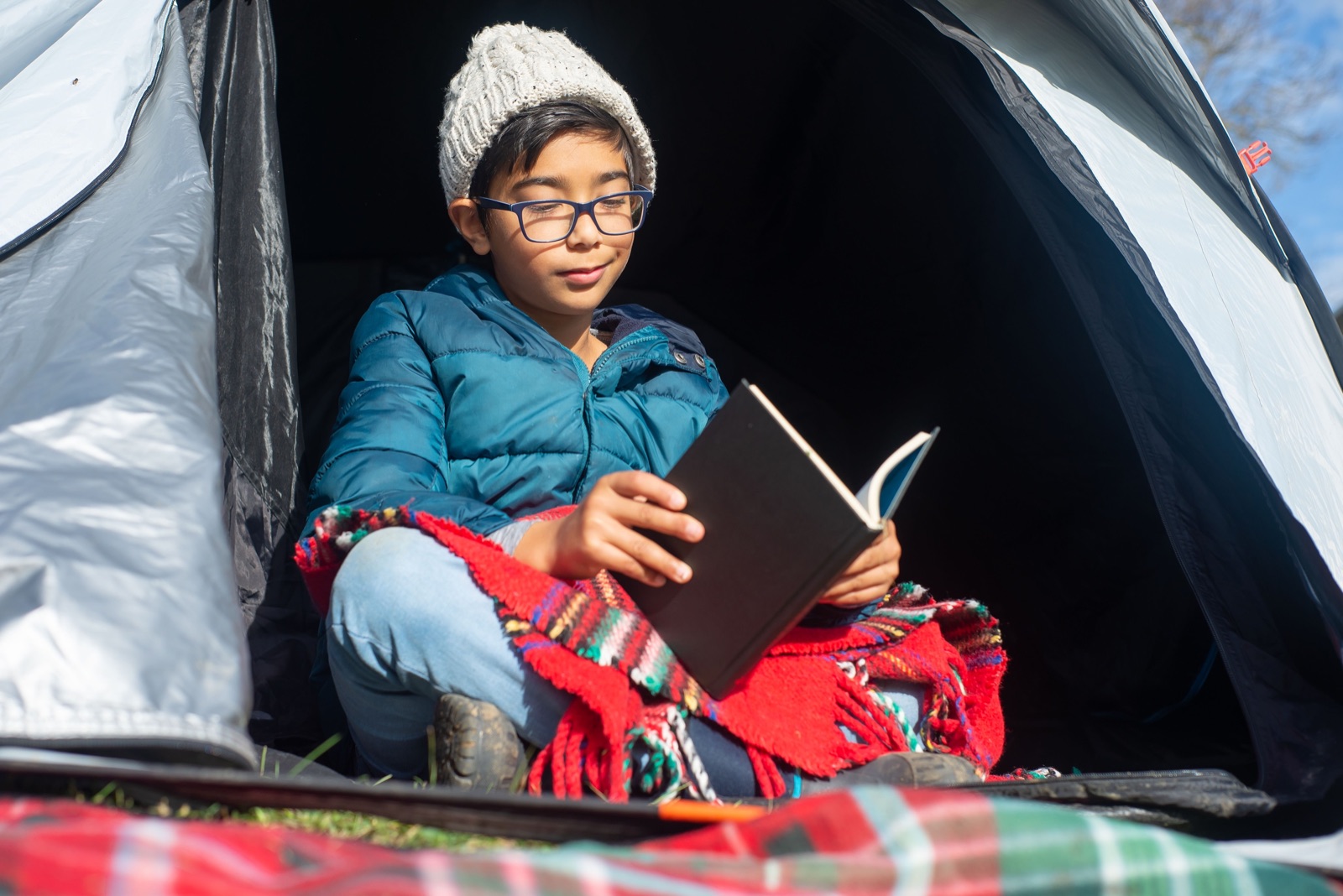
A kids sleeping bag is a smaller bag cut for a child's height, so there is less empty space to warm up and less fabric to carry. For a first family camping trip it is often the single best upgrade over a borrowed adult bag. This guide covers the sizes, the types and how they compare, what to check on the label, and how to care for a bag that will see spilled cocoa and muddy socks.
Why a kids' bag instead of an adult one
A sleeping bag keeps you warm by trapping air that your body heats. In a bag that is far too long, a small child has to heat all the dead space below their feet, and they can slide down into it during the night. A bag sized to the child stays warmer for its weight and is easier for small hands to zip.
Older children close to adult height can move into a short or regular adult bag. Until then, a kids' or youth bag usually fits better.
A note on babies and infants
Camping sleeping bags are not designed for infants, and nothing in this guide applies to babies. For how and where a baby should sleep, at home or on a trip, follow the American Academy of Pediatrics' safe sleep guidance and ask your pediatrician before you go.
Types of kids' sleeping bags compared
| Type | Typical fit | Fill | Best for |
|---|---|---|---|
| Toddler bag | Small children, check the maker's height range | Usually synthetic | Car camping and sleepovers |
| Kids' bag | Children up to roughly 4 to 5 ft | Usually synthetic | Campground trips, first backpacking trips |
| Youth bag | Older children up to about 5 ft or a little more | Synthetic or down | Scouts, backpacking, cooler nights |
| Adjustable-length bag | A range of heights, shortened with clips or cinches | Synthetic or down | Kids who will grow into it |
| Rectangular slumber bag | Generous | Synthetic | Indoor sleepovers and warm nights only |
Toddler sleeping bags
Toddler bags are short and often rectangular or semi-rectangular. Check the maker's minimum age and maximum height, and follow them. If you are unsure whether your child is old enough for a sleeping bag, ask your pediatrician.
Kids' and youth sleeping bags
Most kids' and youth camping bags are mummy or semi-rectangular in shape, with a hood and a draft tube behind the zipper like an adult bag. Youth backpacking sleeping bags tend to be lighter and pack smaller, sometimes with down fill.
Adjustable-length bags
Some bags shorten for a small child and lengthen as they grow. Big Agnes, for example, describes its Torchlight EXP Youth 20° as having length that adjusts with exterior hooks and loops, plus two zippered panels that open up the width, so the bag can be sized down for a smaller child and let out later. It uses 650-fill down and has a built-in sleeve for a 20-inch-wide pad.
Slumber bags
Thin rectangular bags printed with cartoons are made for sleepovers. They are fine on a warm summer night in a tent next to the car, but usually too thin for cool nights outdoors.
What to look at
Height range and fit
Read the maker's maximum height, not the age range alone, since children of the same age vary widely. Many kids' and youth bags list a maximum height of about 5 feet: Kelty's Kids' Mistral 20 and The North Face's Youth Wasatch Pro 20 both do. Choose a bag that fits the child now with a little room, or one with an adjustable length. Have the child try it on if you can: they should be able to lie straight with their head in the hood and their feet near the end.
Temperature rating
Adult bags are often tested to ISO 23537, but the standard covers adult-sized bags only; ISO notes that there is no model for predicting the temperature limits of bags for children and babies. Kids' bags therefore carry the maker's own rating. Treat that number with some caution, and pick a bag rated a little colder than the lowest night you expect. Children often kick out of the bag or slide down in it, which costs warmth. Our temperature ratings guide explains how ratings work.
Down or synthetic fill
Synthetic fill is the practical default for kids: it costs less, keeps insulating if the bag gets damp from a spilled drink or a wet tent floor, and tolerates frequent washing. Down is lighter and packs smaller, which helps when an older child carries their own pack. The down vs. synthetic comparison has the full trade-offs.
Zipper, hood and extras
Look for a zipper that runs smoothly and has a snag guard, a hood that cinches without fiddly cords, and a stuff sack the child can manage. Some children's sleeping bags come with a pillow or a pillow pocket; a folded fleece in a stuff sack works just as well.

The pad matters too
A child on bare ground or a cold air bed will sleep cold in any bag. Give them a sleeping pad suited to the season: Big Agnes groups pads as R-2 or lower for summer, R-4 to R-4.8 for spring through fall and R-5 or more for winter. Short pads, such as the 20 by 66 inch "petite" size Big Agnes lists, save space and weight for small sleepers. If the bag has a pad sleeve, check the pad's width against it. See the sleeping pads guide for types.
Which bag suits whom
By family and trip
Car camping families
A synthetic kids' bag rated for the season, plus a foam or self-inflating pad. Bring a spare fleece blanket for a colder night than forecast.
Scouts and first backpacking trips
A youth mummy bag that fits the child's height and packs small enough for their pack. Synthetic for wet regions, down for dry ones if the budget allows.
Growing kids
An adjustable-length bag, or a youth bag that fits now with some room. Avoid buying several sizes too big.
Helping kids sleep warm
- Change into dry clothes before bed; damp clothes from the day make a child cold.
- Add a warm hat and dry socks on cool nights.
- A trip to the bathroom right before bed saves a cold midnight walk.
- Check on young children during the first cold night; they may not say they are cold.
Try it at home first
A night in the backyard or on the living room floor is the easiest test of a new sleeping bag. It shows whether the bag is long enough, whether your child can work the zipper and hood alone in the dark, and whether they feel boxed in by a mummy shape. It also gives a nervous first-time camper a chance to get used to sleeping in a bag before the real trip. If the bag is too long, a stuff sack of spare clothes pushed into the foot box takes up the extra space, and the clothes stay warm for the morning.
Caring for a kids' sleeping bag
Air the bag out each morning and store it loose at home, not in its stuff sack. Kids' bags usually need washing more often than adult ones. Sea to Summit advises washing synthetic bags on a gentle cycle with a technical wash rather than regular detergent, whose brighteners can reduce loft. A liner inside the bag is easier to wash than the bag itself. Always follow the care label.
For more on the full sleep system, see the sleep systems section and our sleeping bags buying guide.
Questions
What size sleeping bag does my child need?
Choose a bag whose stated maximum height is a little above your child's height, without a lot of spare length. Many kids' and youth bags list a maximum height of about 5 feet, and some have adjustable lengths so they can grow into them.
Can a child use an adult sleeping bag?
An older child near adult height can. A small child in an adult bag has a lot of empty space to heat, so they are likely to sleep colder than the bag's rating suggests; a kids' bag or an adjustable-length bag fits better.
Can a baby sleep in a sleeping bag while camping?
Camping sleeping bags are not made for babies, and this guide does not cover them. For how and where an infant should sleep, including on a camping trip, follow the American Academy of Pediatrics' safe sleep guidance and ask your pediatrician.
What temperature rating should a kids sleeping bag have?
Choose a rating at or below the coldest night you expect, with some margin, since children often kick off covers and kids' bag ratings are the maker's own estimates rather than ISO results. Kids' bags for 3-season camping are usually rated somewhere around 20°F to 40°F.
Do kids need a sleeping pad?
Yes. A child loses heat to the ground just as an adult does. A pad with enough R-value for the season matters as much as the bag.
Sources (7)
- Big Agnes — Torchlight EXP Youth 20° sleeping bag
- HealthyChildren.org (American Academy of Pediatrics) — How to keep your sleeping baby safe
- Kelty — Kids' Mistral 20 sleeping bag
- The North Face — Youth Wasatch Pro 20 sleeping bag
- ISO — ISO 23537-1:2022 Requirements for sleeping bags, Part 1
- Big Agnes — Finding the right sleeping pad
- Sea to Summit — How do you wash a down sleeping bag
Read next
Family tents: how to choose a big tent for camping with kids
Person ratings, floor size, headroom and shape: what to compare before you buy a large tent for the whole family.
Sleeping bags: how to choose one for camping and backpacking
Rating, fill, shape and fit: what to compare so the bag you buy keeps you warm on the nights you actually camp.
Sleeping bag temperature ratings: what comfort and limit mean
Comfort, limit and extreme explained, and how to turn the number on the bag into a warm night at the campsite you are going to.