Buying guide
Camping stoves: how to choose a stove for the campsite
Two-burner propane, single-burner butane or a backpacking stove: what each type cooks well, what the specs mean and how to use one safely.
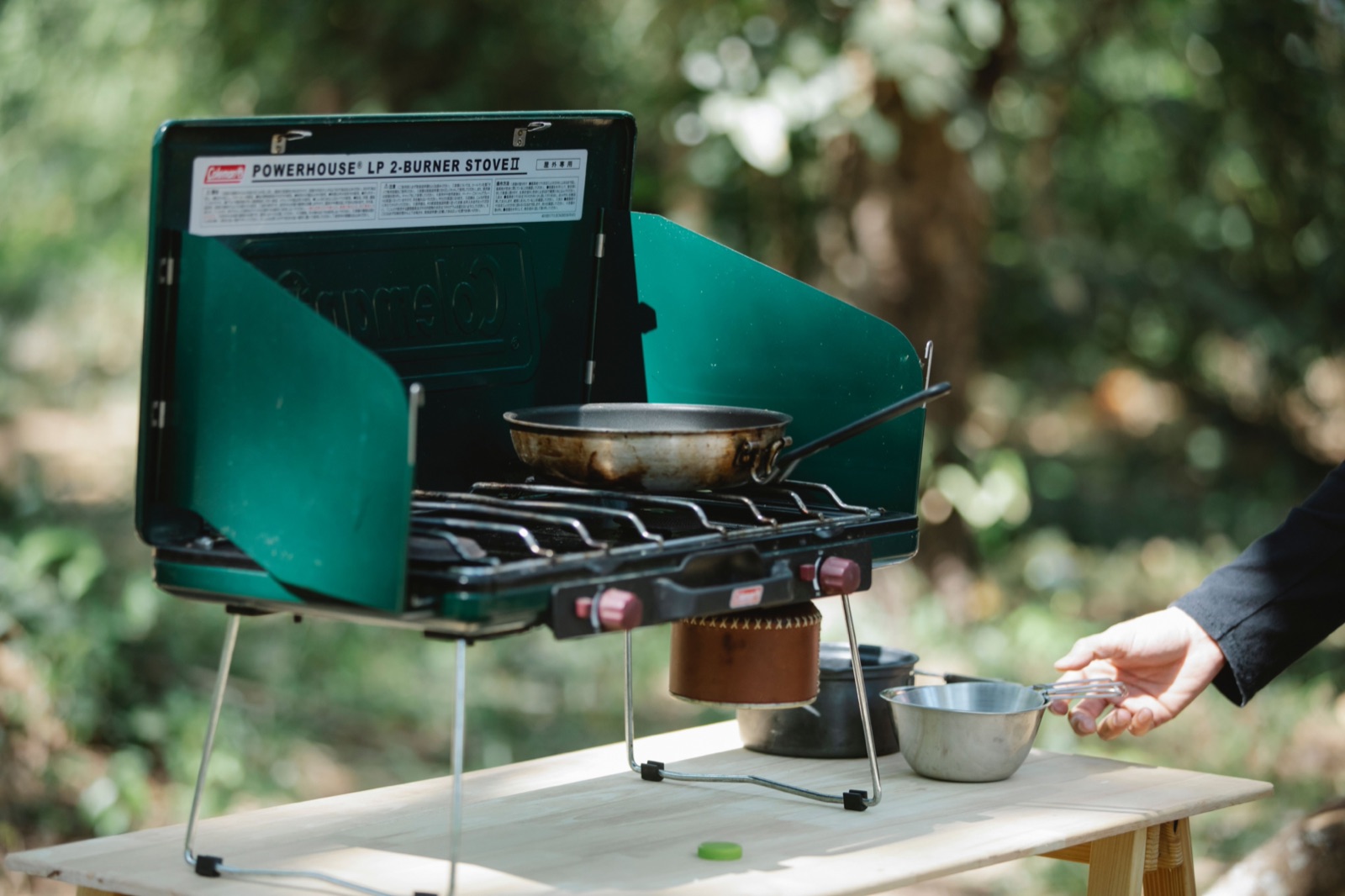
A camping stove turns a campsite into a kitchen: coffee in the morning, pancakes for the family, a pot of pasta at the end of the day. The right one depends mostly on how you get to camp. If the car is parked next to the tent, a two-burner propane stove is hard to beat. If you carry everything on your back, you want a small canister or liquid-fuel stove instead; those have their own backpacking stoves guide.
This guide explains the main types of camping stove, what the numbers on the box mean, which type suits which trip, and how to use and look after a stove safely.
What a camping stove does
Every portable stove does the same job: it mixes fuel gas with air, burns it under a pot support and lets you turn the flame up and down with a valve. What changes from one stove to the next is the fuel it burns, how many pans it holds, how well it copes with wind and cold, and how much it weighs.
For car camping, weight hardly matters. Stability, burner spacing, wind protection and simmer control matter far more, because you are cooking real meals for several people rather than boiling a pot of water.
Types of camping stove
Two-burner propane stoves
The classic car camping stove: a folding steel case with two burners, a lid and side panels that fold up as a windscreen. Most run on the disposable 16.4 oz propane cylinders sold in hardware and grocery stores, and many can connect to a larger refillable tank with an adapter hose.
Output varies a lot. Coleman lists its Classic two-burner propane stove at 20,000 BTU in total across both burners. Camp Chef rates each of the two burners on its Everest 2X at 20,000 BTU and lists 215 square inches of cooking space.
High-output and freestanding burners
Freestanding stoves on legs, often with one to three large burners, are built for big pots, turkey fryers and dutch ovens. They usually run from a 20 lb refillable propane tank. They are heavy and bulky but feed a crowd. Look for a wide, stable stance and a regulator matched to the stove.
Single-burner butane stoves
These look like a small briefcase: one burner on top, and a slim butane canister that slides into a compartment at the side. They are cheap, compact and simple, which is why they are common in camp kitchens, at picnics and in power-outage kits.
Butane has a weakness in the cold: it turns from liquid to gas poorly near freezing, so the flame weakens as the canister chills. These stoves also have a specific hazard. A U.S. Consumer Product Safety Commission staff report on tabletop butane stoves found that overheating the fuel canister was the apparent cause of the incidents it investigated, and one cause was using large pans that extended over the fuel compartment and trapped heat. Use pans no wider than the maker allows.

Backpacking stoves
Small canister and liquid-fuel stoves are built to boil water quickly for one or two people, not to cook for a family, though some car campers bring one as a second burner for coffee. The backpacking stoves guide compares them.
Comparison of camping stove types
| Type | Typical fuel | Burners | Best for | Main limits |
|---|---|---|---|---|
| Two-burner propane | 16.4 oz propane cylinder or a bulk tank with adapter | 2 | Car camping, families, real cooking | Bulky; cylinders are heavy and need recycling |
| High-output freestanding | 20 lb propane tank | 1–3 | Large groups, big pots, dutch ovens | Heavy; needs a car and a lot of space |
| Single-burner butane | Slim butane canister | 1 | Picnics, mild-weather camping, small kitchens | Weak in cold; canister must not overheat |
| Backpacking canister or liquid fuel | Isobutane-propane canister or white gas | 1 | Boiling water, solo cooking, a spare burner | Small pot support; built for one or two people |
What to look at before you buy
BTU ratings and what they mean
BTU (British thermal unit) per hour is a measure of how much heat a burner can put out at full flame. A higher number boils water faster and recovers heat quicker when you add cold food to a pan. It does not tell you how well a stove simmers, how well it holds up in wind or how much fuel it uses for a normal meal.
Simmer control and burner spacing
For pancakes, eggs and sauces, simmer control matters more than raw power. A burner that turns down to a low, steady flame without blowing out is the one you will enjoy cooking on. Check the space between the two burners too: if it is narrow, a large skillet and a pot will not fit side by side.
Wind protection
Wind steals heat, wastes fuel and can blow out a low flame. Fold-up side panels on two-burner stoves help, and so does setting the stove where a vehicle, a rock or the tarp edge breaks the wind. Do not improvise a windscreen that wraps around a fuel canister: trapped heat can overheat the fuel.
Ignition
Many stoves have a push-button igniter. They are convenient but can fail when wet or worn, so always carry a lighter or matches as a backup.
Fuel and run time
Run time depends on how hard you run the burners. Coleman rates its Classic two-burner at up to 1 hour with both burners on high from one 16.4 oz cylinder; at the lower flames used for most cooking, a cylinder lasts longer. Bring at least one spare for a weekend. An adapter hose to a refillable 20 lb tank is cheaper per meal on longer trips and cuts down on empty cylinders.
Which camping stove suits you
- Car camping as a family or group: a two-burner propane stove with wind panels and good simmer control.
- Large groups, big pots, outdoor frying: a freestanding high-output burner on a bulk propane tank.
- Picnics, a backup burner, a small budget: a single-burner butane stove, in mild weather.
- Backpacking, or car camping where you mostly boil water: a canister stove; see the backpacking stoves guide.
- Cold-weather camping: propane or a liquid-fuel stove, not butane.
Your stove is only half of the camp kitchen. Pair it with the right camp cookware and a plan for camping meals.
Safe use at camp
Never cook inside a tent
Stove makers are blunt about this. Coleman says its propane and liquid-fuel stoves are designed for outdoor use only and should be used in well-ventilated areas clear of combustible materials, because of the danger of fire and the carbon monoxide (CO) that burning fuel gives off. MSR's DragonFly manual states: "This stove can produce carbon monoxide, which has no odor. Using it in an enclosed space can kill you. Never use this stove in an enclosed space such as a camper, tent, vestibule, car, or home." Cook in the open air, away from the tent, even when it rains; a tarp pitched high over an open cooking area is the usual solution.
Keep a clear space around the stove
Your stove's manual gives its own clearances. MSR's DragonFly manual, for example, says to keep combustibles at least 4 feet from the top and sides of a burning stove, and flammable liquids and vapors at least 25 feet away. Set the stove on a solid, level surface such as a picnic table, check for gas leaks at the connection, and keep children and dogs away from the cooking area.
Check fire restrictions
During dry seasons, land managers may restrict campfires and some stoves. For example, Sequoia and Kings Canyon National Parks list gas, propane, alcohol and tablet stoves as permitted under their restriction stages while banning wood and charcoal fires. Rules vary by park and forest, so check the current order for where you are going.
Care and storage
- Let the stove cool completely before packing it.
- Wipe spills and grease off the burners and drip tray after each trip; clogged burner ports cause uneven flames.
- Disconnect propane cylinders when the stove is not in use and store them upright, outdoors or in a ventilated place, away from heat.
- Inspect hoses and O-rings before each season and replace cracked or brittle ones.
- Follow your stove's manual for cleaning and for which regulator, hose and fuel it accepts.
Stoves, cookware and coolers are all covered in the camp kitchen section.
Questions
What is the best type of camping stove for car camping?
For most car campers a two-burner propane stove is the practical choice: it runs on the 16.4 oz cylinders sold in most hardware and grocery stores, holds two pans at once and folds into a case with built-in wind panels.
How long does a 1 lb propane cylinder last on a camp stove?
It depends on the stove and how high you run it. Coleman, for example, rates its Classic two-burner stove at up to 1 hour with both burners on high from one 16.4 oz cylinder; at the moderate flames used for most cooking, a cylinder lasts longer.
Can I use a propane camping stove indoors or in a tent?
No. Coleman says its propane stoves are for outdoor use only because burning fuel gives off carbon monoxide, and MSR's stove manuals warn that using a stove in an enclosed space such as a tent, vestibule, camper, car or home can kill you. Cook outdoors only.
Are butane stoves good for camping?
Single-burner butane stoves are cheap and compact and work well for mild-weather car camping. Butane turns to gas poorly in the cold, so in near-freezing weather a propane stove is usually the better choice.
Sources (6)
- Coleman — Classic Propane Gas Camping Stove, 2-Burner
- Camp Chef — Everest 2X camping stove
- MSR — DragonFly stove instruction manual (carbon monoxide and fire warnings)
- U.S. Consumer Product Safety Commission — Butane fueled table top cooking appliances, staff project report
- Coleman Help Center — Can I use my Coleman stove or lantern indoors?
- National Park Service, Sequoia & Kings Canyon — Fire restrictions
Read next
Camping checklist: everything to pack for a weekend at a campground
The full packing list for camping by the car, grouped the way you will pack it, plus the things most often left at home.
Backpacking stoves: canister, integrated, liquid fuel and alcohol compared
A light stove that boils water fast is enough for most trips. Here is how the four types compare, and which one suits the way you hike.
Camp cookware: how to choose pots, pans and cook sets
Material decides most of it: what each one cooks well, what it weighs and how to look after it, from a titanium mug to a cast iron dutch oven.