Guide
Camping meals: how to plan, pack and cook food at camp
A simple plan, a cold cooler and a few one-pot dinners: how to eat well at camp without spending the whole trip cooking.
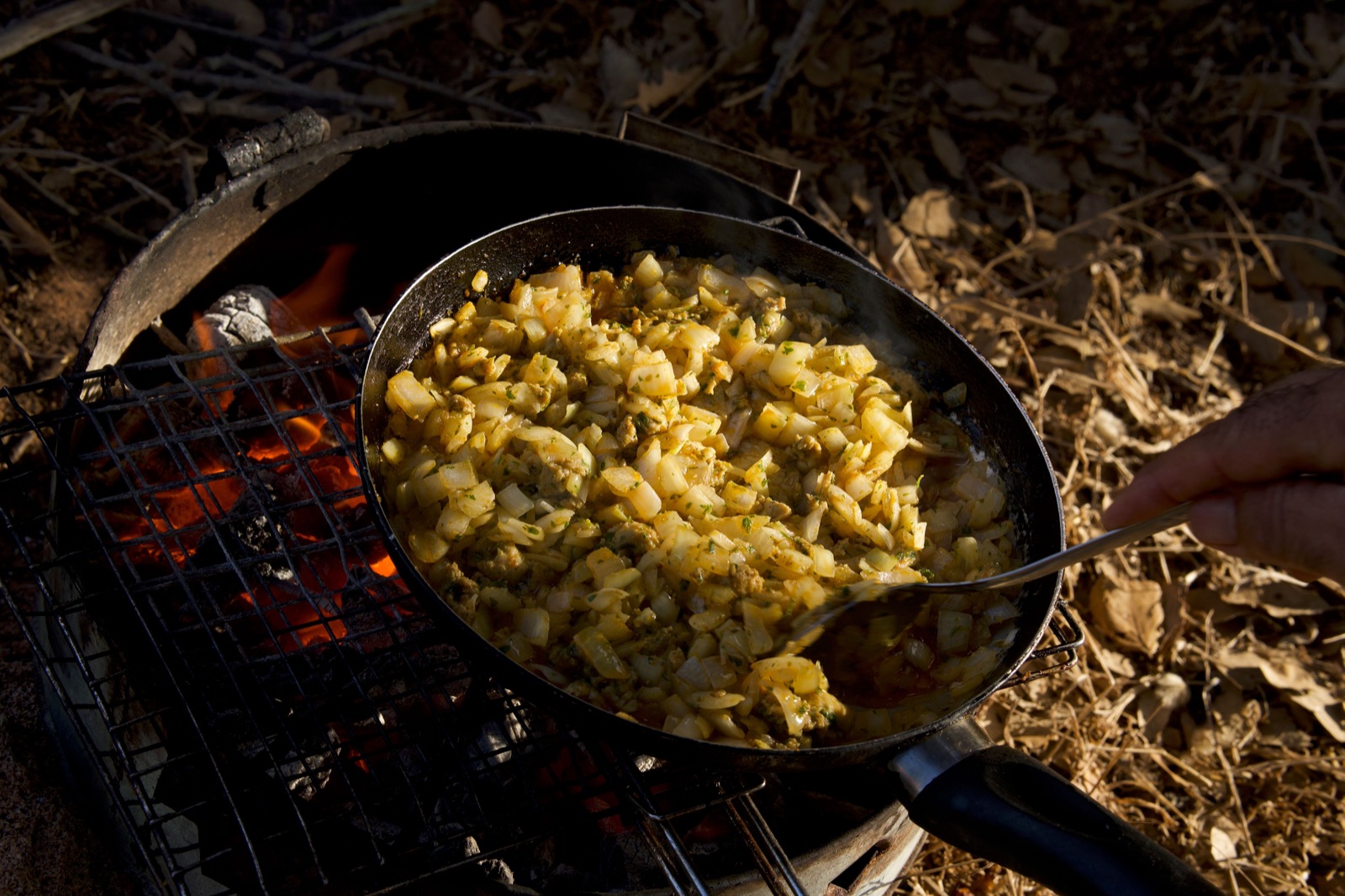
Good camping meals are mostly planning. Decide what you will eat before you leave, do the chopping and mixing at home, keep the cooler cold, and cooking at camp becomes the easy part. By the end of this guide you will have a simple method for building a camping menu, packing food so it stays safe, cooking on a stove or over coals, and cleaning up without drawing in wildlife.
The food-safety numbers here come from USDA and CDC guidance. The method works with any recipes you like.
What you'll need
Essentials
-
Stove and fuel
: faster and more controllable than a campfire, and allowed in many places when fires are banned. -
Cooler with ice or frozen bottles
: keeps perishable food at or below 40°F, the limit USDA guidance sets. -
Appliance thermometer and food thermometer
: one shows the cooler is cold enough; the other shows meat is cooked through. -
Pot, pan and utensils
: one pot and one pan cover most camp menus; add a spatula and tongs. -
Water and a way to treat it
: for drinking, cooking and washing up. -
Trash bags and a dish kit
: a tub or collapsible basin, a scraper, a little soap and a strainer for dishwater.
Optional
-
Camp dutch oven
: for stews, chili and baking over coals at a car campsite. -
Heavy-duty aluminum foil
: for foil packet meals over coals or on a grill grate. -
Second cooler
: keeps drinks, which get opened often, apart from perishable food.
Plan the menu
Count the meals
Write down every meal from the first lunch to the last breakfast, and add snacks for each day. A two-night weekend is usually two breakfasts, two lunches and two dinners. A day outdoors tends to make people hungrier, so pack generous snacks.
Match the menu to how you camp
Car camping: you can bring a cooler, a two-burner stove and fresh food. Plan perishable meals for the first day or two, when the cooler is coldest, and shelf-stable meals for the end of the trip.
Backpacking: everything rides on your back, so choose light, shelf-stable food that needs only boiling water or no cooking at all: dehydrated meals, instant oats, couscous, ramen, tortillas, nut butter, hard cheese and dried fruit. Raw meat and a cooler stay home.
Prep at home
Chop vegetables, mix spice blends, crack eggs into a sealed bottle, marinate meat in a leak-proof bag and freeze it, and cook chili or stew in advance. Label everything by meal. Prepping at home means less washing up, fewer knives at camp and less food waste to pack out.
Pack food safely
Keep the cooler at 40°F or below
USDA guidance is to keep perishable food at or below 40°F, using a cooler or insulated container with ice, gel packs or frozen water bottles, and to put an appliance thermometer inside to check. Pack perishable food straight from the refrigerator or freezer; meat and poultry can go in frozen and will thaw slowly. Our camping coolers guide covers choosing and packing a cooler.
Separate raw and ready-to-eat food
USDA advises keeping raw meat and poultry at the bottom of the cooler, wrapped separately from cooked food and from food eaten raw, such as fruit. Sealed containers stop juices dripping onto anything else. USDA also suggests two coolers: one for drinks, which gets opened often, and one for perishable food.
Watch the time
USDA calls 40°F to 140°F the "Danger Zone": perishable food left out of the cooler for more than two hours, or more than one hour when it is above 90°F, should be thrown away. At camp that means putting food back in the cooler as soon as the meal is served, not after the dishes are done.

Cook at camp
On a stove
A stove is the most reliable way to cook at camp: it lights in seconds, simmers on demand, and in many places remains allowed when campfires are banned. Sequoia and Kings Canyon National Parks, for example, permit gas, propane and alcohol stoves under their fire restriction stages while prohibiting wood and charcoal fires. A two-burner propane stove suits car camping; see the camping stoves guide. Always cook outdoors, never inside a tent or vestibule: stove makers warn that stoves produce carbon monoxide, which can kill in an enclosed space.
Over a campfire
Use an existing fire ring where fires are allowed, and cook over a bed of glowing coals rather than tall flames, which scorch food on the outside and leave it raw inside. A grill grate over the ring holds pans and foil packets; a camp dutch oven sits directly in the coals. Check current fire restrictions before you go.
Campfire foil packet meals
Foil packets are the classic easy camping dinner. Lay out a double layer of heavy-duty foil, add thinly sliced potatoes, other vegetables, a protein such as pre-cooked sausage or fish, a little oil and seasoning, then fold the edges into a tight sealed packet. Cook it on a grate over coals or at the edge of the coals, turning it once or twice, until the vegetables are tender. Cut vegetables small and evenly so everything cooks through at the same time.

Cook meat to a safe temperature
Color is not a reliable sign that meat is done, so bring a food thermometer. USDA's safe minimum internal temperatures are:
| Food | Safe minimum internal temperature |
|---|---|
| Ground beef, pork, veal and lamb | 160°F |
| All poultry, including ground poultry | 165°F |
| Whole cuts of beef, pork, veal and lamb (steaks, chops, roasts) | 145°F, then rest at least 3 minutes |
Water for cooking and drinking
Untreated water from lakes and streams can carry germs. The CDC says boiling is the best way to kill them: bring water to a rolling boil for 1 minute, or 3 minutes above 6,500 feet. Cooking water you boil that long in the pot is covered by the same rule. For drinking water on the trail, see our backpacking water filters guide.
Easy camping meal ideas
These are starting points, not recipes; they work with the pots and stoves most campers already own.
Breakfast camping meals
- Oatmeal with dried fruit, nuts and brown sugar (works for backpacking too).
- Scrambled eggs with pre-chopped peppers and cheese, wrapped in tortillas.
- Pancakes from a dry mix prepared at home; just add water at camp.
- Bagels with cream cheese or nut butter for a no-cook start.
Lunch
- Wraps with hard cheese, cured meats or hummus and crunchy vegetables.
- Leftover dinner, kept cold in the cooler and reheated to 165°F, the USDA temperature for leftovers.
Easy camping dinner ideas
- Chili or stew made at home, frozen flat in a bag, and reheated on the stove on the first night; it doubles as cooler ice.
- One-pot pasta with a jar sauce and pre-cooked sausage.
- Tacos or burritos with fillings cooked at home.
- Foil packets of potatoes, vegetables and sausage or fish over coals.
- Rice or couscous with a pouch of curry for the last night, when the cooler is low.
Clean up and store food
Wash dishes away from water
Scrape plates and pots clean and pack out the scraps. Leave No Trace recommends washing about 200 feet from lakes and streams, straining dishwater to catch food bits and packing those out with your trash, then scattering the strained water widely. Never wash pots directly in a stream or lake.
Store food where wildlife can't reach it
Food smells draw animals, from raccoons to bears. In Yosemite, for example, "food" means any item with a scent, including ice chests (even empty ones), toiletries, trash and unwashed dishes, and all of it goes in the campsite food locker; it may stay in a car only during daylight, out of sight with the windows closed. Rules differ by park and forest, so read them before you go, and never keep food in your tent.
Common mistakes
- Too much fresh food late in the trip. Plan perishables for the first days and shelf-stable meals for the last.
- Opening the food cooler all day. Keep drinks in their own cooler.
- Cooking over flames instead of coals. Wait for the fire to burn down.
- No backup lighter. Pack matches or a second lighter with the stove.
- Guessing when meat is done. Use a food thermometer.
- Leaving food out after dinner. Put it away before the dishes, not after.
Next steps
Once your menu is set, check that the rest of your kitchen fits it: the right camp cookware for your stove, enough fuel, and a cooler big enough for the plan. More guides are in the camp kitchen section.
Questions
What are easy camping meals for beginners?
One-pot meals and things you can prep at home: pasta with a jar sauce, chili or stew made ahead and reheated, burritos with pre-cooked fillings, foil packets of sausage and vegetables, and oatmeal or eggs for breakfast.
How do I keep food safe without a fridge at camp?
Keep perishable food at or below 40°F in a cooler with ice or frozen water bottles, check it with an appliance thermometer, and don't leave food out for more than two hours, or one hour when it is above 90°F, as USDA advises.
What temperature should meat be cooked to when camping?
The same as at home, measured with a food thermometer: 160°F for ground beef, 165°F for all poultry, and 145°F for whole cuts of beef and pork with a 3-minute rest, according to USDA.
What food should I bring for backpacking instead of car camping?
Light, shelf-stable food that needs only boiling water or no cooking: dehydrated or freeze-dried meals, instant oats, couscous, tortillas, nut butter, hard cheese and dried fruit. Leave the cooler and raw meat for car camping.
Sources (8)
- USDA — Serve summer safe with food safety tips from USDA
- USDA — Check your steps! Chill: how to pack a cooler to prevent food poisoning
- USDA Food Safety and Inspection Service — Danger Zone (40°F–140°F)
- USDA Food Safety and Inspection Service — Safe minimum internal temperature chart
- CDC — About water treatment options when hiking, camping, or traveling
- Leave No Trace — Principle 3: Dispose of waste properly
- National Park Service, Yosemite — Bears and food storage
- National Park Service, Sequoia & Kings Canyon — Fire restrictions
Read next
Coolers for camping: how to choose one and keep ice longer
Size, insulation and how you pack it matter more than the label. Here is how cooler types compare and how to keep food at 40°F or below all weekend.
Camping stoves: how to choose a stove for the campsite
Two-burner propane, single-burner butane or a backpacking stove: what each type cooks well, what the specs mean and how to use one safely.
Camp cookware: how to choose pots, pans and cook sets
Material decides most of it: what each one cooks well, what it weighs and how to look after it, from a titanium mug to a cast iron dutch oven.