Buying guide
Coolers for camping: how to choose one and keep ice longer
Size, insulation and how you pack it matter more than the label. Here is how cooler types compare and how to keep food at 40°F or below all weekend.
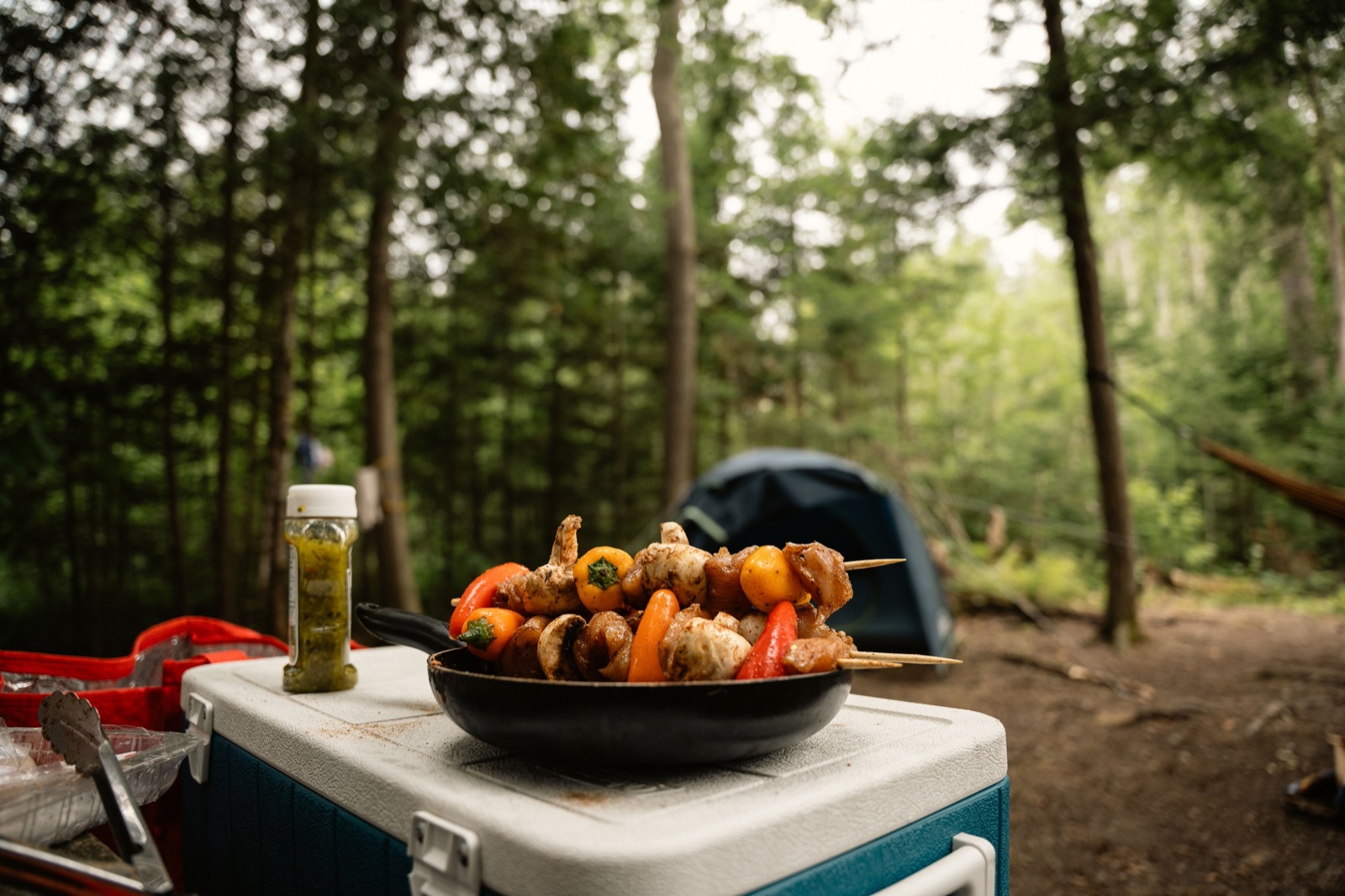
A cooler for camping does one job: keep food and drinks cold enough, for long enough, that you can eat well on the second and third day of a trip. Every cooler is a box of insulation, and none of them make cold. How long your ice lasts depends as much on how you pack and where you park the cooler as on the brand name on the lid.
This guide compares the main types of camping cooler, explains how to read ice retention claims, and covers packing, food safety and storing a cooler in bear country.
What a camping cooler does
A cooler slows down the flow of heat from outside to the ice inside. Thicker insulation, a lid gasket that seals tight and fewer gaps around the hinges and drain all slow that flow. When the ice is gone, the cooler warms up quickly, and that is when food becomes a problem.
For food safety the number to watch is 40°F. USDA guidance is to keep perishable food at or below 40°F in a cooler with ice, gel packs or frozen water bottles, and to check with an appliance thermometer that it stays there.
Types of camping cooler
Standard hard coolers
The classic ice chest: a plastic shell with foam insulation and a hinged lid. They are affordable, light for their size and come in every capacity from small personal ice chests to large family coolers. Ice retention varies a lot between models, so read the maker's claim and the conditions behind it.
Rotomolded premium coolers
Rotomolded (rotationally molded) coolers have a one-piece, thick-walled shell, thick insulation, a freezer-style gasket and heavy latches. They usually hold ice longer and survive rough use, and some models are certified as bear-resistant. The cost is weight and price: a large rotomolded cooler can be heavy even when empty.
Wheeled coolers
A hard cooler with wheels and a pull handle, useful when the campsite is a walk from the car or the beach is a long way from parking. Coleman, for example, rates its 50-quart Xtreme wheeled cooler at up to 5 days of ice retention at temperatures up to 90°F and says it holds 84 cans.
Soft-sided and backpack coolers
Insulated bags with a waterproof liner. They are light, easy to carry and fold down when empty, which makes them good for day trips, a lunch at the trailhead or a drinks cooler at camp. Backpack coolers add shoulder straps. They hold ice for a shorter time than hard coolers, and some makers note limits: YETI says its Hopper soft coolers should not be used with dry ice, unlike its hard coolers.
Electric coolers
Plug-in coolers run from a car's 12-volt socket or a portable power station. Thermoelectric models usually cool only to a certain amount below the outside temperature; compressor models work like a small fridge and many can freeze. They need power the whole time, so check your battery capacity before relying on one.
Cooler type comparison
| Type | Ice retention | Weight empty | Best for | Watch out for |
|---|---|---|---|---|
| Standard hard cooler | Short to medium | Light | Weekend car camping, budget | Thin lids and loose seals on cheap models |
| Rotomolded hard cooler | Long | Heavy | Long trips, hot weather, bear country (if certified and locked) | Price, weight |
| Wheeled hard cooler | Short to long, by model | Medium | Long walks from the car, beach camping | Wheels on rough ground |
| Soft-sided or backpack | Short | Very light | Day trips, drinks, lunches | Less insulation, liners can puncture |
| Electric (12 V) | Not ice-based | Medium to heavy | Long trips with power | Needs a constant power supply |
What to look at before you buy
Capacity in quarts
Cooler capacity is listed in quarts. Remember that a full cooler is mostly ice: YETI recommends a 2:1 ratio of ice to contents, so only about a third of the volume is food and drinks. A small ice chest suits one or two people for a day or a night; a family weekend usually needs a large cooler, or one for food and a second for drinks.
Ice retention claims
Claims such as "5-day ice" come from the maker's own test conditions, which are rarely spelled out on the box and are kinder than a busy campsite. Use them to compare coolers from the same maker, not as a promise for your trip. A cooler opened often in direct sun will fall short of any rating.
Lid, gasket and drain
A lid that seals tight on a rubber gasket, latches that pull it closed and a drain plug that does not leak all help keep warm air out. Check that the drain sits low enough to empty the cooler fully.
Weight and handles
A large hard cooler full of ice and food is heavy. Look for sturdy handles at both ends, or wheels, and think about who will carry it from the car to the site.
Bear-resistant certification
In grizzly country you may see coolers certified by the Interagency Grizzly Bear Committee (IGBC). The IGBC says all certified coolers can be locked with a padlock, carabiner or nuts and bolts, that an unlocked cooler is not considered bear-resistant, and that certification does not guarantee a product is bear-proof. Match the model to the IGBC's certified list.
Which camping cooler suits you
- A weekend at a campground: a standard or wheeled hard cooler, plus a small cooler for drinks.
- A week in hot weather or remote camping: a rotomolded cooler, pre-chilled and packed with block ice.
- Day trips, picnics, lunch at the trailhead: a soft-sided or backpack cooler.
- Road trips with a power station or a dual-battery vehicle: an electric compressor cooler.
How to pack a cooler

- Pre-chill it. YETI suggests loading the cooler with a sacrificial bag of ice a few hours before packing.
- Start cold. USDA advises packing perishable food straight from the refrigerator or freezer; meat and poultry can go in frozen and will stay colder longer.
- Use block ice at the bottom and cubes on top. Blocks melt more slowly; YETI recommends block ice on the base with cubes or more blocks above.
- Fill it up. Aim for about twice as much ice as contents and fill empty space; USDA notes that a full cooler keeps food cold much longer than a half-full one.
- Wrap raw meat separately. USDA guidance is to keep raw meat and poultry at the bottom of the cooler, wrapped separately from cooked foods and from foods eaten raw, such as fruit.
- Use two coolers. USDA suggests one cooler for drinks, which gets opened often, and one for perishable food.
At camp
Keep the cooler in the shade; YETI says ice lasts up to twice as long in the shade and suggests covering a cooler with a tarp or towel when it can't be avoided. Open it as little as possible. Don't drain cold meltwater, which keeps contents colder than air, but keep food out of the water. Check the thermometer: if perishable food has been above 40°F for more than two hours (one hour when it is above 90°F outside), USDA guidance is to throw it out.
For menus that make the most of a cooler, see camping meals.
Coolers in bear country
A cooler smells like food to a bear even when it is empty. Follow the rules of the place you camp. Yosemite, for example, treats ice chests as food "even when empty, and even if certified as bear resistant", and requires them to be stored in a food locker. Food may stay in a car there only during daylight, out of sight with the windows fully closed. Other parks have their own rules, so check before you go.
Cleaning and storage
- Empty and wash the cooler with mild soap and water after each trip, including the drain and gasket.
- Dry it fully and store it with the lid propped open so it does not trap moisture and odors.
- Keep the cooler out of direct sun in storage, and check the gasket and latches before the next season.
- Follow the maker's care instructions for your cooler, especially before using dry ice.
More camp kitchen guides are in the camp kitchen section.
Questions
What size cooler do I need for a weekend of camping?
Work back from the ice. Cooler makers such as YETI recommend about twice as much ice as food and drinks by volume, so a cooler for a weekend needs roughly three times the volume of what you plan to keep cold. A second cooler for drinks helps.
How long does a cooler keep ice?
Anywhere from a day to several days. Maker claims, such as Coleman's rating of up to 5 days at up to 90°F for its 50-quart Xtreme wheeled cooler, are measured under the maker's conditions; real results depend on pre-chilling, the ice-to-food ratio, shade and how often the lid is opened.
Should I drain the water from my cooler?
YETI advises not draining cold meltwater, because it keeps contents colder than air would, but keep exposed food and meat out of the water. Seal raw meat in leak-proof containers either way.
Is a bear-resistant cooler enough in bear country?
Not always. The Interagency Grizzly Bear Committee says certified coolers are bear-resistant only when locked, and certification does not mean bear-proof. Some parks, such as Yosemite, require all coolers, even empty or certified ones, to go in a food locker.
Sources (7)
- YETI — Maximising ice retention
- Coleman — 50-Quart Xtreme 5-Day Hard Cooler with Wheels
- USDA — Serve summer safe with food safety tips from USDA
- USDA — Check your steps! Chill: how to pack a cooler to prevent food poisoning
- USDA Food Safety and Inspection Service — Danger Zone (40°F–140°F)
- Interagency Grizzly Bear Committee — Bear-resistant products
- National Park Service, Yosemite — Bears and food storage
Read next
Camping checklist: everything to pack for a weekend at a campground
The full packing list for camping by the car, grouped the way you will pack it, plus the things most often left at home.
Camping meals: how to plan, pack and cook food at camp
A simple plan, a cold cooler and a few one-pot dinners: how to eat well at camp without spending the whole trip cooking.
Camping stoves: how to choose a stove for the campsite
Two-burner propane, single-burner butane or a backpacking stove: what each type cooks well, what the specs mean and how to use one safely.