Buying guide
Water filters for backpacking: squeeze, gravity, pump and purifiers
What each type of trail filter does, what its maker says it removes and the standard it cites, and when a filter alone is not enough.
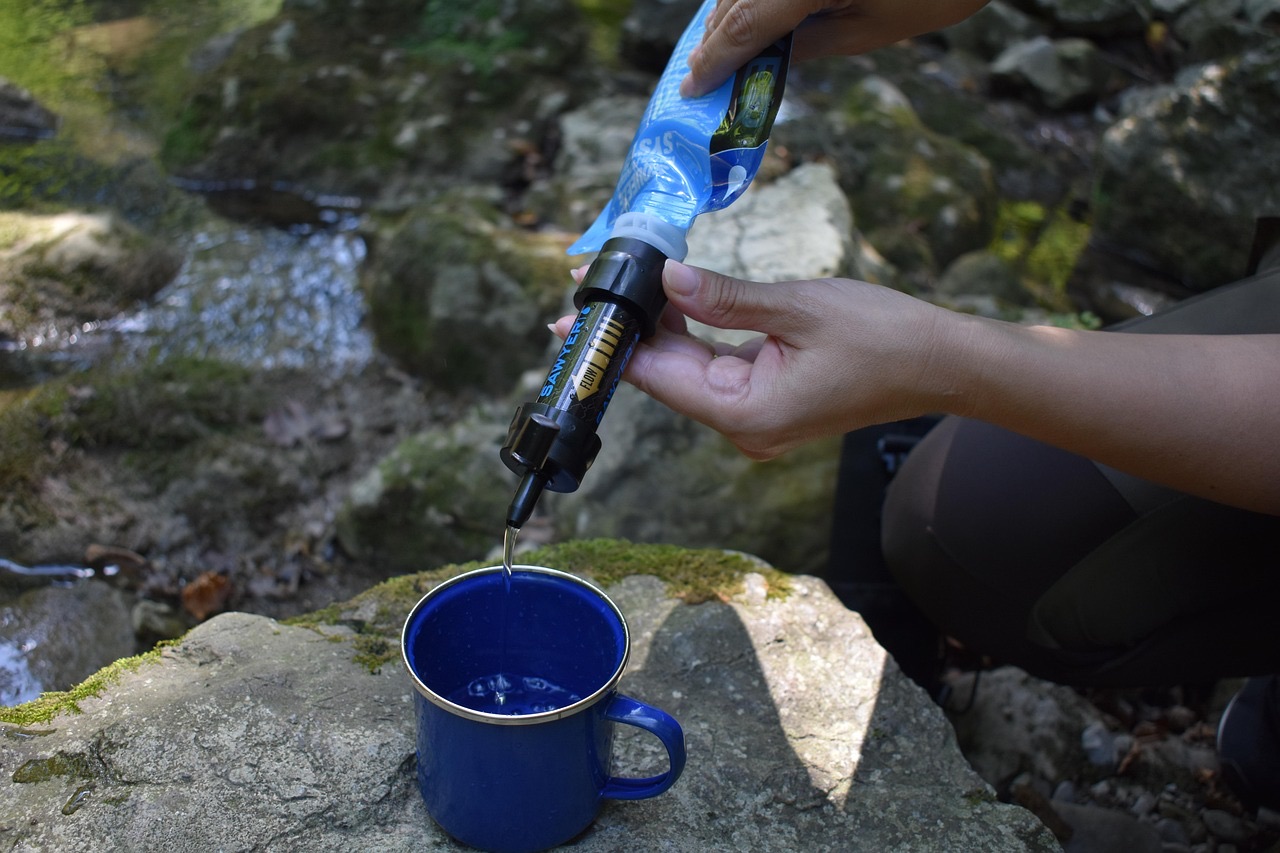
A water filter for backpacking lets you drink from streams and lakes instead of carrying every liter from home. Water weighs about 2.2 pounds per liter, so treating it along the way is one of the biggest weight savings on any trip. The choice between filters is mostly about how you collect water, how many people you treat it for, and what you need the filter to remove.
This guide compares the main types of trail filter, explains how to read pore sizes and makers' claims, and covers what a filter does not do. It describes what each maker states its product removes and the standard it cites; for questions about waterborne illness, follow the CDC or your local health authority.
What a backpacking water filter does
Many trail filters push water through a hollow-fiber membrane: a bundle of tiny tubes whose walls are full of microscopic pores. Anything larger than the pores stays behind. Pore size is given in microns (millionths of a meter).
The CDC explains what that means in practice: a filter with an absolute pore size of 1 micron or smaller, or one certified to NSF/ANSI standard 53 or 58 for cyst reduction, will remove parasites "but not viruses or all bacteria." A filter with an absolute pore size of 0.3 micron or smaller will remove bacteria and parasites, "but not viruses."
Filters and purifiers
MSR draws the line this way: a microfilter "is designed to remove waterborne protozoa and bacteria, but not viruses," while a purifier "is designed to remove protozoa, bacteria and viruses." MSR says microfilters should meet NSF Protocol P231 and/or the U.S. EPA Guide Standard, and names NSF Protocol P248 among the standards for purifiers. It also says viruses are mainly spread by human waste, so they are more of a concern in heavily used areas, and that in the backcountry of the U.S. or Canada a microfilter is typically considered sufficient.
When a filter is not enough
If viruses are a concern, the CDC says "boiling is the best way to kill germs in water," including viruses: bring water to a rolling boil for 1 minute, or 3 minutes above 6,500 feet. Its next-best option is to filter the water and then disinfect it, for example with chlorine or chlorine dioxide. Most trail filters are also not designed to remove chemicals; check what the maker claims.
Types of water filter
Squeeze filters
A small filter that screws onto a soft pouch or bottle. You fill the pouch at the source and squeeze water through the filter into a bottle or straight into your mouth. Light, cheap and simple, which makes them the most common choice for solo hikers. Sawyer, for example, states that its Squeeze uses a 0.1 micron absolute hollow-fiber membrane and removes 99.99999% of bacteria and 99.9999% of protozoa such as Giardia and Cryptosporidium; its product page does not claim virus removal.
Katadyn's BeFree is a similar soft-flask design. Katadyn states it removes bacteria, cysts and sediment with a 0.1 micron pore size, flows at up to 2 liters per minute and lasts up to 1,000 liters, depending on water quality.
Gravity filters
A large bag that you fill at the source and hang from a branch; water runs through a hose and filter into a clean reservoir. No pumping or squeezing, and they treat several liters while you pitch the tent, which makes them popular with pairs and groups. Platypus states its GravityWorks filter has a 0.2 micron pore size, filters up to 1.75 liters per minute, lasts up to 1,500 liters, and meets EPA and NSF guidelines for the removal of 99.9999% of bacteria and 99.9% of protozoa. Its spec table lists it as not effective against viruses.

Pump filters
A hand pump draws water through an intake hose and pushes it through the filter. Pumps are heavier and slower to set up, but they can draw from shallow puddles, slow seeps and murky ponds where filling a pouch is hard. Some pumps are purifiers. MSR states its Guardian pump purifier meets NSF Protocol P248 for removing viruses, bacteria and protozoa.
Bottle and straw filters
A filter built into a drinking bottle cap or a straw. You fill the bottle and drink through the filter. They are convenient on day hikes and short trips with frequent water sources, but treat only what you drink at that moment, which is awkward for cooking water.
Water filter comparison
| Type | Speed | Weight | Effort | Best for |
|---|---|---|---|---|
| Squeeze | Moderate | Very light | Hand squeezing | Solo backpackers, thru-hikers |
| Gravity | Fast for a group | Light to moderate | Hang it and wait | Pairs, groups, base camps |
| Pump | Moderate | Heaviest | Pumping | Shallow, murky or hard-to-reach sources |
| Bottle or straw | Slow, drink-as-you-go | Light | Sucking or squeezing | Day hikes, frequent water sources |
| Purifier (pump or other) | Varies | Moderate to heavy | Varies | Travel or high-use water where viruses are a concern |
What to look at before you buy
What the maker says it removes
Read the claim, not the box art. Look for the list of organisms (protozoa, bacteria, viruses), the percentage removed and the standard it was tested to: NSF/ANSI 53 or 58 for cyst reduction, NSF Protocol P231 or P248, or the EPA Guide Standard. A product that does not mention viruses should be treated as not removing them.
Pore size
A smaller absolute pore size blocks smaller organisms. Typical hollow-fiber filters are rated around 0.1 to 0.2 micron; MSR describes purifiers as removing contaminants down to 0.02 micron.
Flow rate and capacity
Flow rate (liters per minute) tells you how long you will stand at the stream. Capacity (liters before replacement) is the maker's estimate in test water; silty water clogs a filter sooner. Many hollow-fiber filters can be backflushed or shaken to restore flow. Follow the instructions for yours.
Weight and compatibility
Check that the filter threads onto the bottles or bladders you already use, and weigh the whole kit, including dirty-water pouches and hoses.
Which water filter suits you
- Solo backpacking in North America: a squeeze filter and a spare pouch.
- Two or more hikers, or a base camp: a gravity filter.
- Desert seeps, shallow pools or silty water: a pump filter, plus a prefilter or a cloth to strain out sediment.
- Day hikes: a bottle or straw filter.
- International travel or heavily used water sources: a purifier rated for viruses, or a filter plus chemical disinfection, following CDC guidance.
Treated water still has to get to your dinner; see the backpacking stoves guide and camping meals.
Using a filter on the trail
- Collect water from the clearest, fastest-moving source you can find, and let silt settle first if the water is cloudy.
- Keep dirty and clean containers separate, and keep the clean side of the filter away from untreated water.
- Backflush or clean the filter as the maker instructs when the flow slows.
Protect it from freezing
Cold can ruin a hollow-fiber filter. Sawyer says there is no definitive way to tell whether a filter has been damaged by freezing after it was first wetted, and recommends replacing it if you suspect it froze. It suggests storing the filter in a pocket close to your body, and keeping it in your sleeping bag next to you at night.
Care and storage
- At home, backflush the filter, let it dry fully, and store it somewhere it can't freeze.
- Don't drop it on hard ground; Sawyer recommends replacing a filter that may have been dropped onto a hard surface.
- Replace the cartridge at the end of its rated capacity or sooner if flow can't be restored.
- Follow the care and replacement instructions for your specific filter.
More guides to cooking and water on the trail are in the camp kitchen section.
Questions
Do backpacking water filters remove viruses?
Most do not. The CDC says a filter with an absolute pore size of 0.3 micron or smaller removes bacteria and parasites but not viruses. For viruses you need a purifier rated for them, chemical disinfection after filtering, or boiling.
What is the difference between a water filter and a water purifier?
MSR explains that a microfilter is designed to remove protozoa and bacteria but not viruses, while a purifier is designed to remove protozoa, bacteria and viruses. Check which one your product claims to be and the test standard it cites.
What is the best kind of water filter for backpacking?
It depends on how you hike. For a solo hiker a squeeze filter is usually the lightest, simplest option; groups often prefer a gravity filter, which treats several liters while camp is being set up; pump filters suit shallow or murky sources.
Can a backpacking water filter freeze?
Yes, and freezing can damage it. Sawyer, for example, says there is no definitive way to tell whether a filter has been damaged by freezing after it was first wetted, recommends replacing it if you suspect it froze, and suggests keeping it in a pocket by day and in your sleeping bag at night.
Sources (7)
- CDC — About water treatment options when hiking, camping, or traveling
- MSR — Backpacking water filter vs. water purifier: what's the difference?
- Sawyer — Squeeze water filtration system
- Sawyer — FAQs (freezing)
- Platypus — GravityWorks water filter system
- Katadyn — BeFree 1.0L
- MSR — Guardian purifier
Read next
Hydration packs: how to choose a pack with a water reservoir
A hydration pack lets you drink without stopping. The choice comes down to how much water you carry, how much else you carry, and how you move.
Backpacking stoves: canister, integrated, liquid fuel and alcohol compared
A light stove that boils water fast is enough for most trips. Here is how the four types compare, and which one suits the way you hike.
Camp cookware: how to choose pots, pans and cook sets
Material decides most of it: what each one cooks well, what it weighs and how to look after it, from a titanium mug to a cast iron dutch oven.